5 days ago
Nepal Floods Expose Himalayan Risks From Warming and Development
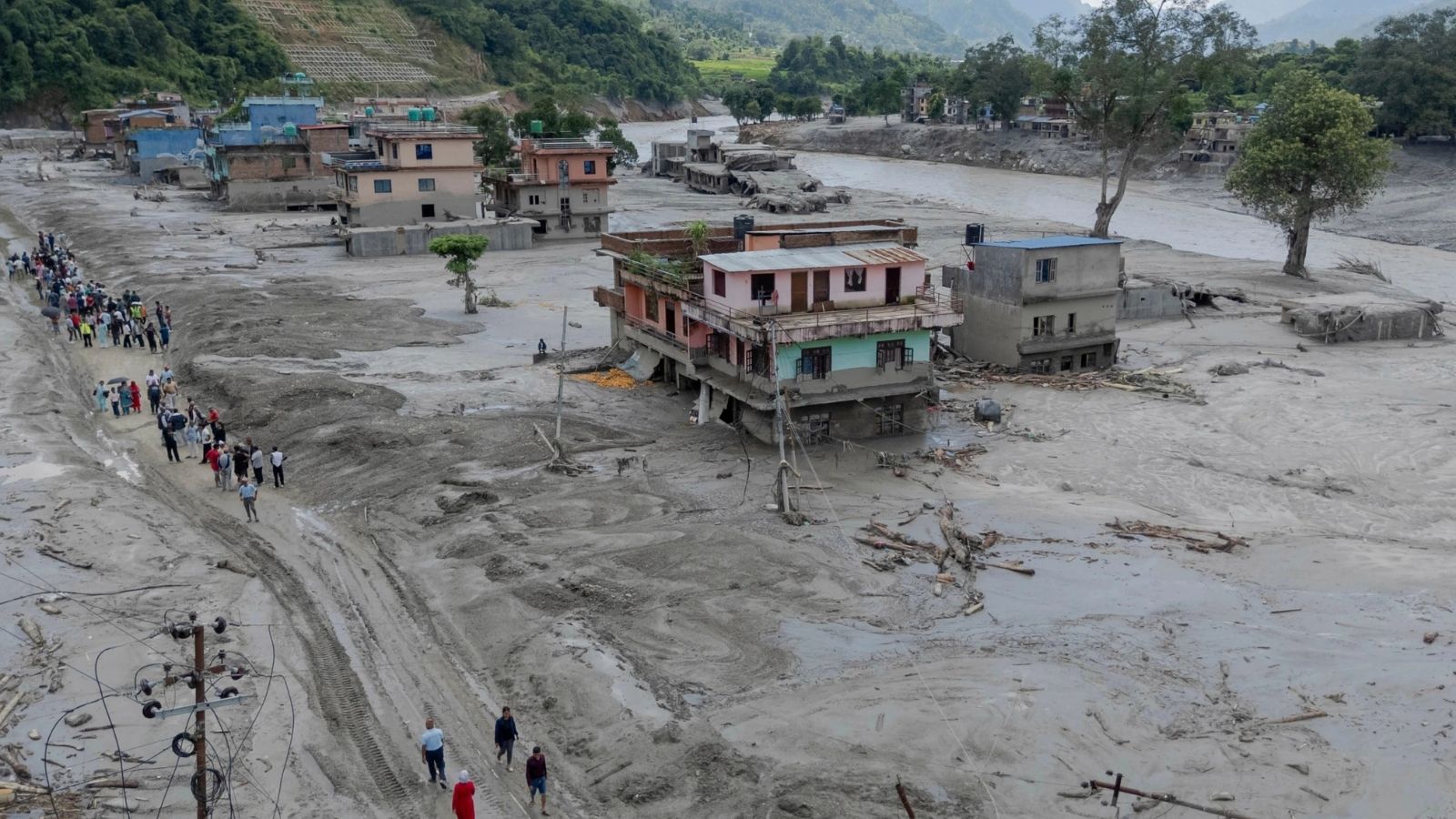
A huge flood recently rushed down a mountain river in Nepal.
It carried water, mud and broken pieces of the mountains into villages and roads.
The flood may have started when an avalanche blocked and then released water, possibly after a small earthquake.
This kind of event is called a glacial lake outburst flood.
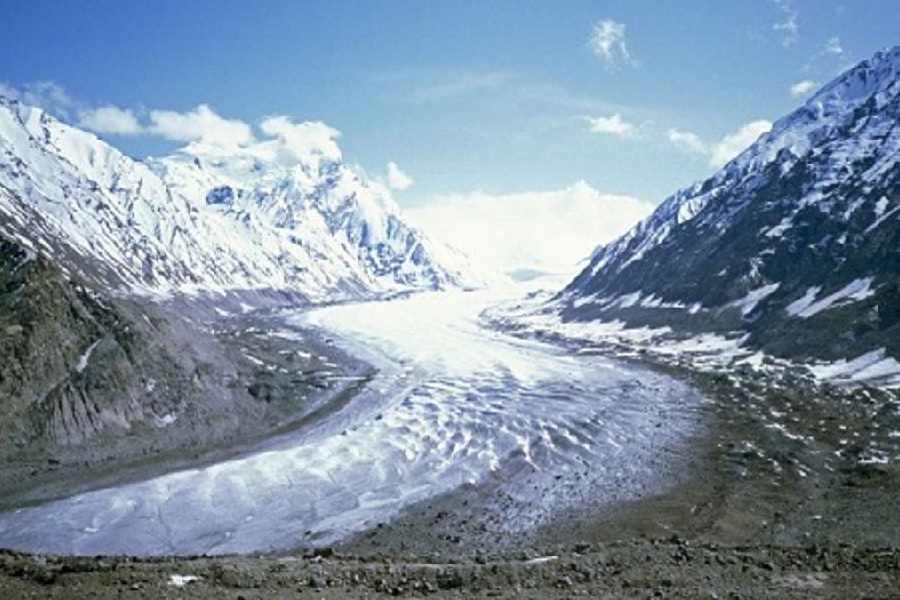
Warmer temperatures can make mountain glaciers and lakes less stable.
Buildings, roads and power projects built near rivers can make disasters more damaging.
Similar floods have already destroyed projects in Uttarakhand and Sikkim.
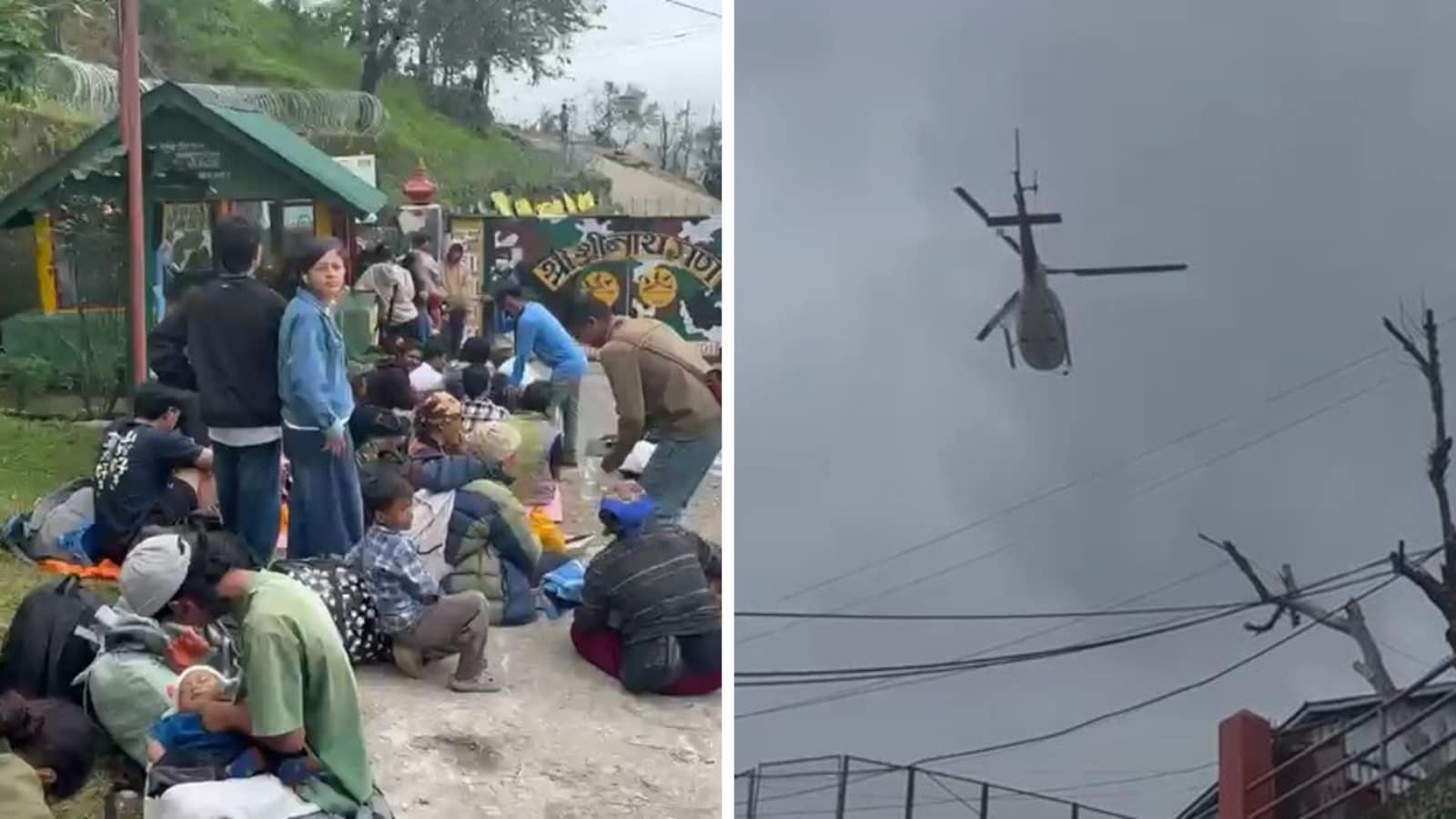
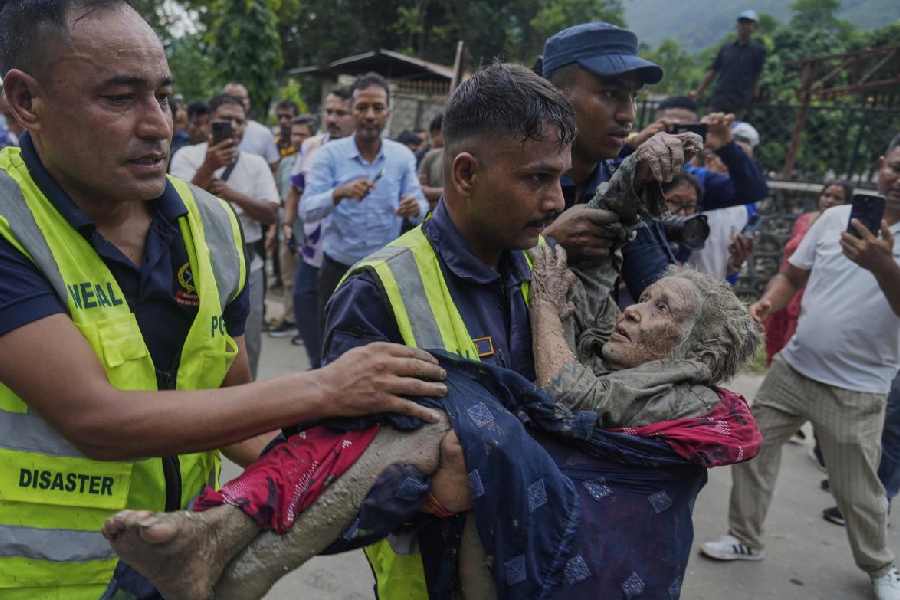
India sent supplies and rescue teams to help Nepal.
The article says countries need better warnings and safer decisions about construction in the Himalayas.

A flash flood in Nepal’s Lhende River valley reportedly followed an avalanche near the Rasuwagadhi border crossing.
The disaster swept away settlements, infrastructure and at least six hydropower projects totaling 405 megawatts.
More than 160 Indian pilgrims were reportedly missing after hotels and guest houses were destroyed.
The article links growing glacial lake outburst flood risks to warming, ecological damage, construction and hydropower development.
It warns that weak India-China information sharing and the planned Medog dam could increase risks downstream in India.
- Who
- Communities in Nepal were affected, along with people and infrastructure on the Tibetan side; more than 160 Indian pilgrims were reportedly missing.
- What
- A catastrophic flash flood, described as a possible glacial lake outburst flood, swept through the Lhende River valley and downstream districts.
- Where
- The flooding began near the Rasuwagadhi Nepal-Tibet border crossing and spread through Nepal’s Rasuwa, Dhading, Gorkha and Nuwakot districts.
- When
- The Nepal disaster is described as the latest event; the article also cites related disasters in 2021, 2023 and August 2025.
- Why
- The article says an avalanche may have triggered the flood, possibly after a magnitude-4.4 earthquake, while climate warming and ecological degradation are increasing Himalayan risks.
Key facts
- Affected river
- Lhende River
- Border location
- Rasuwagadhi, connecting Nepal’s Rasuwa district with Gyirong county in Tibet
- Hydropower loss
- At least six projects and 405 megawatts of capacity
- Missing pilgrims
- More than 160 Indian pilgrims were reportedly missing
- Himalayan glaciers
- About 48,000 square kilometers of glaciers are spread across the Himalayas
- Hazardous glacial lakes
- About 500 of more than 5,000 mapped Himalayan glacial lakes are classified as hazardous or significantly hazardous
- India’s response
- India sent medical and food supplies and specialized rescue teams to Nepal
Sources
Related news

Nepal Flash Floods Expose Glacier Risks Amid Climate Concerns
Glacial Floods Expose the Growing Himalayan Disaster Threat
Nepal Avalanche Floods Echo Chamoli With Greater Downstream Impact

Nepal Flash Floods Highlight Himalayan Climate and Dam Risks

Nepal Thanks India as Glacial Disaster Rescue Efforts Continue
Nepal Warns of Heavy Rain After Deadly Floods
Nepal Flood Exposes Delayed Alerts and Cross-Border Warning Gaps

Bhotekoshi Flood Crisis: Nepal PM Shah Calls for Courage

Nepal PM Thanks India, China Amid Climate Compensation Demand