1 hr ago
India’s UPI MDR Plan Draws Warnings and Official Defense
India plans to charge some merchants a small fee when customers make large UPI payments.
The fee would apply only to transactions above ₹2,000.
Person-to-person payments would stay free.
Some retailers worry that the fee could increase prices or make people use cash again.
NPCI says the fee is needed to help pay for servers, fraud protection and technical support.
It also says UPI would remain cheaper than many card-payment options.
The fee would not affect most person-to-merchant UPI payments because they are small.
Supporters believe the change could help smaller technology companies compete and improve digital payments.
Critics want the government to keep UPI free through subsidies.

The National Payments Corporation of India announced a 0.4% MDR on UPI transactions above ₹2,000, effective October 15, according to the article.
Person-to-person payments would remain free, while charges would be capped at ₹300 for transactions totaling ₹75,000 or more.
Retailers and commentators warned that the fee could raise prices, pressure small merchants and encourage a shift back to cash.
NPCI said the commercial model is needed to support payment infrastructure, cybersecurity, fraud prevention and long-term innovation.
The article argues that more than 95% of UPI person-to-merchant transactions are worth ₹2,000 or less and would be unaffected.
- Who
- The National Payments Corporation of India announced the measure; retailers, commentators, the Reserve Bank of India and other payment-sector participants are involved in the debate.
- What
- A 0.4% Merchant Discount Rate is proposed for UPI transactions above ₹2,000, with exemptions and a transaction cap described in the article.
- Where
- The measure concerns India’s UPI digital-payment system.
- When
- The announcement was made on September 15, with implementation scheduled for October 15, according to the article.
- Why
- NPCI says the fee would provide more reliable funding for payment infrastructure, security, technical support and innovation instead of relying solely on government subsidies.
Critics and merchant concerns
NPCI and official justification
Impact on prices and small businesses
Critics and merchant concerns
Retailers and apparel manufacturers cited inflation, high logistics costs and narrow margins, warning that the fee could increase consumer prices and burden smaller businesses.
NPCI and official justification
NPCI and the article’s supporters argue that most small-value transactions would be unaffected and that UPI would remain the most economical payment channel.
Risk of returning to cash
Critics and merchant concerns
Critics, including Global Trade Research Initiative founder Ajay Srivastava, said the MDR could push small merchants and price-sensitive consumers toward cash and reduce digital transaction records.
NPCI and official justification
NPCI said a sustainable commercial model could expand competition, improve payment reliability and support wider UPI acceptance.
Government funding and external influence
Critics and merchant concerns
Ajay Srivastava argued that the government could continue funding free UPI and suggested that United States pressure influenced the decision; the article says this allegation was rejected by the central government.
NPCI and official justification
NPCI said government incentives were intended as short-term bridge funding and that depending solely on subsidies creates uncertainty for long-term investment. The article also says NPCI cited merchant-fee models in Brazil and China as comparisons.
Key facts
- Proposed rate
- 0.4% Merchant Discount Rate on UPI transactions above ₹2,000
- Effective date
- October 15, according to the article
- Person-to-person payments
- Would continue to remain free
- Transaction cap
- MDR would be limited to ₹300 for transactions totaling ₹75,000 or more
- Small-value transactions
- The article says more than 95% of UPI person-to-merchant transactions are worth ₹2,000 or less
- Estimated operating costs
- NPCI cites industry estimates of about ₹20,000 crore annually for UPI operations
- Earlier pricing policy
- UPI and RuPay debit-card transactions have had zero MDR since 2020, according to the article
Quotes
National Payments Corporation of India
India’s national retail payments network and UPI operator
“Most global payment systems (including Digital Public Infrastructures) have economic models that support infrastructure and innovation. India’s approach continues to prioritise accessibility, scale and inclusion.”
 opindia.com
“A predictable commercial revenue model levels the playing field, allowing smaller, innovative startups to compete, build specialised payment software, and expand financial access.”
opindia.com
Ajay Srivastava
Founder of the Global Trade Research Initiative
“MDR could push small merchants and price-sensitive consumers back towards cash.”
opindia.com
Sources
Related news
New UPI MDR Charges Raise Fears of Cash Return

Small Retailers Resist UPI MDR as Cash Payments Loom
Centre Rejects Foreign Pressure Claims Over New UPI Charges
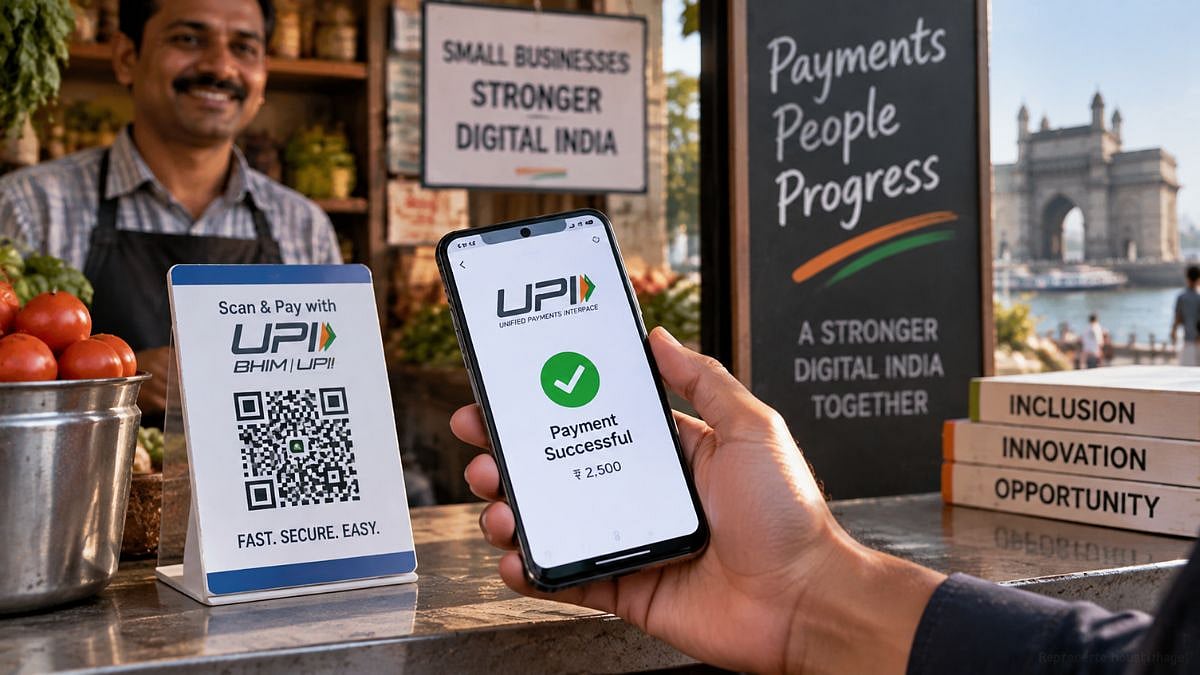
India’s UPI MDR Plan Tests Digital Payments’ Durability

UPI Sets 0.4% MDR on High-Value Merchant Payments
India Weighs Selective UPI Fees to Sustain Digital Payments Growth
India’s Marine Exports Rise on Strong US Shipments
Trump Plans Rare Airport Welcome for Xi Amid Rising Tensions

How India’s Taliban Approach Reflects Principled Pragmatism in Afghanistan

UPSC Key: Conflicts, Devolution, Social Security and Himalayan Hazards