

3 hrs ago
India’s UPI MDR Plan Tests Digital Payments’ Durability
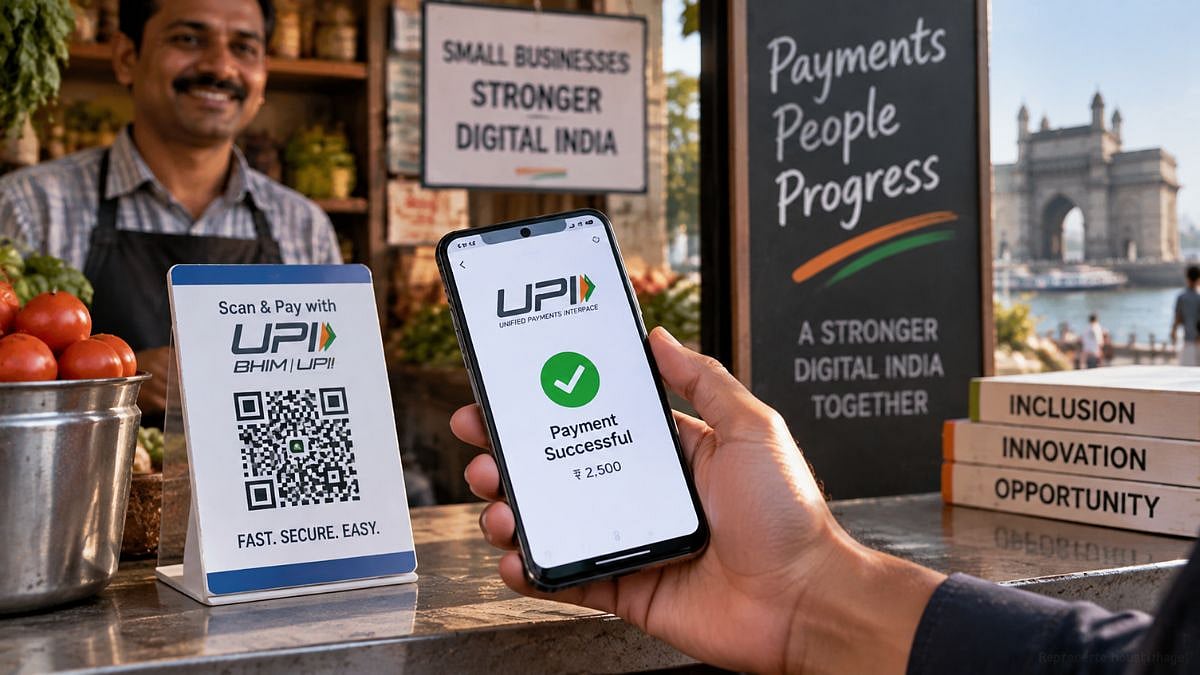
India is changing how some businesses help pay for UPI.
Starting October 15, certain large payments made directly from bank accounts may carry a small fee for businesses.
Customers are not supposed to be charged this fee.
Small payments, person-to-person transfers, and many small merchants are protected.
The possible fee is much lower than typical credit-card fees.
The money could help pay for security, fraud prevention, and improvements to UPI.
However, the final amount collected may be lower than some early estimates because many transactions are exempt or capped.
Some businesses might offer cash discounts or indirectly pass the cost to shoppers.
The policy’s success will depend on keeping UPI affordable while making its payment system financially durable.

From October 15, eligible bank-account-funded P2M UPI payments above ₹2,000 may attract MDR of up to 0.40%, capped at ₹300.
Consumers cannot be charged directly; P2P transfers, payments up to ₹2,000, and eligible small merchants remain protected.
High-value payments above ₹2,000 represented about 4% of P2M volume but approximately 67% of P2M value in August.
The theoretical annual MDR ceiling is estimated at ₹2,880 crore, though exemptions, caps, sectoral rates, and costs will reduce actual collections.
Supporters say MDR can fund UPI’s resilience and innovation, while critics warn of higher merchant costs, indirect consumer charges, and weaker fintech competition.
- Who
- Banks, payment applications, payment aggregators, merchants, consumers, wallets, and other participants in India’s UPI ecosystem.
- What
- India is introducing a targeted MDR on eligible bank-account-funded person-to-merchant UPI payments above ₹2,000.
- Where
- Across India’s Unified Payments Interface ecosystem, including merchant and digital-payment transactions.
- When
- The framework takes effect on October 15; the articles do not specify a year.
- Why
- To replace part of the subsidy-supported model with commercial funding for resilience, cybersecurity, fraud controls, infrastructure, and innovation while preserving low-cost digital payments.
Arguments for the framework
Risks and concerns
Financial sustainability
Arguments for the framework
Commercial MDR can replace part of the taxpayer-supported model and help fund UPI infrastructure, cybersecurity, fraud controls, resilience, and innovation.
Risks and concerns
The realised revenue may be much lower than broad early estimates because of exemptions, transaction caps, sectoral rates, and operating costs.
Effect on consumers and cash use
Arguments for the framework
Consumers pay nothing, more than 95% of P2M transactions by volume are below ₹2,000, and UPI remains cheaper than cards, making a broad return to cash unlikely.
Risks and concerns
Thin-margin, high-value merchants may absorb the cost, offer cash discounts, steer customers toward bank transfers, or indirectly pass costs to consumers.
Competition and pricing
Arguments for the framework
Account-funded UPI should remain materially cheaper than credit-card acceptance, supporting merchant adoption and UPI’s competitive position.
Risks and concerns
Different pricing for bank accounts, cards, credit lines, wallets, and merchant categories could distort competition, disadvantage smaller fintechs, and encourage merchant-category-code misclassification.
Key facts
- Maximum MDR
- Up to 0.40% for eligible account-funded P2M payments above ₹2,000, capped at ₹300.
- Protected transactions
- P2P transfers, payments up to ₹2,000, and eligible small merchants receiving monthly UPI credits of up to ₹1 lakh.
- August UPI activity
- 24.51 billion transactions worth ₹29.82 lakh crore.
- High-value P2M share
- Payments above ₹2,000 accounted for about 4% of P2M volume and approximately 67% of P2M value, or nearly ₹6 lakh crore, in August.
- Theoretical annual ceiling
- Approximately ₹2,880 crore before exemptions, caps, concessional rates, operating costs, and small-merchant fund contributions.
- Sectoral pricing
- Fuel, agricultural inputs, railways, telecommunications, utilities, government payments, insurance, education, wallet top-ups, and tolls attract a flat ₹5 above ₹2,000; capital-market payments attract 0.02%, capped at ₹300.
- Consumer charges
- Consumers cannot be charged directly, and payment applications cannot impose platform or hidden fees.
- Estimates differ
- One article describes the aggregated potential as about $2 billion, while another calculates a ₹2,880 crore theoretical ceiling and says larger pre-notification estimates should not be applied to the final framework.
Sources
Related news

UPI Sets 0.4% MDR on High-Value Merchant Payments

UPI MDR Begins October 15, Merchants Face Charges, Customers Don’t

New UPI MDR Rules Keep Consumers Free, Charge Eligible Merchants
UPI Payments Above ₹2,000 Face New Merchant Fee
India Adds UPI Merchant Fees Above ₹2,000
Panel to Decide UPI MDR Charges Above ₹2,000 Soon

UPI MDR Move Brings PhonePe IPO Filing Closer

Paytm CEO Supports Charges on Large UPI Payments
Indian Stocks Rise as UPI Fee Changes Drive Midday Moves
Entrepreneur Seeks Fairer UPI MDR Based on Margins
