1 hr ago
UPSC Key: Conflicts, Devolution, Social Security and Himalayan Hazards
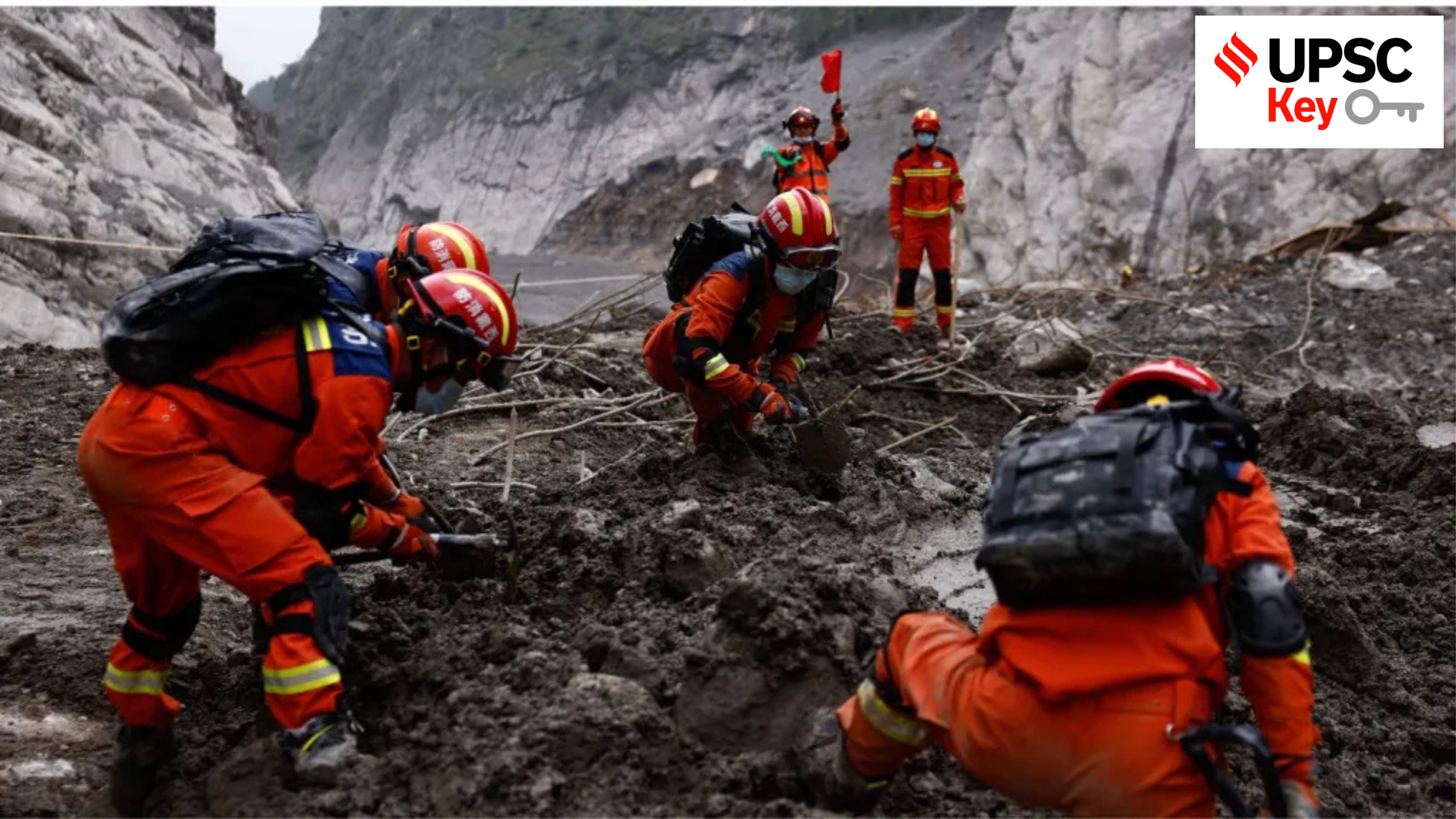
This UPSC current-affairs roundup covers several important developments around the world and in India.
Saudi Arabia said it stopped a drone near Mecca, but the Houthis said they did not attack the holy city.
India and Pakistan blamed each other after their naval ships collided in international waters.
Leaders from Scotland, Wales and Northern Ireland said their people should be able to decide whether to become independent from the United Kingdom.
India increased the wage limit for workers covered by its retirement and pension system.
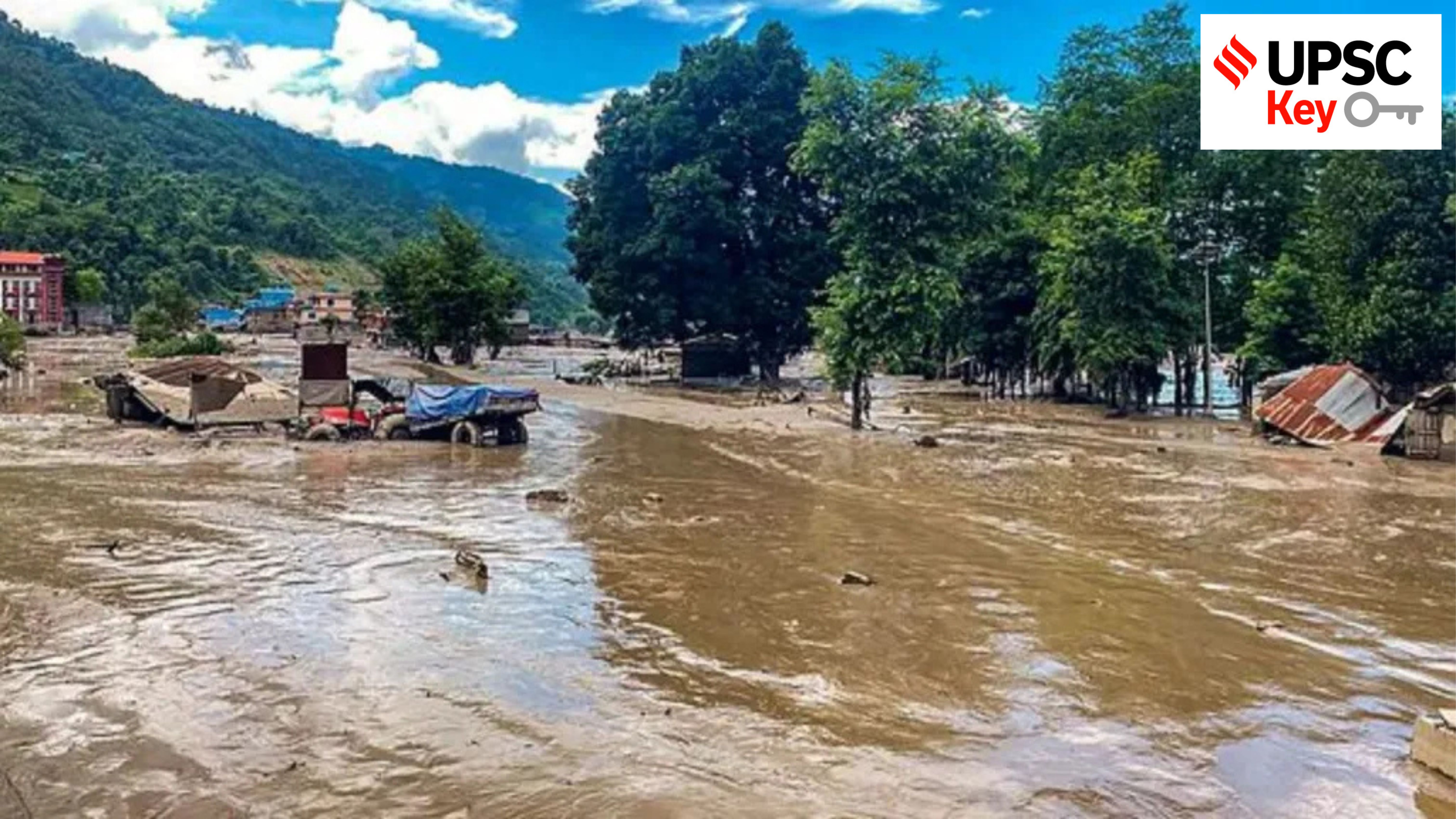
Scientists said a huge rock-and-ice avalanche helped cause devastating floods in Nepal.
India also rejected a Pakistan-China commission dealing with a disputed boundary involving territory claimed by India.
Delhi ranked highest in a new index measuring electric-vehicle development across Indian states and Union Territories.
These issues are important for understanding security, geography, government policy and international relations.

Saudi Arabia said it intercepted a drone near Mecca, while the Houthis denied targeting the holy city and accused Saudi Arabia of airstrikes in Yemen.
India and Pakistan gave opposing accounts of a naval collision near the Gulf of Oman, with India citing a violation of their 1991 military-exercise agreement.
Scotland, Wales and Northern Ireland leaders signed the Cardiff Agreement to support future independence referendums, although UK law limits unilateral Scottish action.
The Union Cabinet approved raising the Employees’ Provident Fund Organisation wage ceiling from Rs 15,000 to Rs 25,000, potentially covering 8 crore workers.
Studies linked Nepal’s flash floods to a massive rock-and-ice avalanche, while India also rejected the Pakistan-China boundary commission and Delhi topped the 2025 electric-mobility index.
- Who
- Saudi Arabia, the Houthi movement, India, Pakistan, the United Kingdom’s constituent nations, the Government of India, Nepali scientists and Indian states are central to the developments.
- What
- The roundup covers a disputed drone incident near Mecca, a naval collision, independence demands in the UK, expanded social-security coverage, Himalayan flooding, a disputed Pakistan-China boundary mechanism and electric-mobility rankings.
- Where
- The events involve Mecca and Yemen, the Gulf of Oman, the United Kingdom, India, Nepal’s Langtang region, Pakistan-occupied Kashmir and Indian states and Union Territories.
- When
- The developments and reports were published for September 17, 2026, with some incidents occurring on September 14-16, 2026.
- Why
- They involve regional security, maritime safety, self-determination, worker protection, disaster risk, territorial sovereignty and the transition to electric vehicles.
Claims and Positions
Counterclaims and Objections
Drone attack near Mecca
Claims and Positions
Saudi Arabia said it intercepted a drone near Mecca and described the alleged attempt as a serious security threat and a red line.
Counterclaims and Objections
The Houthis denied targeting Mecca or other Islamic holy sites and said their operations focused on oil facilities and military bases away from holy places.
Naval collision near Gulf of Oman
Claims and Positions
India said Pakistan Naval Ship Hunain approached its warship at high speed, manoeuvred unsafely and violated Article 10 of the 1991 agreement.
Counterclaims and Objections
Pakistan said the Indian vessel carried out aggressive manoeuvres dangerously close to its ship during the SEASPARK-26 exercise, causing the contact.
Independence referendums in the United Kingdom
Claims and Positions
The leaders of Scotland, Wales and Northern Ireland said their nations have a right to self-determination and should decide their own futures.
Counterclaims and Objections
The UK government and major British parliamentary parties oppose or do not support new referendums in Scotland and Northern Ireland; the UK Supreme Court has said Scotland cannot unilaterally call another referendum.
Pakistan-China boundary commission
Claims and Positions
Pakistan and China described the commission as a mechanism for border management, surveys, trade and connectivity, including through the Khunjerab crossing.
Counterclaims and Objections
India said the commission has no legal basis because it concerns territory under Pakistan’s illegal occupation and rejected the 1963 China-Pakistan boundary agreement.
Key facts
- Mecca drone incident
- Saudi Arabia said its air defences destroyed a drone south of Mecca before it entered prohibited airspace; the Houthis denied targeting Mecca.
- Bab-el-Mandeb
- The strait at the mouth of the Red Sea is about 29 kilometres wide at its narrowest point and carries roughly 12% of global trade, according to the article.
- India-Pakistan collision
- The incident occurred about 120 nautical miles from the Gulf of Oman; India said Pakistan Naval Ship Hunain approached at high speed, while Pakistan blamed aggressive Indian manoeuvres.
- 1991 agreement
- Article 10 says naval ships and submarines of India and Pakistan should not approach within three nautical miles of each other in international waters.
- EPFO wage ceiling
- The Employees’ Provident Fund Organisation ceiling will rise from Rs 15,000 to Rs 25,000 per month; the Employees’ Pension Scheme contribution ceiling will rise from Rs 1,250 to Rs 2,080.
- Nepal avalanche
- An estimated 110 million cubic metres of rock and ice fell from Langtang Lirung, removing about 2.2 square kilometres of the mountain’s northern face.
- Electric mobility index
- Delhi ranked first with a score of 84, followed by Maharashtra at 78 and Karnataka at 73 in NITI Aayog’s India Electric Mobility Index 2025.
Quotes
Leaders of Scotland, Wales and Northern Ireland
First Ministers who signed the Cardiff Agreement on independence from the United Kingdom
“Our nations have the right to self-determination: No Westminster government has the right to block democracy or undermine the principle that our people will decide their own future.”
 indianexpress.com
World Weather Attribution study
International scientific collaboration assessing climate influences on extreme weather events
“Climate change is thus best understood as a destabilising factor acting on a pre-existing geological predisposition, rather than a fundamental cause of the failure.”
indianexpress.com
Sources
Related news
UPSC Key Highlights Nepal Floods, Rights, Defence, Nuclear Energy
UPSC Key Highlights Defence, Disasters, Economy and Governance
UPSC Key Covers SCO, Electoral Rolls, Economy, Defence and Climate

UPSC Key Covers BRICS, Ladakh, Marital Rape, GDP Debate

India’s Electronics, Energy, Economy and Regional Affairs Explained

EPF Wage Ceiling Hike May Cut Take-Home Pay

EPFO Launches WhatsApp Channel for Provident Fund Updates

UPI Makes Informal Workers Visible, But Not More Secure

EPFO Wage Ceiling Set to Rs 25,000 After Years