

9 hrs ago
UPI Sets 0.4% MDR on High-Value Merchant Payments

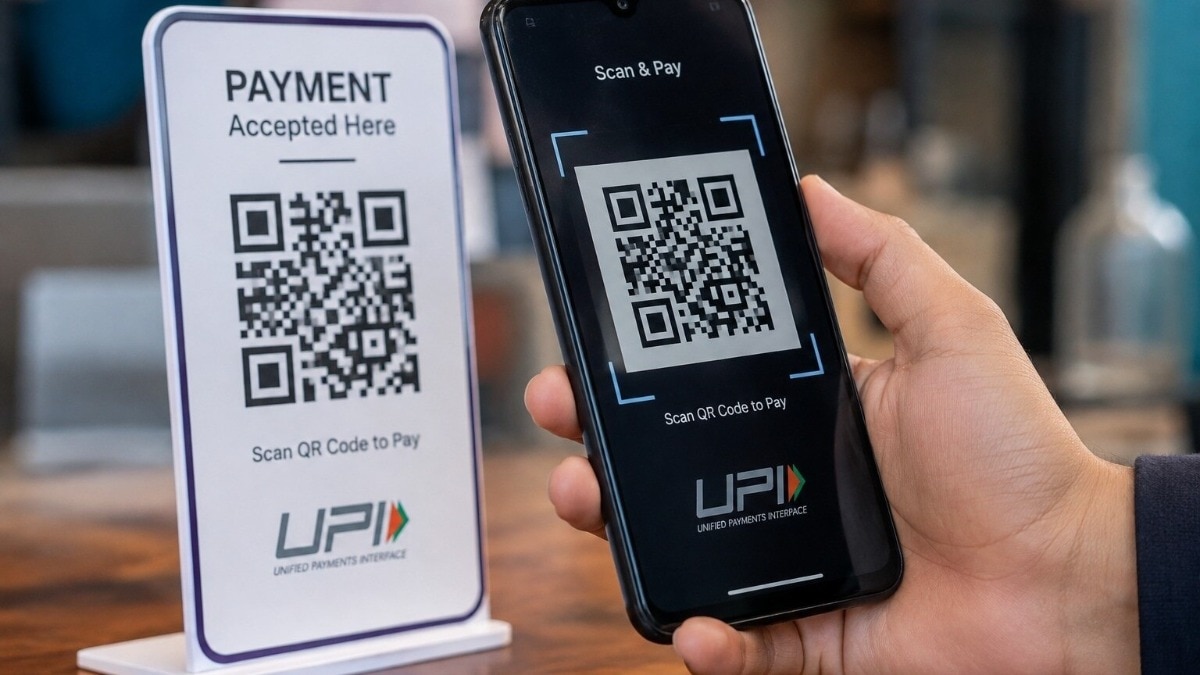
UPI is a way to pay people and businesses using a phone.
Under the new rules, sending money to another person will remain free, even for large amounts.
Paying a business more than ₹2,000 may create a fee for the business.
The usual fee will be 0.4% of the payment.
For payments of ₹75,000 or more, the fee cannot exceed ₹300.
Some important services, such as railways, fuel and telecom, will have a flat ₹5 fee.
Small merchants receiving up to ₹1 lakh per month through UPI QR codes will continue to have no MDR.
The government says UPI apps cannot add platform fees or hidden charges to users.
However, some people worry that businesses could try to recover the fee from customers.
The money collected is intended to support UPI infrastructure, cybersecurity, innovation and small-business adoption.

A 0.4% Merchant Discount Rate will apply to selected person-to-merchant UPI payments above ₹2,000 from October 15, 2026.
The MDR will be capped at ₹300 for merchant transactions of ₹75,000 or more, while person-to-person transfers remain free.
Essential sectors will face a flat ₹5 MDR, and capital-market payments will attract 0.02%, capped at ₹300.
Small merchants receiving up to ₹1 lakh monthly through UPI QR codes will retain zero-MDR protection.
The government says consumers will not be charged directly, but merchants and consumer groups have raised concerns about possible cost pass-through.
- Who
- The Indian government, the National Payments Corporation of India, banks, payment providers, merchants and UPI users.
- What
- A revised framework introduces MDR on selected high-value person-to-merchant UPI payments while keeping person-to-person payments free.
- Where
- Across India’s UPI digital-payments ecosystem.
- When
- The government issued its notification on September 14, NPCI issued its circular on September 15, and the framework takes effect on October 15, 2026.
- Why
- The government and NPCI say the framework will create funding for UPI infrastructure, cybersecurity, fraud prevention, innovation and wider merchant adoption.
Government and payments-industry rationale
Consumer and merchant concerns
Need for MDR
Government and payments-industry rationale
The government, NPCI and the Standing Committee on Finance say UPI’s rapid growth has increased the cost of infrastructure, cybersecurity, fraud prevention and customer support, making a sustainable revenue model necessary.
Consumer and merchant concerns
Critics and some industry observers question whether merchants or consumers will ultimately bear the cost, particularly because UPI has operated under zero MDR since January 2020.
Effect on consumers
Government and payments-industry rationale
The government says consumers will not be charged, UPI app providers cannot impose platform or hidden fees, and banks have been advised to prevent merchants from passing MDR costs to customers.
Consumer and merchant concerns
Merchants sometimes pass card-processing fees to customers, and a LocalCircles poll cited in one article found that many respondents would reduce their UPI use if such charges were passed on.
Scale of impact
Government and payments-industry rationale
The government estimates that only about 4% of merchant transactions will be affected because most payments are below ₹2,000 or qualify for small-merchant exemptions.
Consumer and merchant concerns
Although payments above ₹2,000 account for about 4% of P2M transactions by volume, the articles say they represent roughly two-thirds of P2M payment value, so their financial importance is much larger.
Rate and policy status
Government and payments-industry rationale
The final framework sets the standard MDR at 0.4%, with special rates and caps intended to limit costs and support the ecosystem.
Consumer and merchant concerns
Earlier reports described rates around 0.3% or 0.4% as proposals before the NPCI-led process was completed, illustrating uncertainty during the policy discussions.
Key facts
- Standard merchant MDR
- 0.4% on selected person-to-merchant UPI payments above ₹2,000.
- High-value cap
- MDR capped at ₹300 for merchant payments of ₹75,000 or more.
- Person-to-person payments
- Zero MDR regardless of transaction value.
- Essential sectors
- ₹5 flat MDR above ₹2,000 for sectors including railways, telecom, insurance, fuel and agricultural inputs.
- Capital-market payments
- 0.02% MDR, capped at ₹300, for mutual funds, securities, stockbrokers and dealers.
- Small merchants
- Zero MDR for P2PM merchants receiving up to ₹1 lakh monthly through UPI QR codes.
- Effective date
- October 15, 2026.
Quotes
Department of Financial Services notification
A government notification specifying electronic payment modes protected from charges
“No bank or system provider shall impose, whether directly or indirectly, any charge upon a person making or receiving a payment by using the electronic modes of payment specified in the paragraph above”
 financialexpress.com
“With exponential transaction volumes, the system requires significant and continuous upgrades in cybersecurity, fraud prevention, and infrastructure.”
 indianexpress.com
NPCI
The National Payments Corporation of India, UPI’s operating organization
“UPI remains the most affordable digital payment acceptance tool for commercial enterprises. This cost difference helps merchants lower their payment processing expenses while accepting digital transactions.”
 livemint.com
Sources

UPI fee: How will merchant payments above Rs 2,000 affect you?

UPI sets charges for merchant payments above ₹2,000, caps fee at ₹300
MDR on UPI: What is Merchant Discount Rate? Why is the government bringing it now?
UPI payments to remain free for P2P transactions; 0.4% MDR applicable only on merchant payments above ₹2,000: Govt
UPI rule change: 0.4% MDR on merchant payments above ₹2,000; consumers unaffected

MDR on UPI payments above Rs 2,000 likely in days
Related news
UPI Merchant Payments Above ₹2,000 Face New MDR

New UPI MDR Rules Keep Users Free, Target Merchant Payments

India Introduces New UPI Merchant Fee Above ₹2,000
Panel to Decide UPI MDR Charges Above ₹2,000 Soon
UPI MDR Above ₹2,000 May Begin Within Two Weeks

UPI Charges Debate Grows as MDR Framework Opens Higher Payments

UPI Merchant Charges Trigger Opposition and Fintech Expert Backlash

UPI Charges Draw Criticism Over India’s Industrial Policy Approach

UPI MDR Revision Brings 0.02% Charge to Capital Markets

Congress Calls New UPI Merchant Charges ‘Modi Tax’
