1 hr ago
Trump Plans Rare Airport Welcome for Xi Amid Rising Tensions
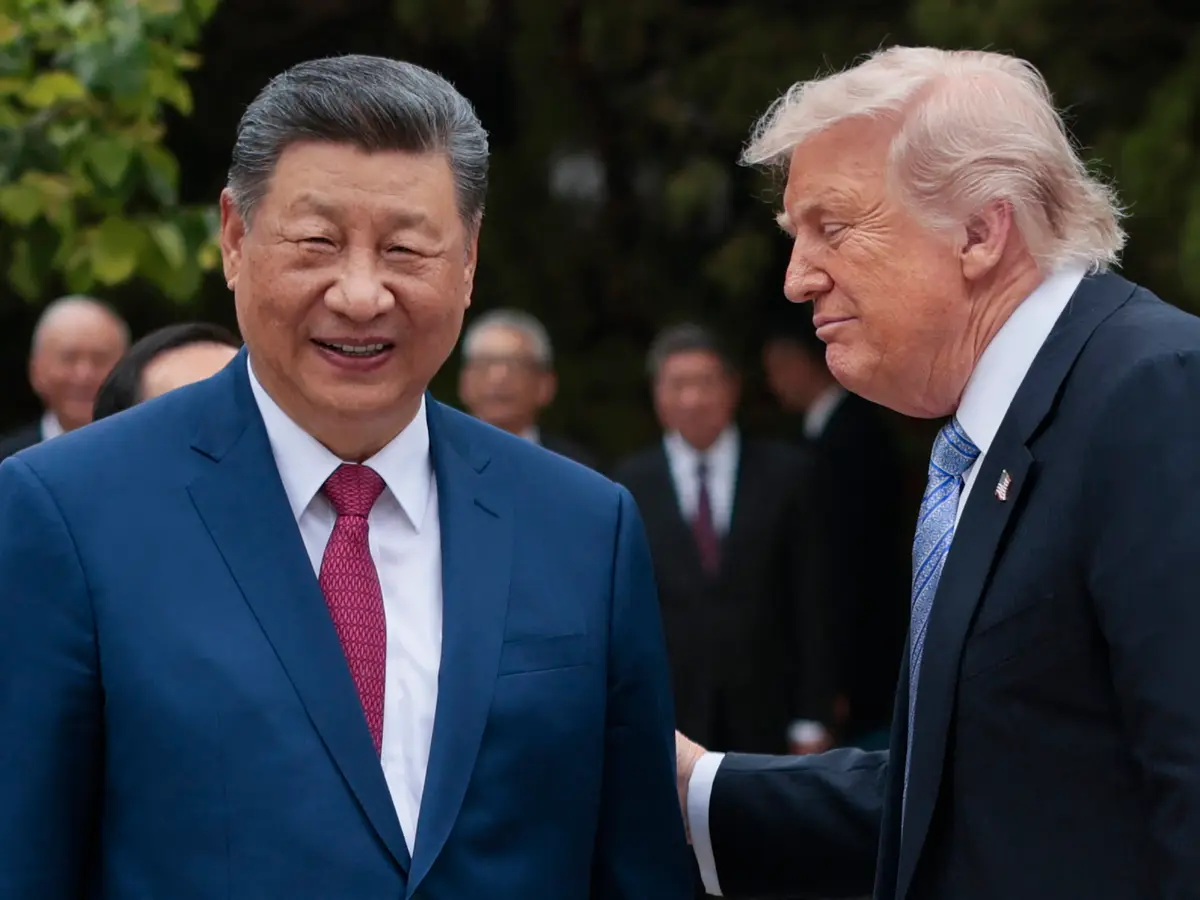
Donald Trump plans to personally welcome Chinese President Xi Jinping when Xi visits Washington.
Xi is expected to arrive next Wednesday at about 4 p.m.
Trump will attend a formal welcome ceremony at a military airbase.
Greeting a visiting leader at the airport is unusual for a US president.
The visit is happening while the United States and China disagree about trade and several international issues.
They also disagree about Taiwan and the South China Sea.
A new US sanctions law could allow tariffs on countries that buy Russian oil and gas.
China says such pressure should not interfere with normal trade.
China has also said it will support Iran’s legitimate rights during its dispute with the United States.

Donald Trump is expected to personally greet Xi Jinping at a Washington military airbase next Wednesday.
Xi is expected to arrive at about 4 p.m. local time for a state visit.
The visit follows disputes over trade, Taiwan, the South China Sea and the war in West Asia.
Tensions have increased after the US Congress passed a sanctions bill allowing tariffs of up to 100 percent on some Russian energy buyers.
China criticized sanctions without international-law or United Nations Security Council authorization and expressed support for Iran’s rights.
- Who
- US President Donald Trump and Chinese President Xi Jinping are the principal leaders involved; China, Iran and the United States are also central to the related disputes.
- What
- Trump is expected to personally greet Xi at the airport during Xi’s state visit to Washington.
- Where
- Washington, at a US military airbase; Trump’s earlier visit took place in Beijing.
- When
- Xi is expected to arrive next Wednesday at around 4 p.m. local time; the article also says Trump visited Beijing from May 13 to 15, 2026.
- Why
- The visit is intended to maintain high-level engagement despite disputes over trade, Taiwan, the South China Sea, sanctions and regional conflicts.
United States Position
Chinese Position
Sanctions and tariffs
United States Position
The US legislation gives Trump discretionary authority to impose tariffs of up to 100 percent on imports from the top five buyers of Russian crude oil and natural gas.
Chinese Position
China says normal trade should not face interference or coercion by third parties and opposes sanctions without an international-law basis or United Nations Security Council authorization.
Relations despite disagreements
United States Position
The United States continues high-level engagement with China while maintaining differences over trade, Taiwan, the South China Sea and regional conflicts.
Chinese Position
China continues engaging with the United States but rejects what it describes as coercive measures and has also expressed support for Iran in its dispute with Washington.
Key facts
- Expected arrival
- Next Wednesday at around 4 p.m. local time
- Welcome ceremony
- A US military airbase in Washington
- Planned gesture
- Trump is expected to personally greet Xi at the airport
- Main bilateral disputes
- Trade, Taiwan and the South China Sea
- Sanctions bill
- The 2026 Lindsey O. Graham Sanctioning Russia and Iran Act
- Potential tariffs
- Up to 100 percent on imports from some major buyers of Russian crude oil and natural gas
- China’s position
- China opposes sanctions lacking international-law grounds or United Nations Security Council authorization
- Iran position
- China said it was willing to safeguard Iran’s legitimate rights and interests
Quotes

Guo Jiakun
Chinese Foreign Ministry spokesperson
“China consistently opposes long-arm jurisdiction that lacks a basis in international law and is not authorised by the United Nations Security Council.”
 wionews.com
Sources
Related news

Trump Says Xi Will Visit United States Within Two Weeks
Trump Says He Will Host Xi Jinping at September Summit

Trump Announces Expected Xi Visit, White House Complex Plans

Trump to Host Xi Jinping State Dinner Amid Tensions

Xi to Visit India for Brics Summit After Seven Years
Trump and Xi Prepare for High-Stakes September 24 Summit

China Warns U.S. Orbital Weapons Could Fuel Arms Race
United States Admits Deploying Weapons in Space, Sparking Legal Debate

China and US Clash Over AI Risks, Control, and Security
U.S. Orbital Weapons Acknowledgment Marks Landmark Space Militarization Moment