

Business · Companies · 1 day ago
Ex Ilva halts production as court orders and raw-material shortages bite
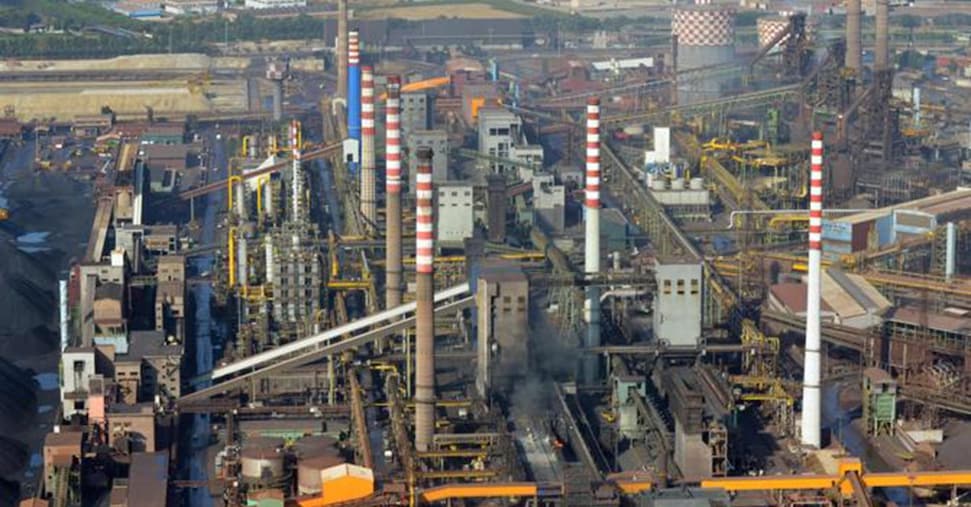
Acciaierie d’Italia, the company formerly known as Ilva, is gradually stopping production at its Taranto steelworks in southern Italy.
It says court orders and a lack of raw materials have made continued production impossible.
A Milan court ordered the hot-production area to close within 90 days, with requirements to reduce fine-particle emissions and remove asbestos from parts of the blast furnaces.
The company says it could not meet those requirements within the time allowed.
It has already stopped the ore-preparation plant and steelworks 2, and placed blast furnace 2 in a heated standby state.
Two requests to keep operating were rejected by the Milan Court of Appeal.
Italy’s Court of Cassation is due to hear appeals on 20 October, while plants in Liguria that rely on supplies from Taranto are expected to stop by mid-November.

Acciaierie d’Italia has halted production at parts of its Taranto steelworks, citing court orders and a lack of raw materials.
The company said the stoppages followed judicial constraints and the need to meet deadlines set by the Milan Court of Appeal.
The court had ordered the hot area to shut within 90 days and required measures to reduce fine-particle emissions and remove asbestos from blast-furnace cowpers.
The company said those requirements could not be completed within the time allowed.
It said its appeals to keep operating were rejected, with a Supreme Court hearing scheduled for 20 October.
- Who
- Acciaierie d’Italia, the company formerly known as Ilva and under extraordinary administration.
- What
- It has stopped the agglomeration plant and steelworks 2 in Taranto, and put blast furnace 2 into preheating.
- When
- The stoppages were reported on 10 October 2026. The company said Ligurian plants would also stop by mid-November.
- Where
- Taranto, with the stoppages expected to affect plants in Liguria as well.
- Why
- The company cited judicial constraints, court-imposed deadlines and a shortage of raw materials.
Acciaierie d’Italia
Milan Court of Appeal
Feasibility of requirements
Acciaierie d’Italia
The company said the requirements could not be met within the time allowed.
Milan Court of Appeal
The court ordered measures to reduce PM10 and PM2.5 emissions and remove asbestos from blast-furnace cowpers.
Continued operation
Acciaierie d’Italia
The company sought to keep the furnaces heated while awaiting a Supreme Court ruling.
Milan Court of Appeal
The court rejected that request on 5 October.
the prescriptions imposed were not achievable within the time allowed
the company worked to ensure production continuity for as long as possible, operating within the 90-day limit indicated by the Court of Appeal
in the absence of further room for intervention, the Extraordinary Administration had to take a painful but inevitable decision
The Milan court issued a decree that set judicial constraints on the plant.
The Milan Court of Appeal rejected the company’s first appeal.
The court rejected a second request to keep the furnaces heated until the Supreme Court ruling.
Acciaierie d’Italia reported that it had stopped parts of the Taranto plant.
A Supreme Court hearing was scheduled on appeals against the shutdown decree.
The company said Ligurian plants supplied from Taranto would also stop.
- Taranto stoppages
- Agglomeration plant and steelworks 2 stopped; blast furnace 2 put into preheating
- Court deadline
- Hot area ordered to shut within 90 days
- Court requirements
- Reduce PM10 and PM2.5 emissions and remove asbestos from blast-furnace cowpers
- Appeals
- Rejected on 11 September and 5 October
- Supreme Court hearing
- Scheduled for 20 October
- Ligurian plants
- Expected to stop by mid-November
Sources
Related news

Study examines whether buying back university years can bring earlier retirement

Tata Motors raises Iveco offer to €14.40 per share

Thieves steal 30,000 bottles worth €5 million from Antinori winery
Italy’s industrial production fell 1.3% in August

Eni cuts recommended diesel price to €2.19 per litre

Stellantis unveils six concept cars in Paris as it plans new models through 2030

MPS calls emergency board meeting after Intesa bid changes

Monte dei Paschi to discuss M&A at Monday board meeting

Poste launches a new savings bond for minors with a 5% gross annual rate

Villa Franciacorta targets Asian and Mexican markets after heat-hit harvest

Chef Matias Perdomo says Milan needs housing for restaurant staff
