

Science & Tech · Space · 19 hrs ago
Turkey outlines plans for independent space capabilities
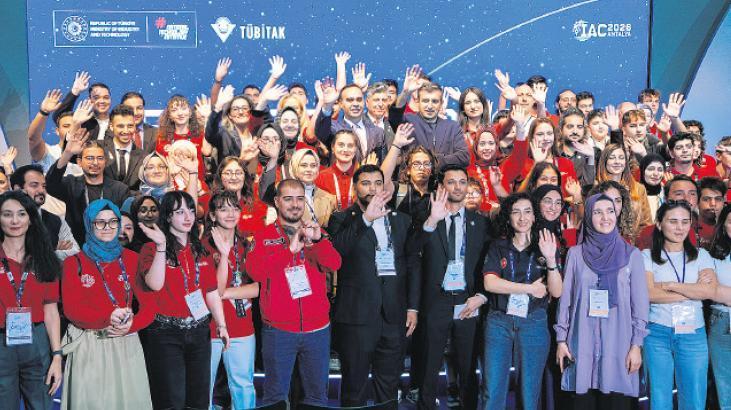
Turkish officials discussed the country’s space plans at the 77th International Astronautical Congress in Antalya.
Selçuk Bayraktar, who leads Baykar and the T3 Foundation, said countries should focus on emerging technologies rather than competing only in established fields.
He said Baykar’s export income helps fund Fergani, a venture developing a satellite navigation system called Uluğ Bey.
Bayraktar said Fergani aims to send its sixth satellite into space in two weeks.
Industry and Technology Minister Mehmet Fatih Kacır said Turkey plans to carry out a lunar mission in the first months of 2027.
He also said the ŞİMŞEK-1 rocket is expected to place the HÜRSAT satellite into orbit by the end of 2027.
Turkey says building its own rockets and launch facilities is central to gaining independent access to space.

Turkey says it aims to develop the ability to reach space independently, including its own launch vehicles and a spaceport.
Industry and Technology Minister Mehmet Fatih Kacır said the ŞİMŞEK-1 rocket is planned to place the 400-kilogram HÜRSAT satellite into orbit in 2027.
Kacır said Turkey plans to carry out its Moon mission in the first months of 2027.
Selçuk Bayraktar said Fergani aims to build an independent global positioning system and planned to send its sixth satellite into space in two weeks.
Kacır said Turkey has 20 space research and development centres and more than 300 companies active in technoparks.
- Who
- Turkey’s government and Baykar executive Selçuk Bayraktar.
- What
- They outlined plans for independent space capabilities, including launch vehicles, satellites and a spaceport.
- When
- The plans were discussed at the 77th International Astronautical Congress in 2026. Some milestones are planned for 2027.
- Where
- Antalya, Turkey, at the NEST Congress Center.
- Why
- Kacır described independent access to space as one of Turkey’s most important strategic goals. Bayraktar said the aim was full independence and sovereignty in space.
This story does not have two clearly opposing sides.
Full independent access to space is among Turkey’s most important strategic goals.
The strategy to follow is not to focus on today’s race, but on races that have not yet begun.
ŞİMŞEK-1 will place the 400-kilogram HÜRSAT satellite at 550 kilometres at the end of 2027.
We established the Uluğ Bey global positioning system entirely with our own resources.
The 77th International Astronautical Congress was held at the NEST Congress Center in Antalya.
Bayraktar said Fergani aimed to send its sixth satellite into space.
Kacır said Turkey planned to carry out its Moon mission.
Kacır said ŞİMŞEK-1 was planned to place the HÜRSAT satellite in orbit.
- Congress
- 77th International Astronautical Congress, Antalya
- ŞİMŞEK-1
- Planned to place a 400-kilogram HÜRSAT satellite at 550 kilometres
- Moon mission
- Planned for the first months of 2027
- Fergani
- Sixth satellite targeted for launch in two weeks
- Space sector
- 20 research and development centres and more than 300 companies in technoparks
Sources
Related news

Margaret Hamilton, whose software helped Apollo astronauts reach the Moon, dies at 90
SpaceX plans to expand Starlink into a major US mobile carrier
NASA releases nearly 800 GB of Artemis II lunar data

Astronomers trace record-distant radio burst to a young galaxy

Victoria Jaggard Takes on Space Editor Role at The New York Times
Camera captures aurora over parts of the Netherlands

New Images Reveal Gas Knots and a Possible Survivor in Supernova Remnant

French astronaut Sophie Adenot says space brought a full range of emotions
China’s Guowang network connects Arctic and Antarctic in video call
SpaceX Buys Spectrum to Expand Starlink Into U.S. Mobile Service
Webb links the most distant known fast radio burst to a small galaxy