Science & Tech · Space · 1 day ago
Astronomers trace record-distant radio burst to a young galaxy

Astronomers traced a brief flash of radio waves, called a fast radio burst, to a small, young galaxy.
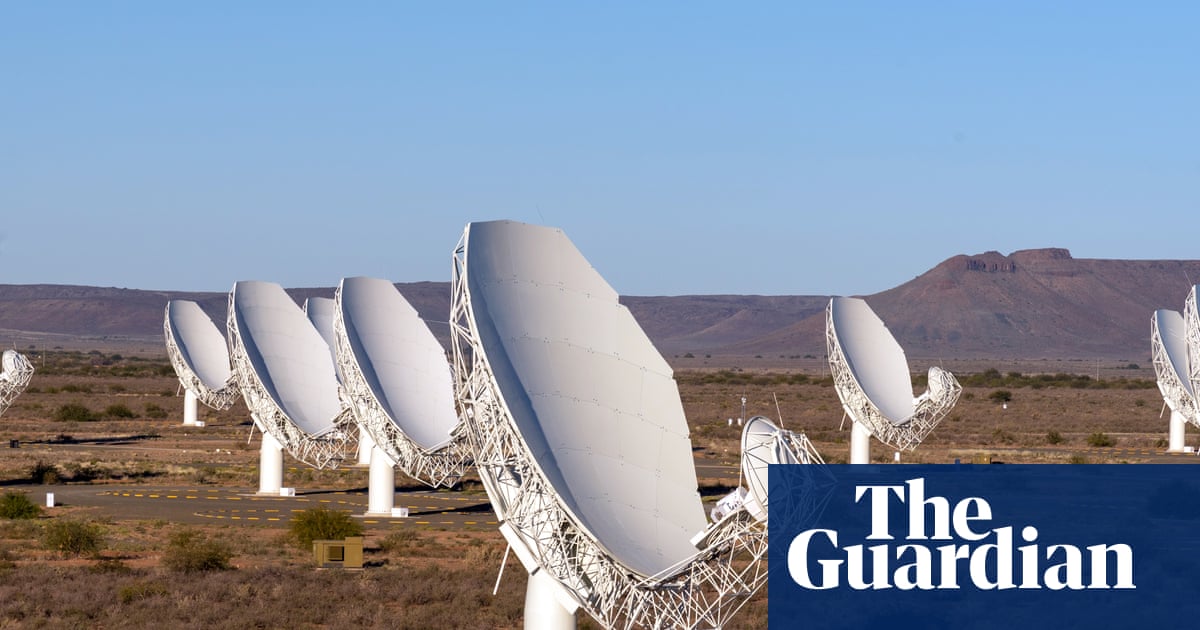
The burst was detected by the MeerKAT radio telescope in South Africa and its likely host galaxy was identified with NASA’s James Webb Space Telescope.
The signal traveled for more than 10 billion years, from a time when the universe was about 3 billion years old.
It is believed to be the most distant fast radio burst detected so far, though the identification of its host galaxy is not certain.
Scientists do not yet know what causes these bursts, but one leading explanation is magnetars, the highly magnetic remains of exploded stars.
The galaxy’s young age supports that idea over a competing explanation involving neutron stars that take billions of years to merge.
Further distant bursts could help scientists measure unseen matter in the universe; whether this burst will happen again is not yet known.

Astronomers traced a fast radio burst, named FRB 20240304B, to a galaxy whose signal traveled for more than 10 billion years before reaching Earth.
The burst was detected by the MeerKAT radio telescope in South Africa on March 4, 2024.
The James Webb Space Telescope identified a faint, small galaxy at the burst’s position, with a redshift of 2.148.
The burst occurred when the Universe was about 3 billion years old, making it the most distant fast radio burst yet reported.
The galaxy’s young stars and low metal content support the possibility that magnetars caused the burst, but astronomers say the source of fast radio bursts remains uncertain.
The research team estimates a 97.5% chance that it identified the correct host galaxy.
- Who
- Astronomers led by Manisha Caleb and Themiya Nanayakkara at the University of Sydney.
- What
- Detection and tracing of the most distant fast radio burst reported to date, FRB 20240304B.
- When
- Detected on March 4, 2024; the signal was reported in October 2026.
- Where
- The burst was detected by MeerKAT in South Africa and traced to a distant galaxy using the James Webb Space Telescope.
- Why
- To investigate the origins of fast radio bursts and use them to study matter in the distant Universe.
This story does not have two clearly opposing sides.
What surprised us was just how small and low-mass it turned out to be
there was no Earth, there was no sun
a validation of how powerful the FRBs are for probing the universe
You can use them essentially as a line-of-sight count for how much matter they had to go through [to get to Earth].
MeerKAT detected the radio burst, and real-time data recording helped researchers determine its position in the sky.
The research team used the James Webb Space Telescope to identify a faint galaxy at the burst’s position.
News reports described the burst as the most distant fast radio burst detected and discussed what its young host galaxy might reveal about its origin.
- Burst name
- FRB 20240304B
- Detection date
- March 4, 2024
- Host galaxy redshift
- 2.148
- Age of the Universe when the burst occurred
- About 3 billion years
- Estimated chance of correct host-galaxy identification
- 97.5%
- Host galaxy stellar mass
- About 10 million times the mass of the Sun
Sources

Related news

Victoria Jaggard Takes on Space Editor Role at The New York Times

Margaret Hamilton, whose software helped Apollo astronauts reach the Moon, dies at 90
SpaceX plans to expand Starlink into a major US mobile carrier
NASA releases nearly 800 GB of Artemis II lunar data

India-France TRISHNA satellite expected to launch within 12 to 16 months
Camera captures aurora over parts of the Netherlands

NASA posts more than 800GB of Artemis II science data online
Black hole jets may switch on at the same feeding threshold

New Images Reveal Gas Knots and a Possible Survivor in Supernova Remnant
Apollo 7 launches as the first crewed Apollo mission

French astronaut Sophie Adenot says space brought a full range of emotions