Science & Tech · Space · 2 days ago
Webb links the most distant known fast radio burst to a small galaxy
A fast radio burst is a brief, powerful flash of radio waves from space.
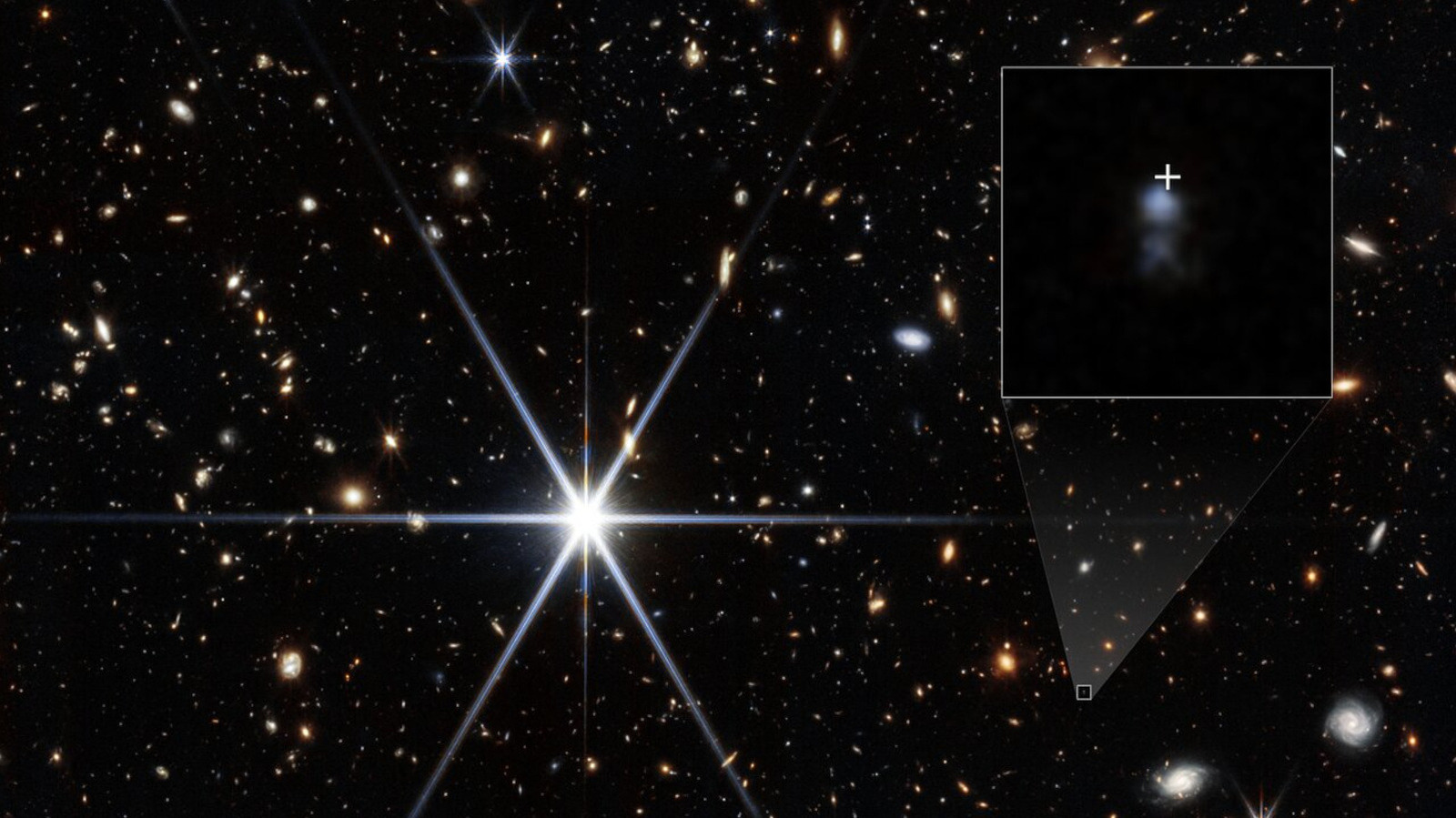
In 2024, the MeerKAT telescope array detected a burst called FRB 20240304B and located it in the sky.
The James Webb Space Telescope later found a small galaxy in that location.
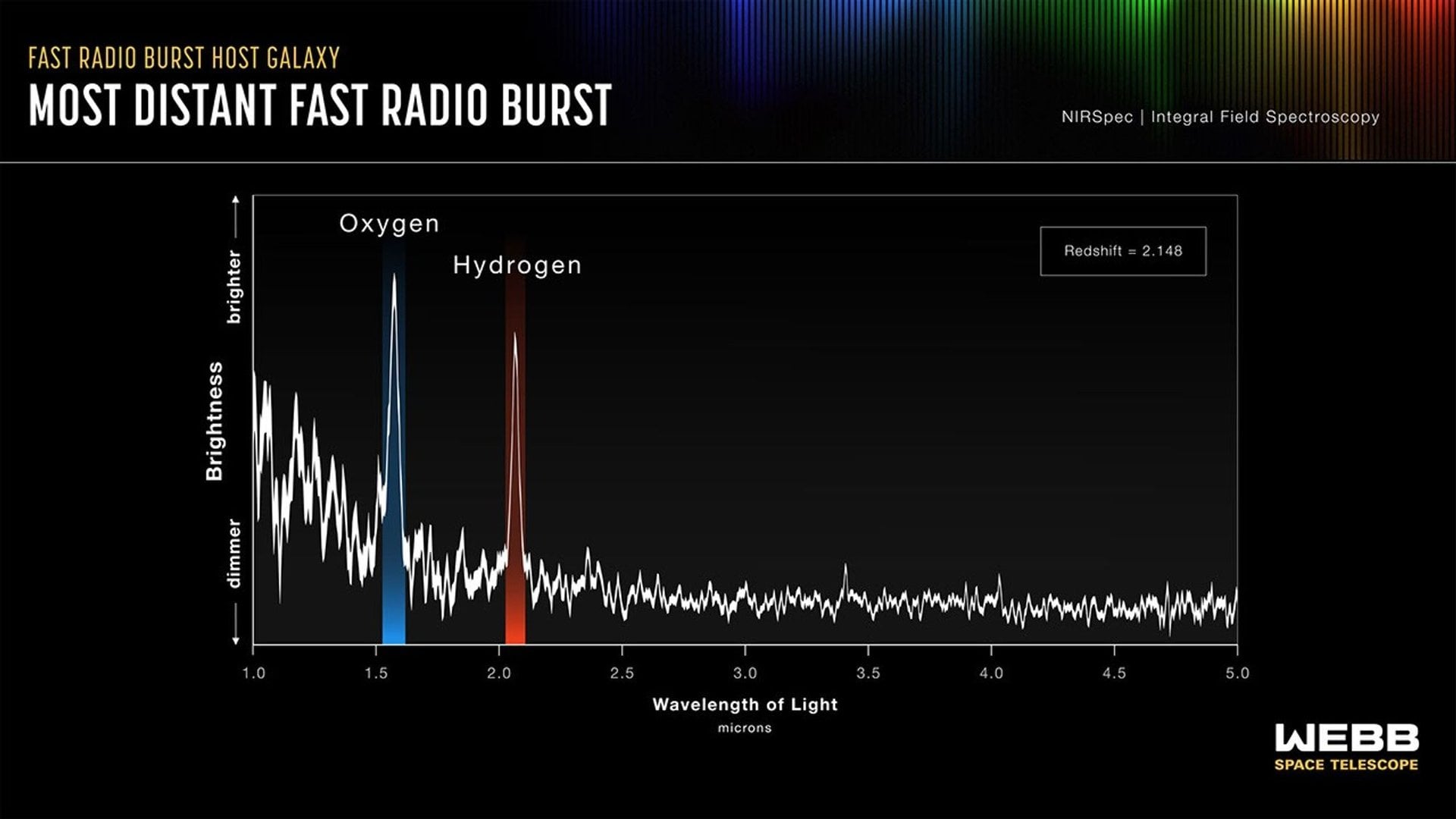
Its light shows the galaxy as it was about 3 billion years after the Big Bang, making this the most distant known burst.
The galaxy’s small size and young stars make a neutron-star merger a less likely explanation, because such mergers can take billions of years to happen.
Astronomers say the burst was more likely linked to a supernova that left behind a magnetar, a neutron star with a very powerful magnetic field.
More observations could help test this idea, and telescopes may find bursts from even earlier in the universe.

MeerKAT detected the fast radio burst FRB 20240304B in 2024 and precisely located it, but initial optical observations did not reveal an object at that position.
Astronomers later used the James Webb Space Telescope to detect a faint galaxy at the burst’s location.
Measurements of the galaxy’s light indicate that it existed about 3 billion years after the Big Bang, making the burst the most distant observed to date, according to the articles.
The galaxy is described as small and young; one account says most of its stars formed within about 30 million years, while the other says it is 1,000 times smaller than expected.
The galaxy’s properties make a neutron-star merger seem unlikely for this burst and support the possibility that it came from a supernova that left behind a magnetar.
- Who
- Astronomers, including study lead author Manisha Caleb.
- What
- The James Webb Space Telescope detected the galaxy associated with fast radio burst FRB 20240304B.
- When
- The burst was detected in 2024; Webb observations were reported on October 9, 2026.
- Where
- In a small, distant galaxy; the galaxy’s name and precise location are not stated.
- Why
- The galaxy’s age and size provide clues about the burst’s origin and support a magnetar-related explanation.
This story does not have two clearly opposing sides.
Our work suggests that it's very unlikely that this [fast radio burst] was produced by a merger,
The MeerKAT radio telescope array detected FRB 20240304B and pinpointed its location.
Reports described Webb observations that identified a galaxy at the burst’s location and offered clues to its origin.
- Burst designation
- FRB 20240304B
- Initial detecting instrument
- MeerKAT radio telescope array
- Follow-up instrument
- James Webb Space Telescope
- Estimated cosmic epoch
- About 3 billion years after the Big Bang
- Galaxy size comparison
- Engadget reports that the galaxy is 1,000 times smaller than expected.
Sources
Related news

Margaret Hamilton, whose software helped Apollo astronauts reach the Moon, dies at 90
SpaceX plans to expand Starlink into a major US mobile carrier
NASA releases nearly 800 GB of Artemis II lunar data

Astronomers trace record-distant radio burst to a young galaxy

Victoria Jaggard Takes on Space Editor Role at The New York Times
Camera captures aurora over parts of the Netherlands

New Images Reveal Gas Knots and a Possible Survivor in Supernova Remnant

French astronaut Sophie Adenot says space brought a full range of emotions

China’s Guowang network connects Arctic and Antarctic in video call
NASA’s Crew-12 Returns to Earth After 237 Days on the Space Station

Four astronauts return to Earth after eight months on the space station