Science & Tech · Space · 2 days ago
Inactive Soviet weather satellite breaks apart in low Earth orbit
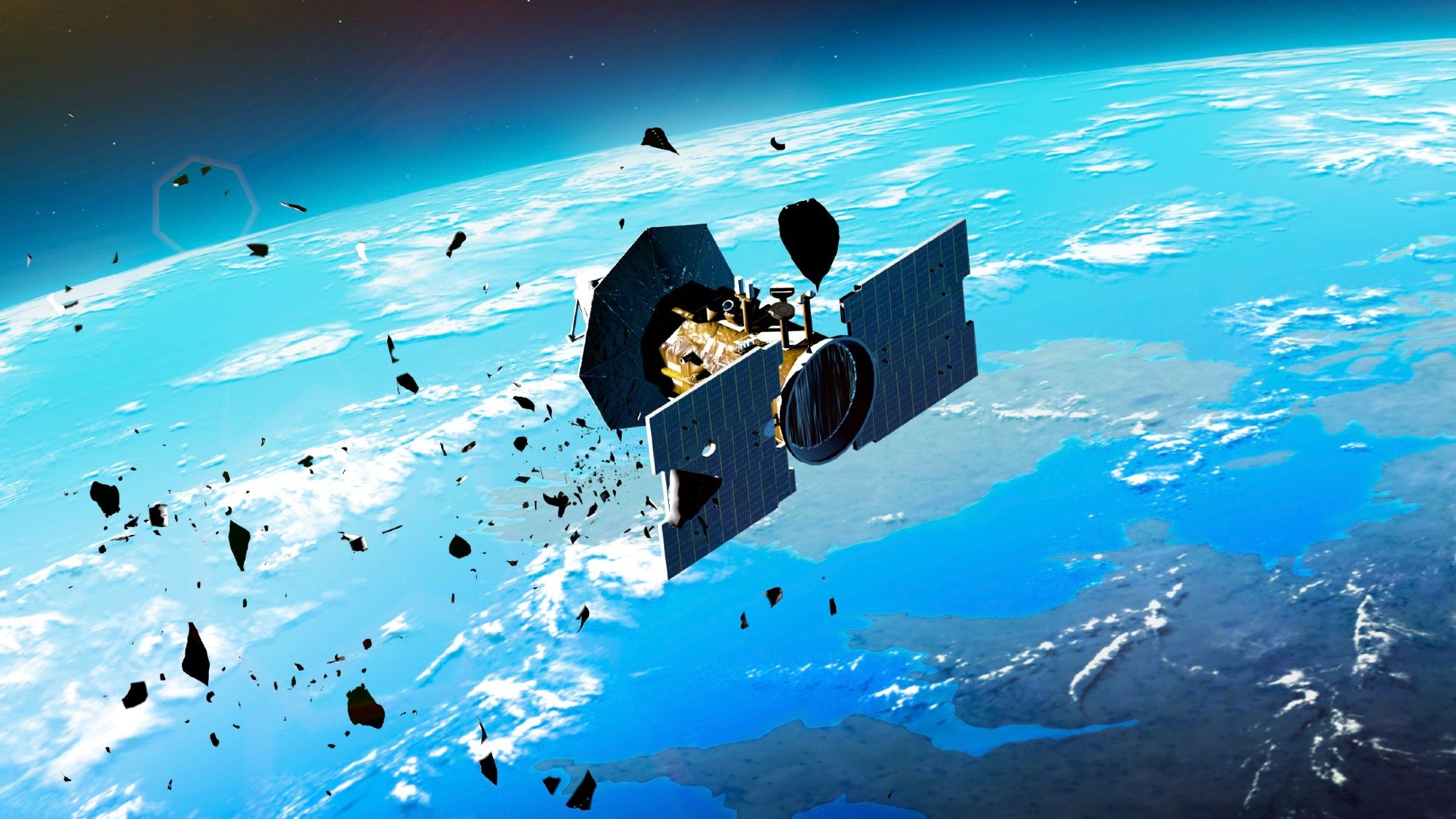
LeoLabs detected that the inactive Soviet weather satellite Meteor 2-7 broke apart in low Earth orbit on October 5, 2026.
The satellite was launched in 1981 and had been inactive for decades.
Radar observations found tens of fragments near the satellite as it passed over Western Australia.
Experts have not determined whether an internal failure or a collision caused the breakup.
The fragments are at an altitude of about 530 miles, where debris can remain in orbit for decades or even centuries.
Fast-moving debris can damage spacecraft, and more breakup events add to the risk.
LeoLabs says this is part of a series of debris-generating events detected over the past six months, but the cause of this breakup may never be known.

The inactive Soviet-era weather satellite Meteor 2-7 broke apart in low Earth orbit on October 5, 2026.
LeoLabs detected an estimated tens of fragments near the satellite as it passed over a radar site in Western Australia.
The satellite was launched in 1981 and had been inactive for decades.
Experts said the breakup adds to a series of recent debris-generating events that raise concerns about risks to spacecraft.
The cause is unknown; experts have suggested an internal failure or a collision with another object.
- Who
- The satellite was Meteor 2-7, a Soviet-era weather satellite. LeoLabs detected the breakup.
- What
- The inactive satellite broke apart, producing an estimated tens of fragments.
- When
- October 5, 2026.
- Where
- Low Earth orbit, as the satellite passed over a LeoLabs radar site in Western Australia.
- Why
- The cause is unknown. Possible explanations include an internal failure or explosion, or a collision with another object.
This story does not have two clearly opposing sides.
Together, they point to a worrying trend for space safety and security, and underscore the critical need for persistent sensing.
Meteor 2-7’s altitude of 855 km is in a dense region for orbital debris. Might we have experienced an impact from one of the numerous untracked debris objects?
I think we're heading towards a situation where there will be a collision involving an operational satellite in the constellation,
The Soviet Union launched Meteor 2-7 as part of its weather-satellite series.
Jim Shell said Meteor 2-7 had previously broken apart.
LeoLabs detected multiple objects near Meteor 2-7 after it passed over a radar site in Western Australia.
- Satellite
- Meteor 2-7
- Launch
- May 1981
- Breakup date
- October 5, 2026
- Estimated fragments
- Tens
- Altitude
- About 530 miles (855 kilometers)
Sources

Related news

Margaret Hamilton, whose software helped Apollo astronauts reach the Moon, dies at 90
SpaceX plans to expand Starlink into a major US mobile carrier
NASA releases nearly 800 GB of Artemis II lunar data

Astronomers trace record-distant radio burst to a young galaxy

Victoria Jaggard Takes on Space Editor Role at The New York Times

Camera captures aurora over parts of the Netherlands

New Images Reveal Gas Knots and a Possible Survivor in Supernova Remnant

French astronaut Sophie Adenot says space brought a full range of emotions

India-France TRISHNA satellite expected to launch within 12 to 16 months

China’s Guowang network connects Arctic and Antarctic in video call

SpaceX Buys Spectrum to Expand Starlink Into U.S. Mobile Service