Business · Companies · 4 hrs ago
Bank Jakarta to provide up to Rp5.07 trillion for Transjakarta electric buses
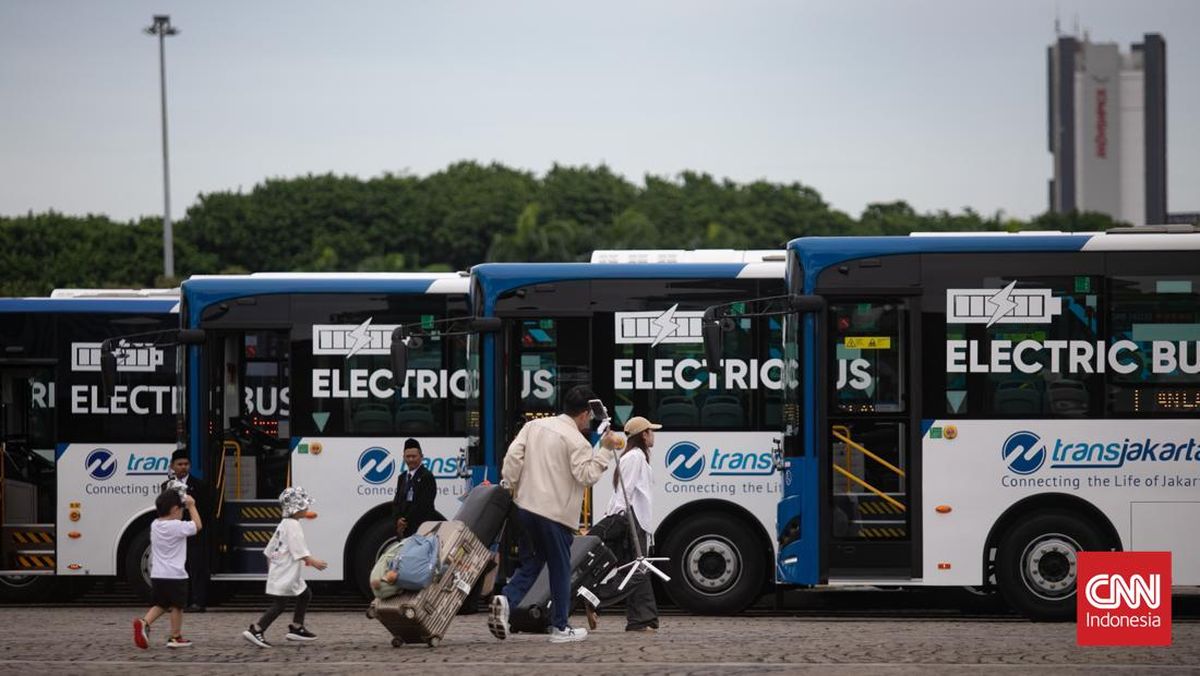
Transjakarta, Jakarta’s public bus operator, is set to receive financing support from Bank Jakarta for 3,782 electric buses.
The funding could reach Rp5.07 trillion, and the agreement has a three-year term.
The plan is part of Jakarta’s effort to shift public transport to electric vehicles and reduce emissions.
The agreement was signed in Jakarta on Monday, 12 October.
Bank Jakarta also agreed to support other projects, including a pedestrian deck near Dukuh Atas MRT station, but those are separate from the bus funding.
Jakarta’s governor said public agencies and companies need to turn their agreements into practical projects with clear targets.
The bus financing is intended to help expand the city’s electric fleet; the information provided does not specify when the buses will be delivered.

Bank Jakarta will provide financing of up to Rp5.07 trillion for Transjakarta’s electric bus program.
The program covers the electrification of 3,782 buses under a three-year memorandum of understanding.
The agreement was signed at Jakarta City Hall on October 12, 2026.
The financing is intended to speed up the development of electric buses and support emissions reductions in the capital.
- Who
- Bank Jakarta and PT Transportasi Jakarta (Transjakarta).
- What
- Bank Jakarta will provide potential financing of up to Rp5.07 trillion for Transjakarta’s electric bus program.
- When
- The memorandum of understanding was signed on October 12, 2026.
- Where
- Jakarta City Hall, in Jakarta.
- Why
- To speed up the development of electric buses and support emissions reductions in the capital.
This story does not have two clearly opposing sides.
This story does not have a timeline yet.
- Financing ceiling
- Rp5.07 trillion
- Electric bus fleet
- 3,782 buses
- Agreement term
- Three years
- Signing date
- October 12, 2026
- Signing venue
- Jakarta City Hall
What people are saying
Jakarta's development cannot be carried out separately; it requires synergy from the entire city ecosystem.
The measure of our success is not how many agreements are signed, but how much benefit Jakarta residents feel from this cooperation.
Regional-owned enterprises have a strategic role in supporting Jakarta's development. That role is not only focused on business performance, but also includes public service and driving the regional economy.
Sources
Related news
Pertamina Adjusts Fuel Supplies After Pertalite Queues in Bondowoso

Rupiah weakens to 17,920 per US dollar at Tuesday's open

Indonesia’s Jakarta Composite Index falls 0.85% in early trading

Village cooperative helps Pasuruan mango pickle seller double sales

Astra plans to buy more Astra Otoparts shares as PGEO completes five wells

PGUN Says It Was Not Involved in Share Pledges by Three Major Shareholders
A small group holds 95.58% of Mitratel shares, exchange says
Pertamina Links Long Fuel Queues in Jember to Delivery Schedule Changes
Pertalite runs out at three fuel stations in Bali's Klungkung
Indonesia Seeks Stronger Links Between Big Investors and Local Businesses
Indonesia’s Deputy Minister Says Inflation Is Driven Mainly by Supply Problems