

3 weeks ago
India Plans 10 GW Polysilicon Incentives to Cut China Dependence
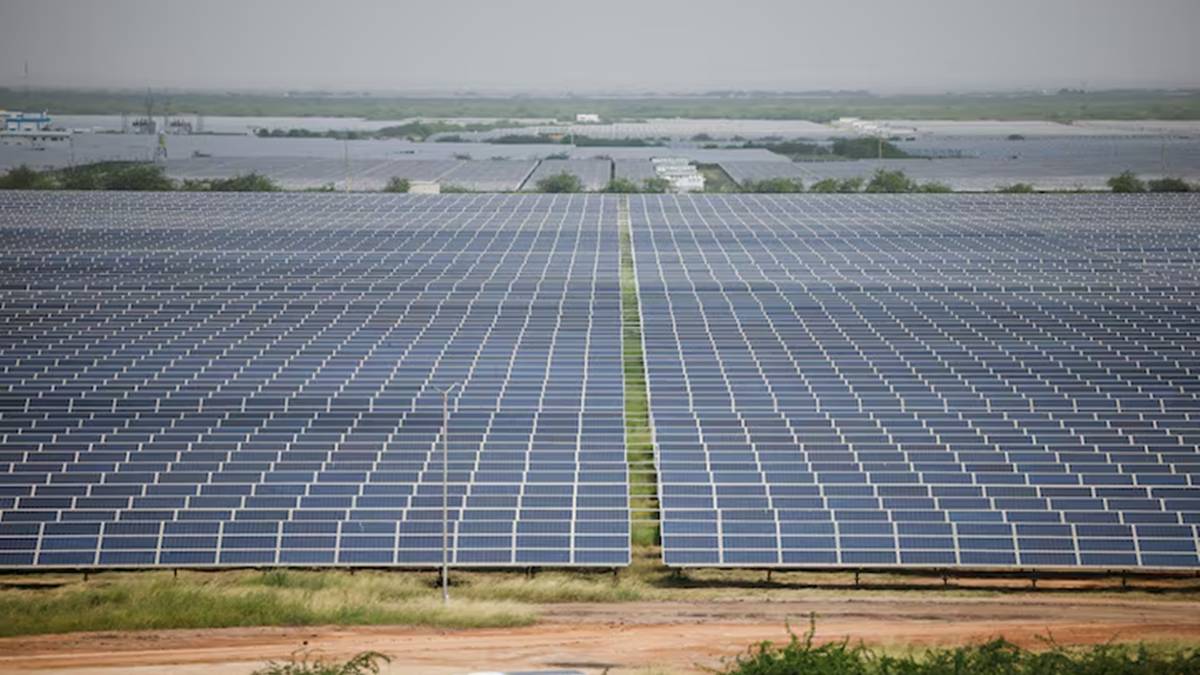
India makes a lot of solar panels, but the very first material needed to make them comes from China.
That material is called polysilicon, and it is like the special sand used to build the panels.
India's government has announced a plan to help companies build big new factories to make polysilicon at home.
This way, India would not have to depend so much on China.
A government leader named Santosh Kumar Sarangi told everyone about this plan at a big energy meeting in New Delhi.
India is already very good at making the finished parts of solar panels.
Now it wants to make the starting material too.
India is also working on making electricity available all day using a mix of solar, wind, and stored power.
The country has already crossed 300 gigawatts of clean energy and wants to reach 500 gigawatts by 2030.

India is preparing an incentive scheme to build more than 10 GW of domestic polysilicon manufacturing capacity.
The move aims to plug a critical upstream gap in the solar supply chain and reduce complete dependence on China for polysilicon.
Union New and Renewable Energy Secretary Santosh Kumar Sarangi announced the plan at the 7th CII International Energy Conference & Exhibition in New Delhi.
India currently has over 213 GW of solar module capacity and around 32 GW of solar cell manufacturing capacity, with 80 GW of ingot and wafer capacity expected by June 2028.
India crossed 300 GW of non-fossil fuel generation capacity by end-July and is targeting 500 GW by 2030.
- Who
- India's Ministry of New and Renewable Energy, led by Secretary Santosh Kumar Sarangi.
- What
- A planned incentive scheme to build more than 10 GW of domestic polysilicon manufacturing capacity.
- Where
- New Delhi, India.
- When
- Announced at the 7th CII International Energy Conference & Exhibition; India crossed 300 GW of non-fossil capacity by end-July.
- Why
- To reduce India's complete dependence on China for polysilicon, a key raw material in solar and semiconductor manufacturing.
Key facts
- Target polysilicon capacity
- More than 10 GW
- Existing solar module capacity
- Over 213 GW
- Existing solar cell capacity
- About 32 GW (100 GW expected within a year)
- Ingot and wafer capacity target
- At least 80 GW by June 2028
- Existing solar PLI programme
- ₹24,000 crore for high-efficiency solar modules
- Non-fossil generation capacity
- Over 300 GW as of end-July; 500 GW target by 2030
- RTC renewable tariff
- ₹5.25 per unit with 90% assured availability
- Wind manufacturing capacity
- 24 GW with around 85% indigenisation
Quotes
Santosh Kumar Sarangi
India’s Union new and renewable energy secretary
“We are coming up with a support scheme for manufacturing of polysilicon in the country, and we should be able to come up with something which will support our manufacturers to dive deeper into polysilicon manufacturing.”
 financialexpress.com
Sources
Related news

India Plans PLI Scheme for Polysilicon to Cut Solar Imports

India Plans New Scheme to Boost Domestic Polysilicon Manufacturing
India Plans ₹13,000 Crore Battery Component Incentive Push

India’s Solar Cell Imports Surge, Challenging Domestic Manufacturing

Indosol Solar to Launch India’s Only Operational Ingot Plant
India on Track for Record 50 GW Solar Capacity
India’s Non-Fossil Capacity Crosses 300 GW as Centre Pushes Transition

Karnataka Accelerates Rooftop Solar Projects for Government Buildings
Economy Quiz Covers Solar Projects, Forex Deposits And PPPs
Rajasthan Targets 125 GW Renewable Capacity by 2030
PM Surya Ghar May Tie Support to Solar Performance
