3 hrs ago
UPI MDR Costs May Reach Consumers Through Higher Prices

A new fee applies to some larger payments made through UPI at shops.
Shops can pay the fee themselves, which may reduce their profits.
Or they may raise prices to cover the extra cost.
If prices go up, people buying small things could also pay more.
That means small-purchase customers might help cover the costs of customers making larger purchases.
Banks are supposed to stop shops from adding the fee directly to a bill.
But the report says it may be hard to stop shops from covering the cost through higher prices.
The report’s authors say customers may ultimately bear the cost either way.

An IIT Bombay report says merchants may absorb the new UPI fee or indirectly pass it on through higher prices.
From October 15, a 0.4% fee applies to merchant UPI payments above ₹2,000, subject to specified caps.
The report warns that higher prices could affect customers making purchases below ₹2,000 as well as larger purchases.
That could mean small-ticket customers indirectly subsidize customers making larger purchases, the authors say.
Banks are expected to ensure merchants do not charge MDR directly to customers, but the report says indirect pass-through may be difficult to prevent.
- Who
- Merchants, UPI-using consumers, and the banks and payment providers sharing the MDR revenue.
- What
- An IIT Bombay report examines how merchants may respond to a fee on high-value merchant UPI payments and warns that higher prices could spread the cost to consumers.
- Where
- India.
- When
- The report was published October 11, 2026; the fee is stated to take effect October 15.
- Why
- The fee adds a cost to certain merchant UPI transactions, which merchants may absorb or pass on through selling prices.
Cost and consumer concerns
Fee rationale
Who ultimately pays
Cost and consumer concerns
The report’s authors say merchants may raise selling prices to preserve margins, leaving consumers to bear the MDR cost directly or indirectly.
Fee rationale
RBI Governor Sanjay Malhotra said UPI is not free and that its costs are being paid for, including through government subsidy.
Effects on small purchases
Cost and consumer concerns
The authors warn that if merchants raise prices broadly, customers making purchases below ₹2,000 may help subsidize larger-ticket customers.
Fee rationale
The article does not report a specific response from the RBI governor or other officials to this cross-subsidy concern.
Key facts
- Fee threshold
- Merchant UPI payments greater than ₹2,000
- Fee rate
- 0.4%
- Fee caps
- ₹300 or ₹5 for industry programmes
- Effective date
- October 15
- MDR revenue shares
- Issuer bank up to 40%; acquirer bank 30%; application provider 20%; payer payment service provider 10%
- Report
- “UPI at a Crossroads Reintroducing the MDR: Impact Analysis and the Way Forward”
- Report authors
- Ashish Das and Praggya Das
Quotes
Ashish Das and Praggya Das
Authors of the IIT Bombay technical report on UPI MDR.
“Maybe, initially, the charges would be absorbed by merchants. But an increase in input costs – such as electricity, fuel, or any other cost – is ultimately passed on by businesses to their selling prices, so as to preserve their margins. Thus, it may not be correct to assume that the customers will not bear the burden of MDR directly or indirectly just because the merchants’ banks have been advised to ensure that merchants do not pass MDR charges onto customers.”
 thehindubusinessline.com
“That ‘someone’ is the merchant who pays the MDR, but the ‘somewhere’ from where this MDR expenditure gets actually paid is the UPI using consumers who will have to take the burden of the P2M (Person to Merchant) UPI MDR.”
thehindubusinessline.com
Sources
Related news

UPI Merchant Fees May Not Raise Store Prices, NPCI Says
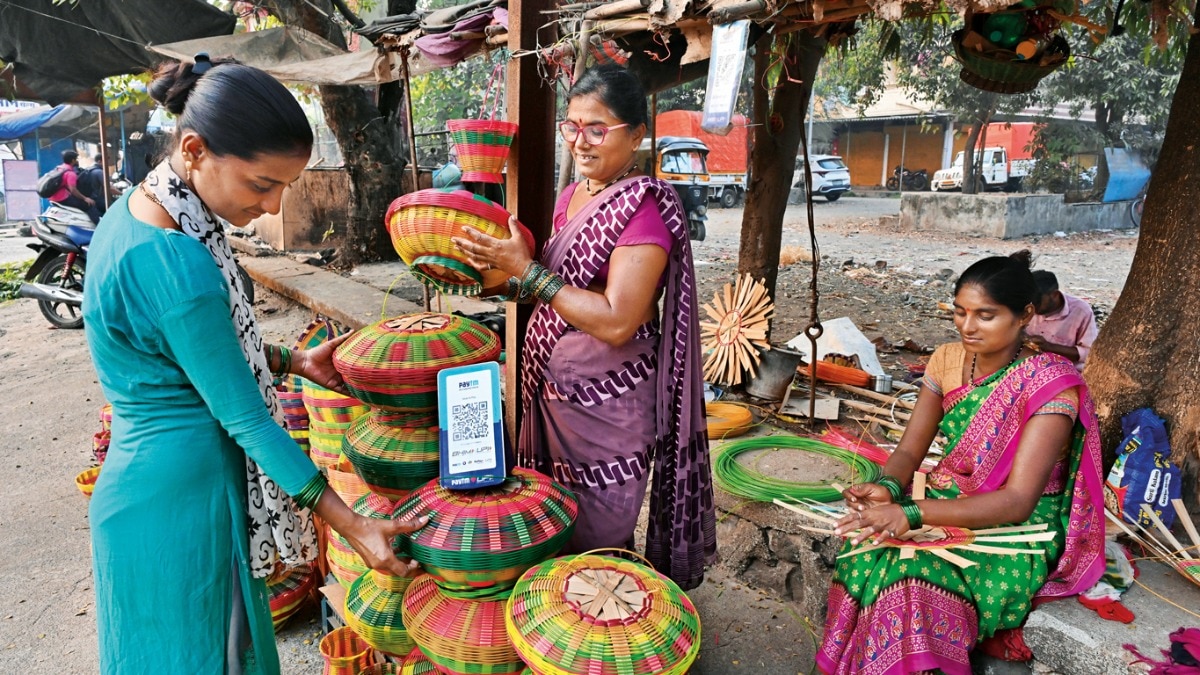
UPI MDR Charges Raise Sustainability Hopes and Merchant Concerns

UPI MDR Begins October 15, Merchants Face Charges, Customers Don’t

Punjab & Sind Bank Chief Says UPI Merchants Cannot Pass MDR

Government Defends UPI Merchant Fee, Says Consumers Won’t Pay

UPI Charges Push Delhi Retailers Toward Cash Payments
RBI Borrows China-Style Reserve to Defend Rupee

UPI Apps Won’t Charge Consumers as Merchant MDR Begins

India Forex Reserves Fall $13 Billion for Fourth Straight Week
RBI Schedules ₹25,000 Crore Bond Sale for October 13