

2 days ago
UPI MDR Charges Raise Sustainability Hopes and Merchant Concerns
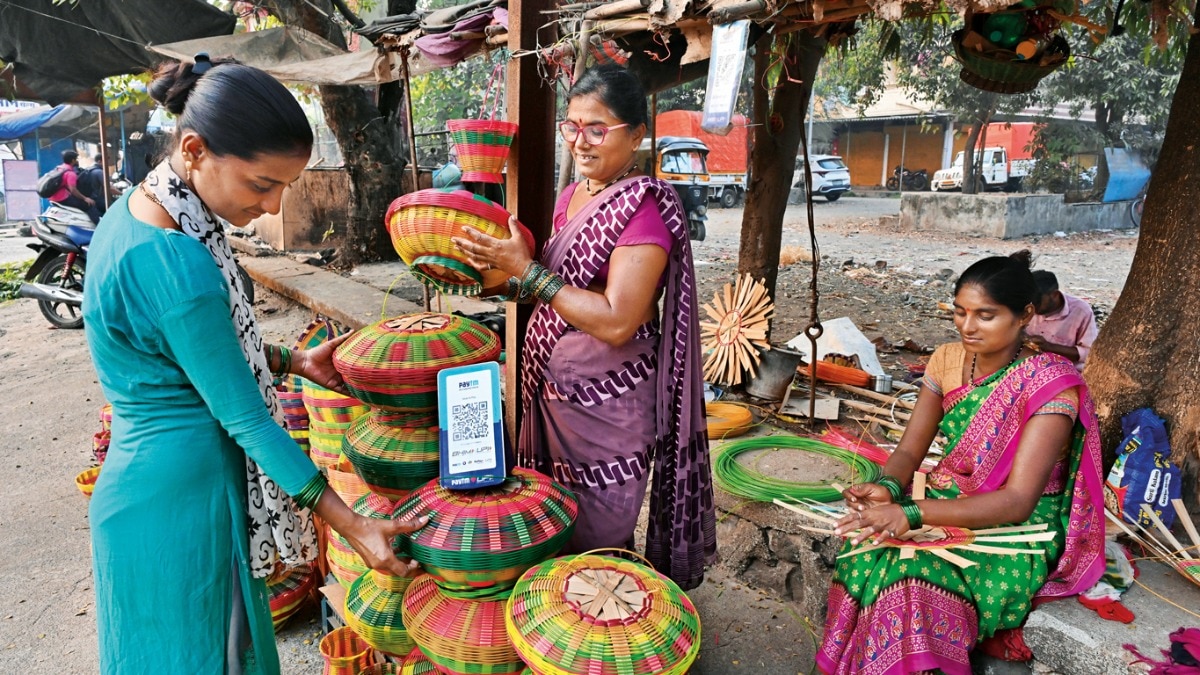
UPI is a way to pay businesses using a phone.
From 15 October 2026, some larger payments to businesses may have a fee called MDR.
Payments between people and eligible small payments are described as staying free.
Some small merchants also remain exempt under the P2PM rules.
Supporters say the fee can help pay for keeping the payment system safe and reliable.
Some shop owners worry that even a small fee could reduce their already thin profits.
A survey found that many people might choose cash or cards if a shop passed the fee on to them.
The finance ministry says merchants pay the MDR, but experts note that businesses could pass costs on indirectly.
The main question is whether the fee can support UPI without discouraging people and shops from using it.

A revised MDR is scheduled from 15 October 2026 on eligible person-to-merchant UPI payments above ₹2,000; person-to-person payments remain free.
The standard MDR is 0.4%, with a ₹300 cap on transactions of ₹75,000 or more; specified categories have a flat ₹5 charge, while securities-related transactions are listed at 0.02%, capped at ₹300.
The framework exempts eligible payments up to ₹2,000 and small merchants in the P2PM category; reports describe the small-merchant eligibility threshold as monthly UPI receipts up to ₹1 lakh.
In a LocalCircles survey, 14% said they would pay an added fee and continue using UPI; 76% expected to move larger payments away from UPI if it carried an extra cost.
Supporters say MDR could help fund security, reliability and innovation, while retailers and survey respondents warn of pressure on small merchants and possible shifts to cash or cards.
- Who
- Eligible merchants accepting UPI payments, payment ecosystem participants, and consumers potentially affected by merchant pricing.
- What
- A revised MDR framework introduces charges on eligible UPI payments to merchants above ₹2,000.
- Where
- India.
- When
- The framework is scheduled to take effect on 15 October 2026.
- Why
- The stated purpose is to support UPI operating costs and investment in infrastructure, resilience, cybersecurity, innovation and customer service.
Concerns About Merchant and Consumer Costs
Arguments for Funding UPI
Effect on small retailers
Concerns About Merchant and Consumer Costs
Retailers Association of India CEO Kumar Rajagopalan says retailers often operate on thin net margins and that the charge may affect smaller merchants; he also describes the ₹1 lakh monthly P2PM threshold as low.
Arguments for Funding UPI
Supporters say the design exempts eligible small payments and P2PM merchants, while larger commercial transactions contribute to system costs.
Consumer cost
Concerns About Merchant and Consumer Costs
The LocalCircles survey found 76% of respondents expected to move larger payments away from UPI if it carried an extra cost. Experts say merchants might pass costs on indirectly through prices or discounts.
Arguments for Funding UPI
The finance ministry says MDR is borne by merchants and consumers should not be charged a surcharge; proponents describe the rates as modest compared with some other payment methods.
Purpose and sustainability
Concerns About Merchant and Consumer Costs
Critics argue that the charge could discourage UPI use or encourage a shift back to cash, particularly among customers and thin-margin merchants.
Arguments for Funding UPI
Payment industry representatives and analysts say MDR can create revenue for payment providers and banks to invest in resilience, cybersecurity, customer service and further UPI expansion.
Key facts
- Start date
- 15 October 2026
- Standard MDR
- 0.4% on eligible P2M UPI transactions above ₹2,000
- Large transactions
- For transactions of ₹75,000 or more, the standard MDR is capped at ₹300 per transaction.
- Specified categories
- A flat ₹5 per transaction is stated for certain categories including railways, telecom, insurance, fuel and agricultural inputs; mutual funds, securities, stockbrokers and dealers are listed at 0.02%, capped at ₹300.
- Exemptions
- Person-to-person payments and eligible transactions of ₹2,000 or less remain free. Small merchants in the P2PM category receiving up to ₹1 lakh monthly through UPI QR codes are described as exempt.
- Consumer survey
- LocalCircles reported more than 67,000 responses across 291 districts; 14% would pay an added fee and continue using UPI for a transaction.
- Merchant survey
- A separate LocalCircles survey had more than 32,000 business responses across 242 districts; 41% said they would not bear any MDR and 17% would bear 0.4%.
- Stated revenue use
- The MDR is described as distributed among UPI ecosystem participants, not collected as a government tax.
Quotes
Ministry of Finance
Government ministry explaining the protection for small merchants.
“The introduction of MDR is expected to materially improve the monetisation potential of UPI and create a commercial incentive for participants across the ecosystem.”
 businesstoday.in
“This provision will protect street vendors, neighbourhood shops and other small businesses from additional payment costs.”
 livemint.com
Kumar Rajagopalan
CEO of the Retailers Association of India
“Retailers only make 18-19% margins. After all the expenses, if they are lucky, they make 2-3%. So, the 0.4% MDR is going to affect them.”
businesstoday.in
Sources


Related news
UPI Sets 0.4% MDR on High-Value Merchant Payments

UPI MDR Begins October 15, Merchants Face Charges, Customers Don’t
UPI MDR Begins October 15, Testing Merchant Payment Choices
UPI MDR Will Target Specified Merchant Payments Above ₹2,000

New UPI MDR Rules Keep Consumers Free, Charge Eligible Merchants
UPI MDR Raises Fears Small Shops Could Return to Cash
Payment Aggregators Seek Larger Share of New UPI MDR

GFF 2026 Concludes With Three Fintech Product Launches
Mindgate, J.P. Morgan Expand Next-Generation UPI Infrastructure Collaboration
