

1 hr ago
Pakistan’s ‘Always and Forever’ Mecca Pact Faces Limits

Pakistan and Saudi Arabia have agreements that sound very permanent and powerful.
However, one analyst says they are not the same as NATO’s mutual-defense system.
He believes the agreements are mostly meant to discourage attacks.
Pakistan has sent some soldiers and weapons to Riyadh.
But Pakistan has not taken part in fighting, or kinetic activities.
Another expert says this is understandable.
Saudi Arabia faces problems involving a failed state near its border and an important sea passage.
Other countries may not want to become involved in that conflict.

Analyst Michael Kugelman says the pacts should not be treated as NATO-like arrangements.
Kugelman argues the agreements are primarily intended to deter threats, not signal offensive capabilities.
Pakistan has recently sent troops and arms to Riyadh but has avoided kinetic activities.
RSDI’s Dr John Harrison calls Pakistan’s reluctance to fight predictable and understandable.
Saudi Arabia seeks help with a failed state on its borders and near a critical choke point, while others want to avoid being drawn into the conflict.
- Who
- Pakistan, Saudi Arabia, Michael Kugelman of the Atlantic Council, and RSDI’s Dr John Harrison.
- What
- Pakistan and Saudi Arabia’s security pacts are being assessed against Pakistan’s limited military involvement.
- Where
- Riyadh, Saudi Arabia, and the surrounding regional conflict zone.
- When
- Pakistan has sent troops and arms to Riyadh in recent weeks.
- Why
- The pacts appear aimed mainly at deterrence, while Pakistan seeks to avoid being drawn into fighting linked to a failed state and a critical choke point.
Skeptical Assessment
Strategic-Deterrence Assessment
Strength of the pacts
Skeptical Assessment
Michael Kugelman argues that the agreements should not be taken seriously as NATO-like mutual-defense arrangements.
Strategic-Deterrence Assessment
The pacts can still serve a strategic purpose by deterring threats, even without NATO-style combat commitments.
Pakistan’s limited involvement
Skeptical Assessment
Pakistan’s avoidance of kinetic activities suggests that the agreements do not guarantee direct military intervention.
Strategic-Deterrence Assessment
Dr John Harrison says the reluctance is predictable and understandable because the conflict involves a failed state and a critical choke point, creating risks for outside participants.
Key facts
- Agreement
- The article refers to Pakistan and Saudi Arabia’s “Always and Forever” Mecca Pact and other pacts.
- Military support
- Pakistan has sent some troops and arms to Riyadh.
- Combat involvement
- Pakistan has stayed clear of kinetic activities.
- Kugelman’s assessment
- The pacts should not be treated as NATO-like arrangements.
- Strategic purpose
- Kugelman says the pacts are more about deterrence than signaling offensive capabilities.
- Saudi concern
- Saudi Arabia wants help with a failed state on its borders and astride a critical choke point.
- Reluctance
- Dr John Harrison describes Pakistan’s reluctance to fight as predictable and understandable.
Quotes
Michael Kugelman
Atlantic Council analyst
“I don't think that either of these pacts could be taken seriously as a NATO-like arrangement.”
 timesnownews.com
“a lot more about deterrence than they are about signalling offensive capabilities.”
timesnownews.com
Sources
Related news

India Watches Cautiously as MECCA Pact Members Meet

Pakistan Rules Out Immediate Military Action After Houthi Attacks
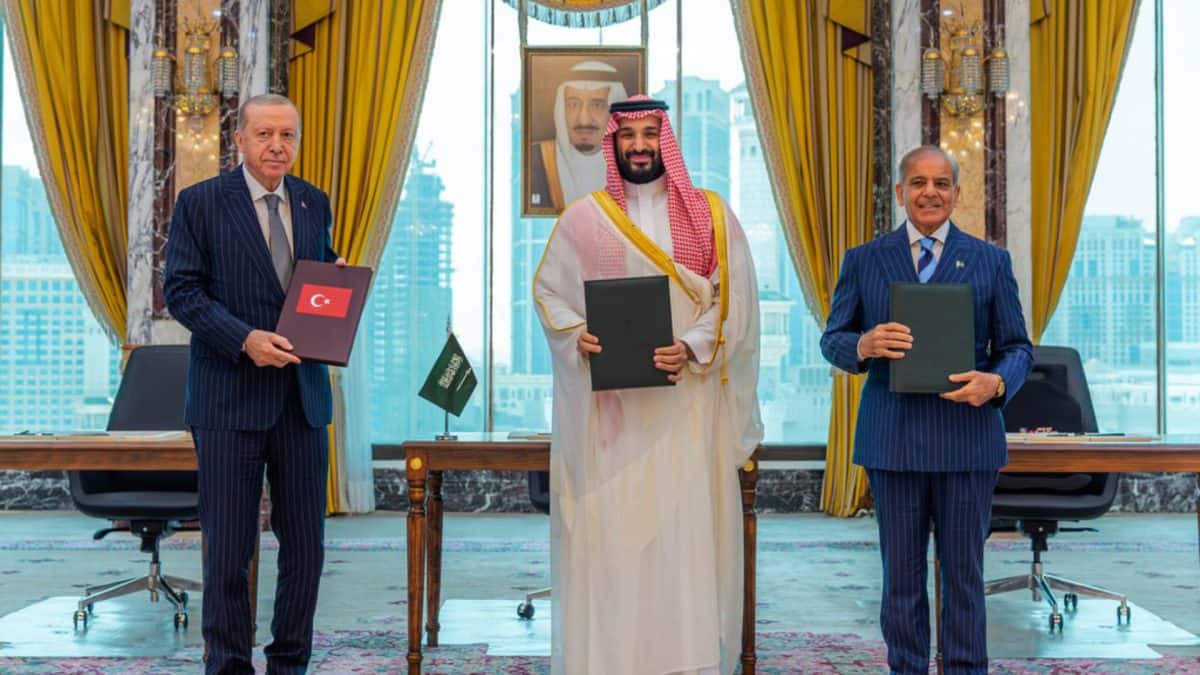
Mecca Pact Faces Questions Over Scope And Strategic Coherence
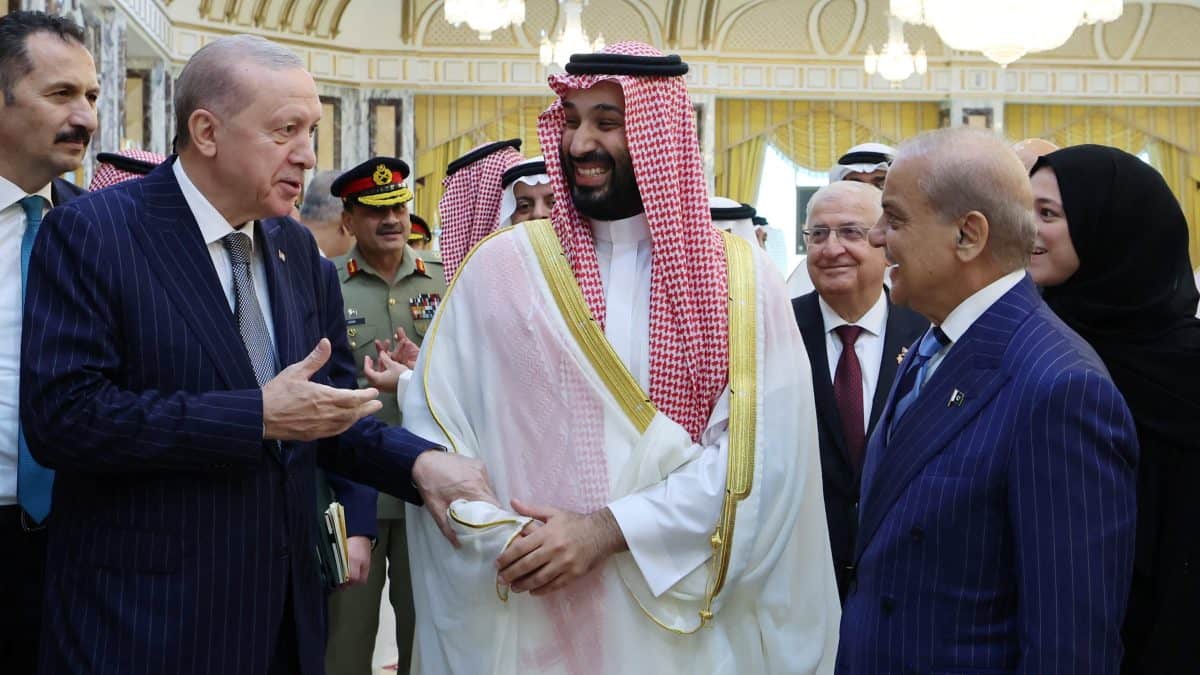
Mecca Pact Faces First Test After Houthi Strike

Pakistan Defers Military Action After Houthi Attacks on Saudi Arabia
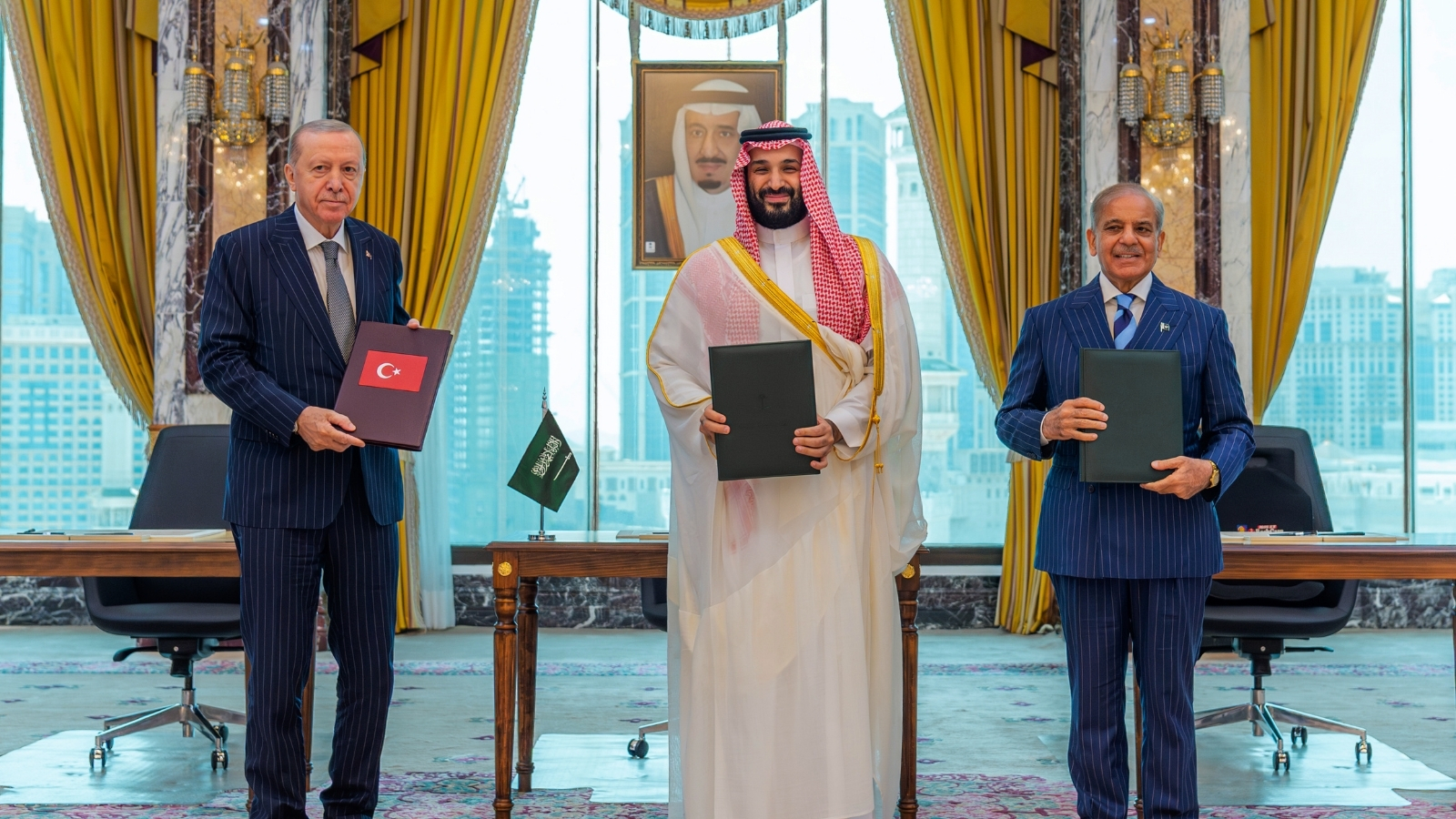
Mecca Pact Offers Pakistan No Blank Security Cheque

Russian Drone Incidents Test NATO's Baltic Defence Readiness
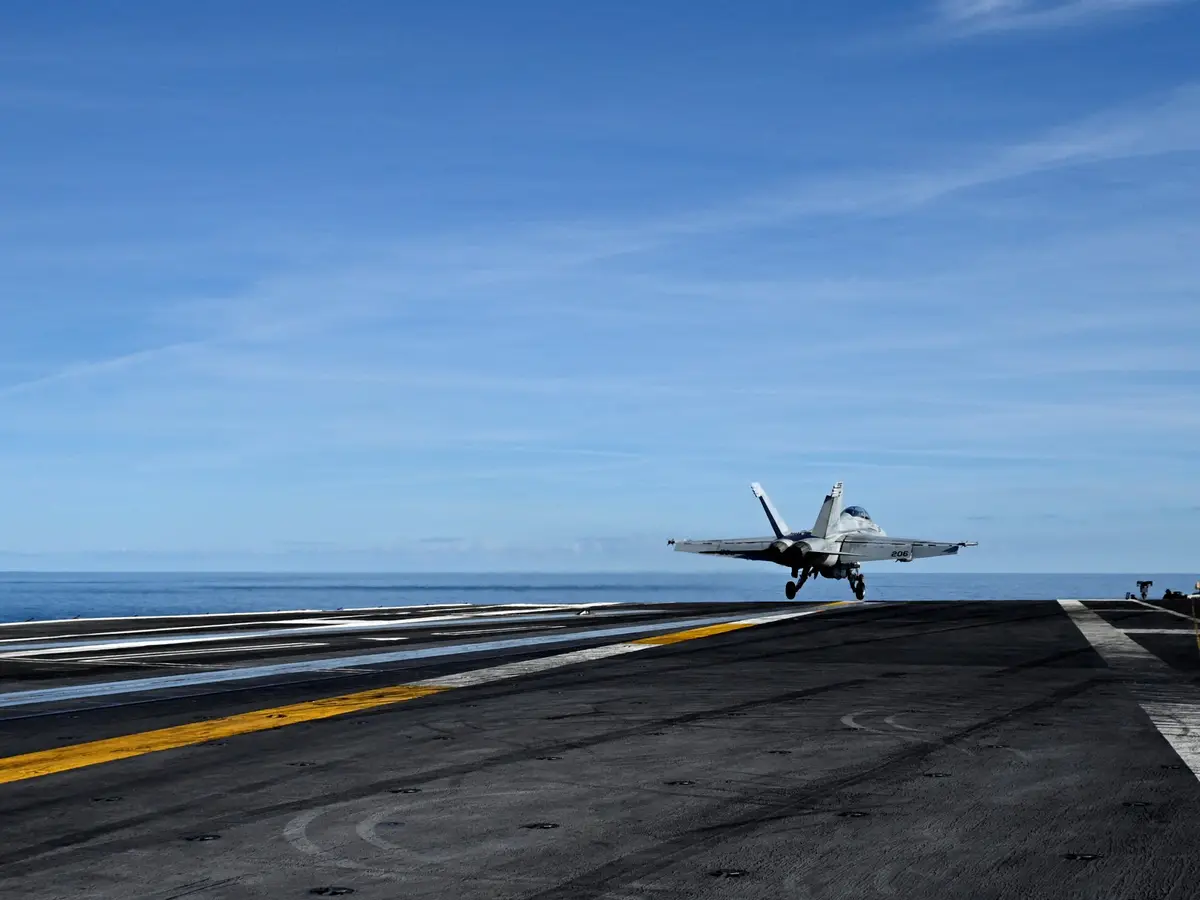
NATO Downs Drone in Lithuania as Russia Fires Flares

Tinder Romance Derails NATO Officer’s Career Amid Russian Spy Suspicions
Why US-China Power Is Challenging the Multipolar World
