

1 hr ago
Why US-China Power Is Challenging the Multipolar World
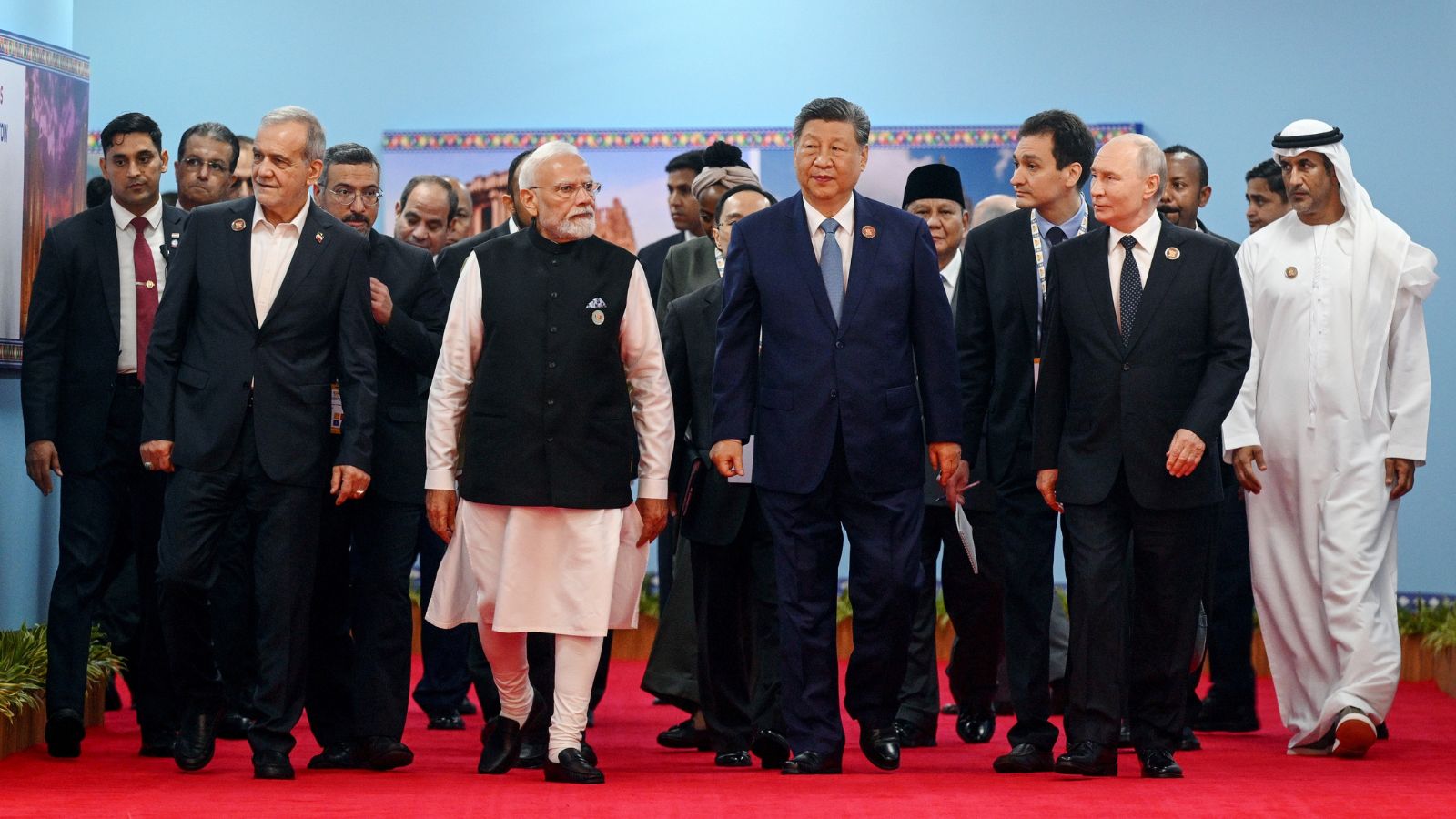
The article says the world may be becoming less multipolar, meaning less evenly shared among many powerful countries.
The United States and China are becoming the two strongest economic powers.
China has a very large share of the BRICS economy, while the United States dominates the G7 economy.
The two countries disagree about trade, technology, and Taiwan.
However, they still need each other’s markets, technology, money, and factories.
Russia is weaker economically but still has enough military and diplomatic power to affect the balance.
This could lead to a world shaped by two major powers, or perhaps three if Russia joins them in important diplomacy.
India prefers a world with many powerful countries, but the article says it must now focus on the growing rivalry among Washington, Beijing, and Moscow.

The article argues that global power is increasingly concentrated around the United States and China.
China now represents roughly three-fifths of BRICS’ combined GDP, while the United States accounts for nearly three-fifths of G7 nominal output.
Washington and Beijing remain economically interdependent despite disputes over trade, technology, and Taiwan.
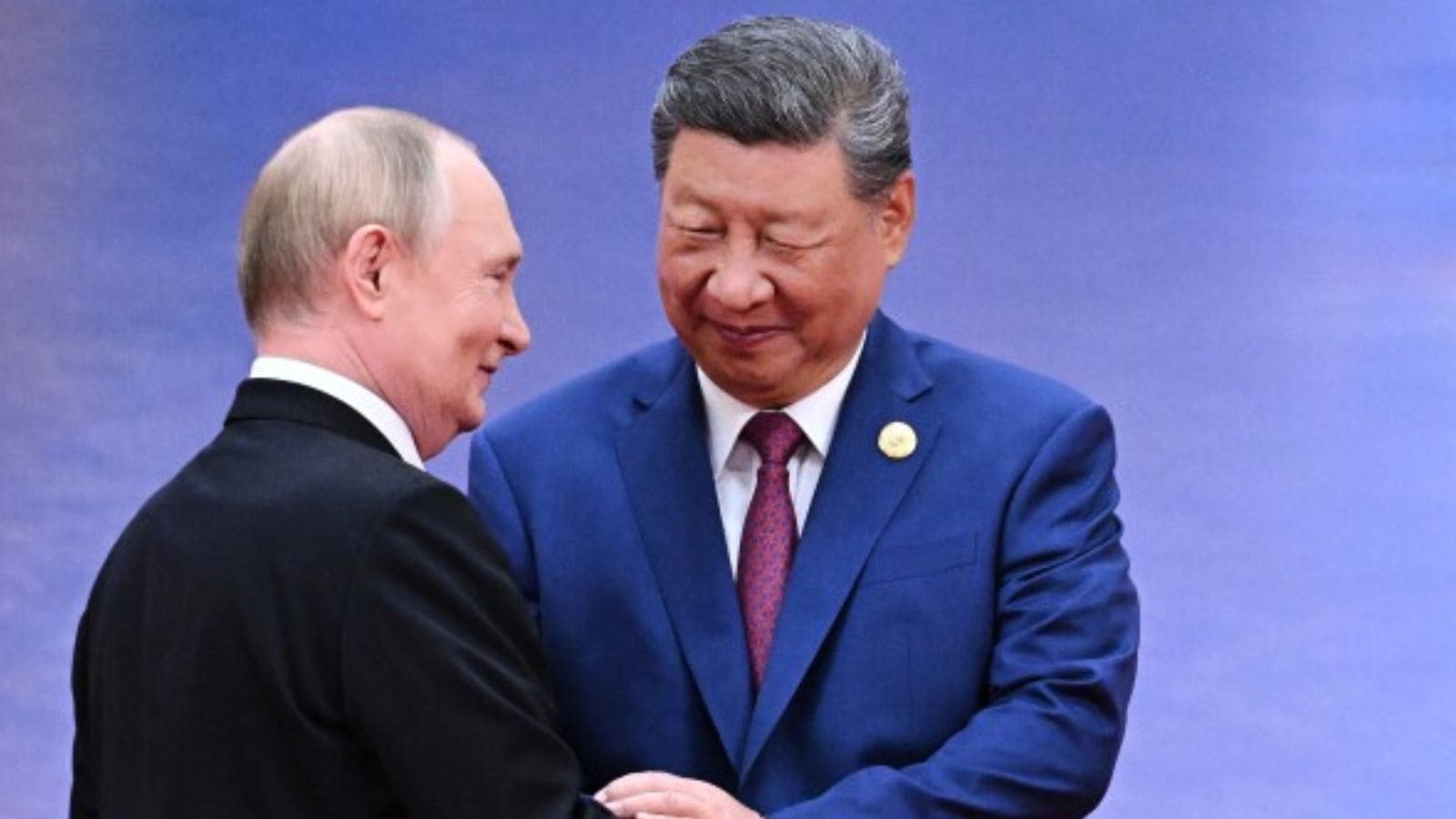
Russia’s military and diplomatic influence could create a possible G3 involving the United States, China, and Russia.
India’s preference for multipolarity faces an international order increasingly shaped by great-power rivalry.
- Who
- The United States, China, Russia, India, and other major powers discussed by C. Raja Mohan.
- What
- The article examines whether global politics is moving from multipolarity toward a US-China-dominated G2, potentially involving Russia as a third major power.
- Where
- The main diplomatic venues mentioned are New Delhi, Washington, Shenzhen, and Miami.
- When
- The shift is discussed in the context of this year’s BRICS, upcoming US-China meetings, a possible APEC meeting, and the G20 summit in December.
- Why
- Economic and geopolitical power is increasingly concentrated in the United States and China, while Russia retains strategic influence.
Multipolar Outlook
G2/G3 Power Concentration
Future world order
Multipolar Outlook
India and other non-Western powers would prefer an order in which influence is distributed among many countries and institutions.
G2/G3 Power Concentration
The article argues that the global economy is increasingly structured around the United States and China, with Russia potentially adding a third strategic pole.
Role of multilateral forums
Multipolar Outlook
Forums such as BRICS, the G20, APEC, the G7, the EU, and NATO provide venues for cooperation and important bilateral diplomacy.
G2/G3 Power Concentration
These organizations generally operate within limits set by great-power politics and have difficulty acting collectively when the United States and China disagree.
US-China engagement
Multipolar Outlook
Continued high-level contact could help manage rivalry and preserve cooperation through multilateral institutions.
G2/G3 Power Concentration
Bilateral deal-making between Washington and Beijing could marginalize other G20 members, even though the two powers are unlikely to form a stable condominium.
Key facts
- BRICS economic concentration
- China accounts for roughly three-fifths of the enlarged BRICS group’s combined GDP.
- G7 economic concentration
- The United States accounts for close to three-fifths of the G7’s nominal output.
- US-China relationship
- The two countries are economically interdependent while seeking to reduce their vulnerabilities to each other.
- Main disputes
- Trade, technology, and Taiwan remain major sources of disagreement between Washington and Beijing.
- Russia’s role
- Russia retains military power, geographical reach, and diplomatic weight despite being economically diminished.
- G20 disagreement
- The United States and China prevented a G20 finance ministers’ meeting from issuing a joint statement over language on trade surpluses and export-led growth.
- India’s position
- India prefers a multipolar world but must address intensifying rivalry among the United States, China, and Russia.
Sources
Related news
Potential Trump-Xi-Putin Summit Raises Questions About BRICS and India
BRICS Gains Influence in Emerging Multipolar World Order
India’s Rise Highlights BRICS Shift as Trump Policies Alienate Partners

Jeffrey Sachs Predicts India, China Will Lead Global Economy
Why Cooperation Between India and China Could Reshape BRICS
BRICS remains India's hedging tool amid possible G2, G3
Additional PMAY Houses Allocated to Andhra Pradesh, Telangana
Omar Abdullah Calls Pahalgam Mention BRICS Foreign Policy Success
Sanjay Nishad Defends Pandey Meeting, Presses Alliance Demands
India, South Korea Seek Stronger Parliamentary and Cultural Ties

Sitharaman Urges Gen Z, Gen Alpha to Put Nation First
