5 hrs ago
India's UPI Fee Proposal Draws Concerns Amid US Pressure

India is considering changing the rules for digital payments such as UPI and RuPay.
The proposal would not immediately add a fee.
Instead, it would give the government more power to decide which payments stay free.
The Global Trade Research Institute worries that future fees could be introduced without changing the law again.
It says UPI should remain free for ordinary users and small businesses.
The United States says India's payment rules may give local systems an unfair advantage over American companies.
GTRI says India should not change UPI simply to help foreign card companies.
It suggests other ways to pay for UPI's cybersecurity, servers and other operating costs.
UPI processed 23.6 billion transactions worth ₹29.9 trillion in July 2026.

Finance Minister Nirmala Sitharaman proposed changing the law governing UPI and RuPay pricing.
The proposal would let the government decide which electronic payment transactions must remain free.
GTRI warned the change could enable future fees without another vote in Parliament.
The think tank said PhonePe and Google Pay process more than 80% of UPI transactions.
The debate follows US criticism that India's payment policies disadvantage Visa and Mastercard.
- Who
- India's government, the Global Trade Research Institute, US trade officials, and payment companies including PhonePe, Google Pay, Visa and Mastercard.
- What
- India proposed amending Section 10A of the Payment and Settlement Systems Act, 2007, potentially changing how UPI and RuPay transactions are priced.
- Where
- India, with the issue involving US-India trade relations.
- When
- The proposal was introduced on August 4; UPI's reported July 2026 volume was 23.6 billion transactions.
- Why
- The proposal could give the government flexibility to change zero-fee rules, while the United States has criticized India's support for UPI and RuPay.
GTRI and UPI Supporters
US Trade Concerns and Card Networks
Whether UPI should remain free
GTRI and UPI Supporters
GTRI says UPI should remain a no-cost public good and should not be changed simply to protect foreign card companies' profits.
US Trade Concerns and Card Networks
US trade officials have criticized zero transaction charges for UPI and RuPay, arguing that India's framework disadvantages US payment providers.
How UPI should be funded
GTRI and UPI Supporters
GTRI says operating costs could be covered through targeted government support, incentives, cross-subsidies, large commercial transactions and narrowly designed fees.
US Trade Concerns and Card Networks
The proposed legal authority could eventually permit charges on additional UPI or RuPay categories, although the proposal itself does not establish a fee.
Domestic payment-system support
GTRI and UPI Supporters
GTRI supports continued government backing for RuPay and says India should preserve successful public infrastructure and reduce dependence on foreign companies.
US Trade Concerns and Card Networks
The United States says government support, RuPay's early access to credit-card payments through UPI and other policies favor domestic providers over Visa and Mastercard.
Key facts
- Proposed change
- The government could decide which electronic payment modes or transactions must remain free.
- Current framework
- Banks and payment-system providers cannot directly or indirectly charge users for prescribed methods including UPI and RuPay debit cards.
- Immediate fee
- The proposal itself does not introduce a merchant discount rate or specify any fee.
- July 2026 UPI volume
- UPI processed 23.6 billion transactions worth ₹29.9 trillion.
- Market concentration
- PhonePe and Google Pay together process more than 80% of UPI transactions; PhonePe alone processes about 45%.
- Transaction cap
- NPCI's proposed 30% volume cap for each third-party payment application has been deferred until December 2026.
- GTRI recommendation
- GTRI favors targeted budget support, incentives, cross-subsidies and narrowly designed fees rather than broad-based merchant charges.
Quotes
Global Trade Research Institute
Think tank commenting on India’s digital-payment policy
“UPI was built by Indian public institutions and banks, yet PhonePe and Google Pay together process more than 80% of its transactions and gain access to valuable spending data.”
 CNBC TV 18
“India must not accept unreasonable US demands that weaken successful public infrastructure and transfer value from Indians to American corporations.”
CNBC TV 18
Sources
Related news
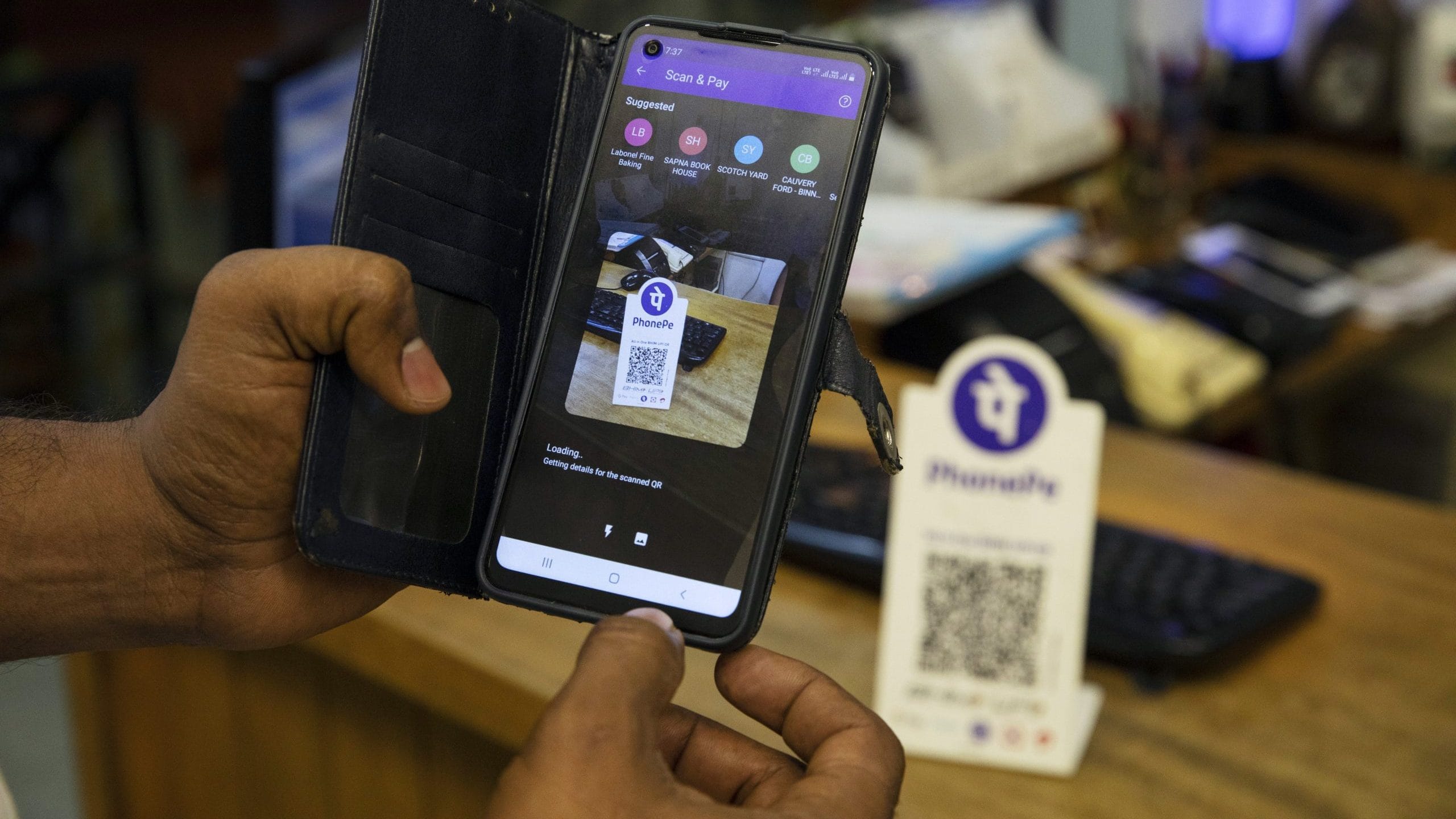
India’s UPI Needs Merchant Fees, Not American Pressure
Congress Warns UPI Fees Loom After Government Notification

UPI Charges Debate Grows as MDR Framework Opens Higher Payments

Rahul Gandhi Accuses Modi Government Over Proposed UPI Charges

India Weighs Selective UPI Fees to Sustain Digital Payments Growth

India Keeps Small UPI and RuPay Payments Free
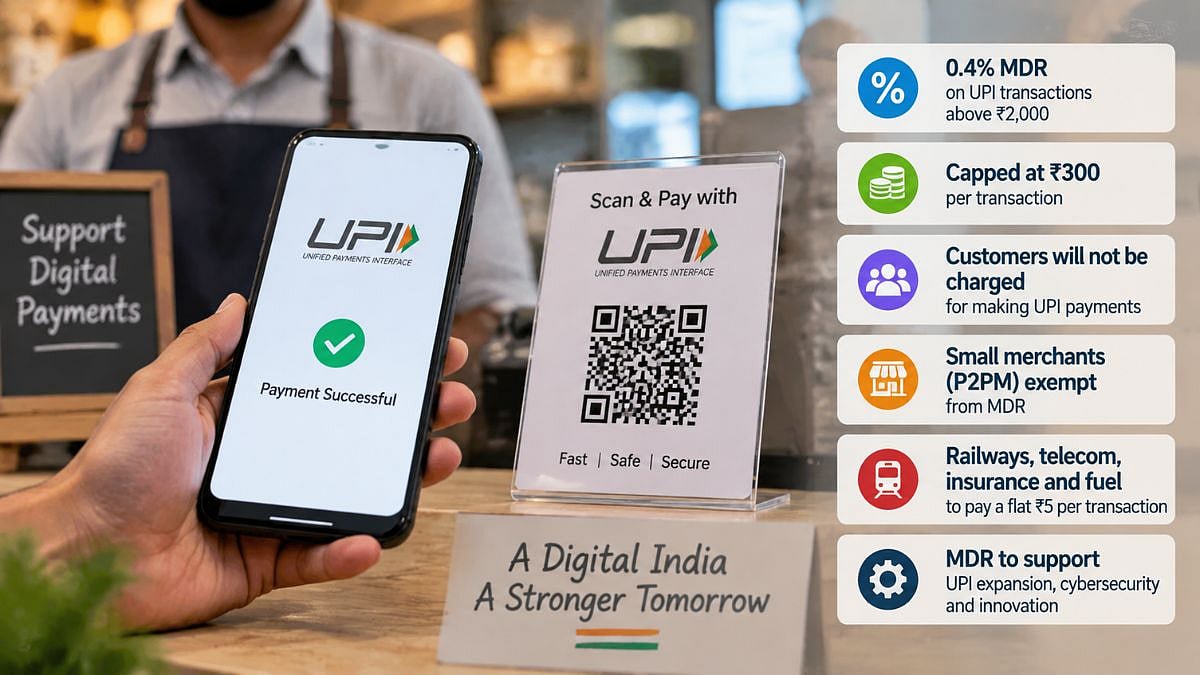
UPI MDR Rules Keep Customers Free, Target Merchant Payments

UPI MDR Revision Brings 0.02% Charge to Capital Markets

Congress Calls New UPI Merchant Charges ‘Modi Tax’

New UPI MDR Framework Sets Merchant Fees From October 15
Government Sets UPI Merchant Fee Above ₹2,000