

9 hrs ago
Congress Warns UPI Fees Loom After Government Notification
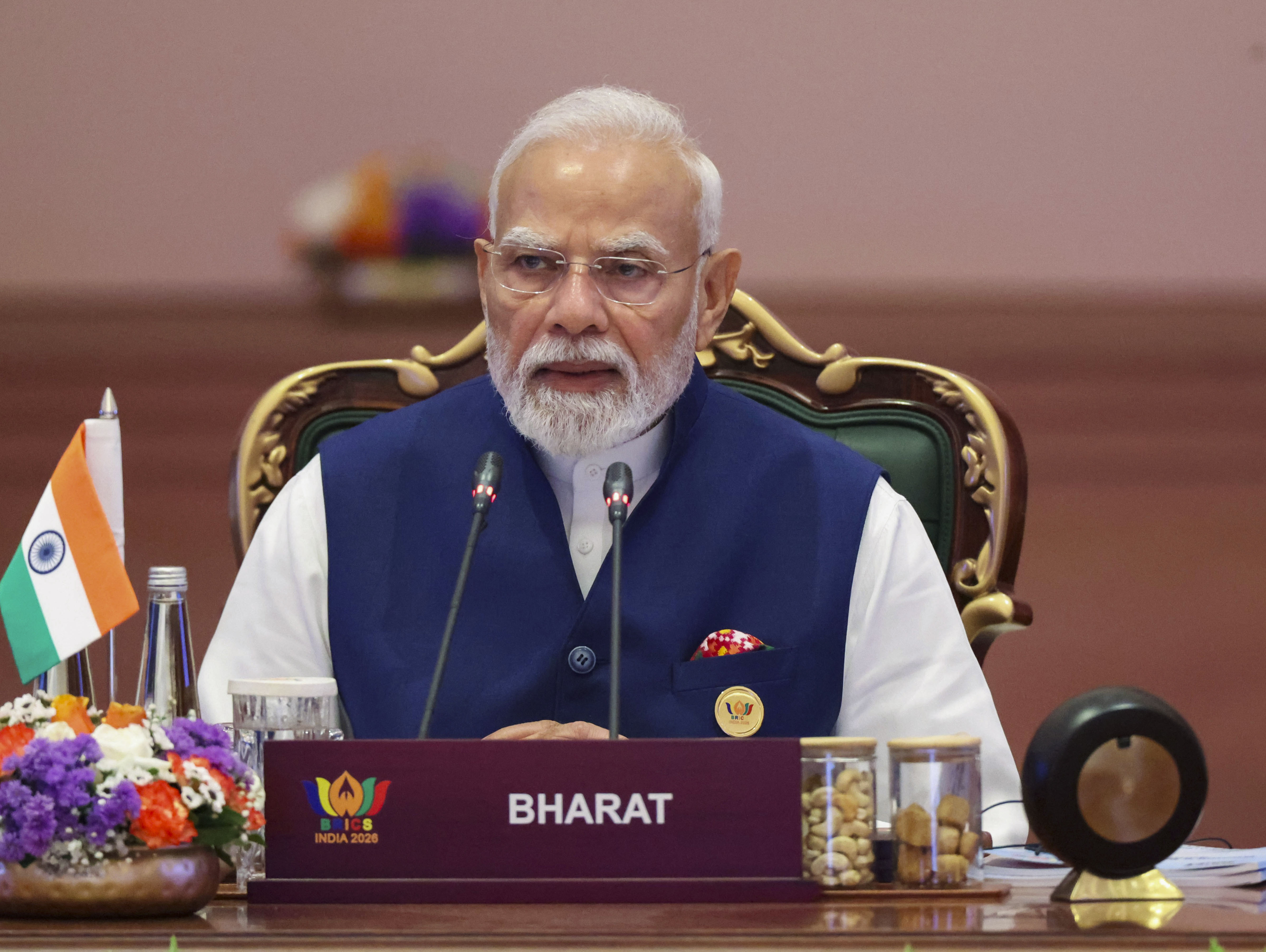
India currently allows people to use UPI without transaction charges.
A new government notification guarantees no charges for UPI payments up to Rs 2,000 and for RuPay debit-card payments.
It does not clearly say what will happen to UPI payments above Rs 2,000.
Congress says this could be the first step toward charging people indirectly.
Rahul Gandhi and other Congress leaders argue that shopkeepers may raise prices to recover any fees.
They also allege that American payment companies are influencing the policy.
The government says any Merchant Discount Rate would be charged to merchants, not customers.
It says the money could help pay for security, fraud prevention and digital infrastructure.
The dispute is about whether the change protects UPI’s future or opens the door to higher costs.

A September 14 notification bars charges on UPI and RuPay debit-card payments up to Rs 2,000.
The notification does not specify whether merchants could face charges on UPI transactions above Rs 2,000.
Congress leaders say the measure removes a statutory guarantee of free UPI payments and could shift costs to consumers.
Rahul Gandhi alleged the policy change reflects pressure from American payment companies and could affect transactions representing much of UPI’s value.
The government says potential MDR revenue would fund cybersecurity, fraud prevention, infrastructure, competition and long-term sustainability, while applying to merchants rather than customers.
- Who
- The Congress, including Rahul Gandhi, Mallikarjun Kharge and Jairam Ramesh, criticized the Narendra Modi government; Finance Minister Nirmala Sitharaman defended its position.
- What
- A notification prohibits direct or indirect charges on UPI and RuPay debit-card payments up to Rs 2,000 while enabling a framework for possible Merchant Discount Rate charges.
- Where
- India’s digital payments system, including UPI and RuPay transactions.
- When
- The gazette notification was dated September 14, 2026; Parliament passed the relevant amendment during the Monsoon Session, which ended August 13, 2026.
- Why
- The government cites cybersecurity, fraud prevention, infrastructure investment, market expansion and self-sustainability; Congress alleges the move could shift costs to users and respond to American pressure.
Congress’s objections
Government’s defense
Effect on consumers
Congress’s objections
Congress says fees charged to merchants could be recovered through higher prices, ultimately burdening ordinary customers.
Government’s defense
Nirmala Sitharaman says MDR applies to merchants rather than end users and would support investments benefiting UPI users.
Meaning of the Rs 2,000 limit
Congress’s objections
Congress says protecting only transactions up to Rs 2,000 removes a broader guarantee that UPI will remain free and opens the door to future charges.
Government’s defense
The government notification specifically prohibits charges on payments up to Rs 2,000, while the articles say MDR rates for other transactions have not yet been decided.
Role of American companies
Congress’s objections
Rahul Gandhi and other Congress leaders allege that the policy change responds to pressure from American payment companies and could open India’s digital-payments market to them.
Government’s defense
The government’s stated justification focuses on cybersecurity, fraud prevention, infrastructure, competition and sustainability; the articles do not report a government confirmation of the alleged American pressure.
Key facts
- Protected transactions
- No direct or indirect charges may be imposed on UPI or RuPay debit-card payments up to Rs 2,000.
- Higher-value transactions
- The government has not specified whether charges will apply to UPI transactions above Rs 2,000.
- Current practice
- The articles state that UPI transactions currently carry no charge regardless of amount.
- Legal basis
- An amendment to Section 10A of the Payment and Settlement Systems Act, 2007, enables an MDR framework for UPI and other notified electronic payments.
- MDR decision-maker
- The UPI and Services Steering Committee, headed by the National Payments Corporation of India, is expected to decide MDR rates.
- Government rationale
- Potential charges are intended to support cybersecurity, fraud prevention, infrastructure, competition and a self-sustaining payments system.
- Congress concern
- Congress argues merchant fees could ultimately be passed on to consumers through higher prices.
Quotes

Mallikarjun Kharge
Congress president
“Before spreading a canard, @Jairam_Ramesh ji, please consider this: Merchant Discount Rate (MDR) applies only on the merchants and not on the end users/customers. It will support the Banks & Fintech to invest more on infrastructure, innovation & security. All users of UPI will reap the benefits of this investment.”
 rediff.com
 theprint.in
“Tomorrow the cap itself might be changed with another such notification – there is no longer a guarantee in the law. For all we know, the government can introduce a charge for daily person-to-person transactions as well.”
theprint.in
Sources
‘Compromised PM Modi Again Surrendering to US Pressure’ Over UPI Move: Cong
Rahul Gandhi Claims Modi Government Surrendering To US Pressure On UPI Charges

Stage being set for levying UPI transaction fee: Cong slams govt

‘Quietly opened the door to UPI fees’: Rahul Gandhi slams Modi govt, Centre defends notification
Related news
Congress Calls New UPI Merchant Charges ‘Modi Tax’

Rahul Gandhi Accuses Modi Government Over Proposed UPI Charges
BJP, Congress Clash Over Possible Future UPI Charges
Government Sets UPI Merchant Fee Above ₹2,000

UPI Charges Debate Grows as MDR Framework Opens Higher Payments

India's UPI Fee Proposal Draws Concerns Amid US Pressure

Madhya Pradesh Farmers Rally for GST Relief, Better Crop Prices
Khadse Calls for Stronger Mizoram Sports Infrastructure and Support