5 days ago
China's Tiangong Ultra Shatters Bolt's 100-Metre Record

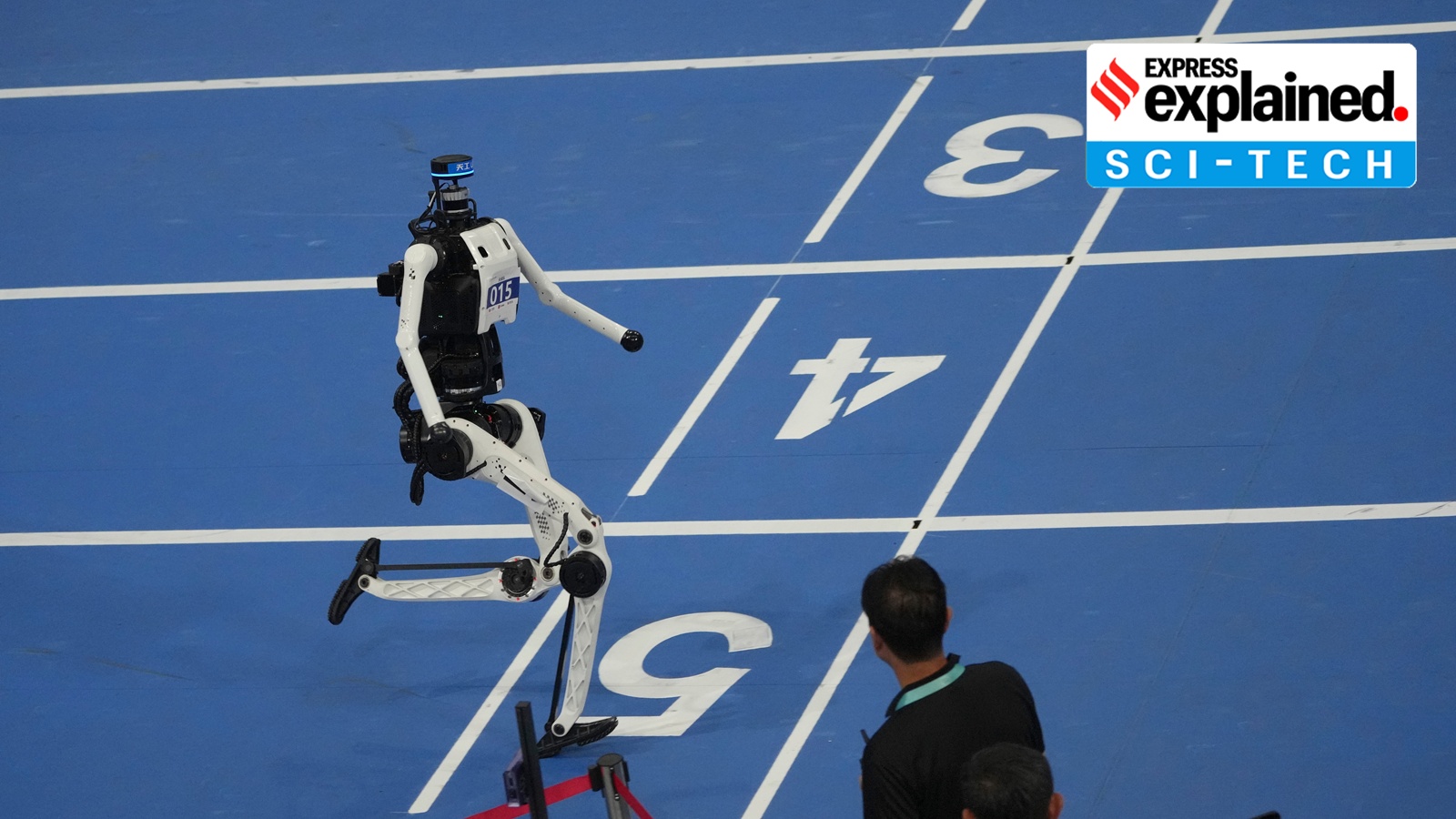
China built a humanoid robot called Tiangong Ultra.
It ran 100 metres in 8.64 seconds.
That was faster than Usain Bolt's human record of 9.58 seconds.
The robot moved with many short, quick steps instead of long human strides.
Its electric motors can keep powering it without getting tired like human muscles do.
However, it had a slow and awkward start.
It also could not stop well and crashed into a padded wall.
Experts say robots still need to improve at seeing obstacles, making decisions and changing direction.
So the robot is extremely fast, but it is not yet as capable as a person in a complicated environment.

Tiangong Ultra completed 100 metres in 8.64 seconds, beating Usain Bolt's 9.58-second human record.
The robot's redesigned torso, lighter waist, improved motors and control software helped produce its speed.
It uses shorter, faster steps and maintains speed because its motors do not experience human muscle fatigue.
Unlike human sprinters, Tiangong started upright, apparently delayed its launch and did not use starting blocks.
Experts said the robot still struggles with stopping, turning, perception and independent decisions, crashing into a padded wall after its run.
- Who
- China's Tiangong Ultra humanoid robot, developed by a Chinese team, surpassed Usain Bolt's 100-metre record.
- What
- Tiangong Ultra ran 100 metres in 8.64 seconds, compared with Bolt's 9.58-second human world record.
- Where
- The race was held at the National Speed Skating Oval in Beijing, China.
- When
- The run took place during the 2026 World Humanoid Robot Games; the image is dated August 25, 2026.
- Why
- The achievement demonstrated advances in humanoid robot motors, movement, balance and control, although experts said robots remain limited in perception and decision-making.
Robot Performance Highlights
Human and Real-World Limitations
Raw speed
Robot Performance Highlights
Tiangong Ultra ran faster than Bolt's human record, showing that humanoid robots can exceed human physical performance in a specific task.
Human and Real-World Limitations
The comparison is not identical because Bolt used starting blocks and the robot began upright; experts said starting blocks could make the robot faster still, but the race conditions differed.
Running technique
Robot Performance Highlights
The robot's redesigned torso and waist, improved motors, greater range of movement and control software enabled rapid, compact steps and sustained speed.
Human and Real-World Limitations
Its gait reflects what its motors can do rather than human sprinting, and its short steps may be necessary to prevent it from falling.
Endurance and capability
Robot Performance Highlights
Electric motors and gearboxes allow the robot to maintain its top speed without the fatigue that slows human sprinters in the final 20 metres.
Human and Real-World Limitations
The robot could not effectively stop or change direction and crashed at the finish; experts said perception, obstacle avoidance and independent decision-making remain more important future challenges.
Key facts
- Robot
- Tiangong Ultra
- Recorded time
- 8.64 seconds for 100 metres
- Human comparison
- Usain Bolt's world-record time is 9.58 seconds
- Average speed
- Almost 42 kilometres per hour
- Robot's stride
- More than 50 shorter, faster steps in its first record-breaking run, compared with Bolt's 41 steps
- Starting method
- Tiangong began from an upright posture and did not use starting blocks
- Finish
- The robot maintained its highest speed near the end before crashing into a padded wall
Quotes
Jung Moon-hyun
Sports science professor at South Korea’s Chungnam National University
“It is a remarkable advancement in technology where humanoids can keep balance and sprint at a speed that humans can't catch up with.”
 rediff.com
“It's no good if we get up to a good top speed, but all we do is end up in a heap of broken bones because we can't stop.”
rediff.com
Sources
Related news
Chinese Humanoid Robots Outrun Bolt, Then Struggle With Beans
Chinese Robot Runs Faster Than Usain Bolt’s Record

Chinese Humanoid Robots Surpass Bolt Benchmark at Beijing Games

Tiangong Ultra Runs 100 Metres in 8.86 Seconds

Robot sprinter breaks 100-meter record at China’s humanoid games

Chinese Humanoid Robot Sets New 100-Meter Sprint Record

Pentagon Turmoil Deepens as Hegseth Tightens Grip on Military

Damaged Lohit River Bridge Cuts Off Arunachal Border Villages

Nepal Flood Exposes Delayed Alerts and Cross-Border Warning Gaps

Chinese Workers Fight Office Ageing With Parasols And Sunscreen

UPSC Key Covers SCO, Electoral Rolls, Economy, Defence and Climate