1 week ago
Chinese Humanoid Robot Sets New 100-Meter Sprint Record

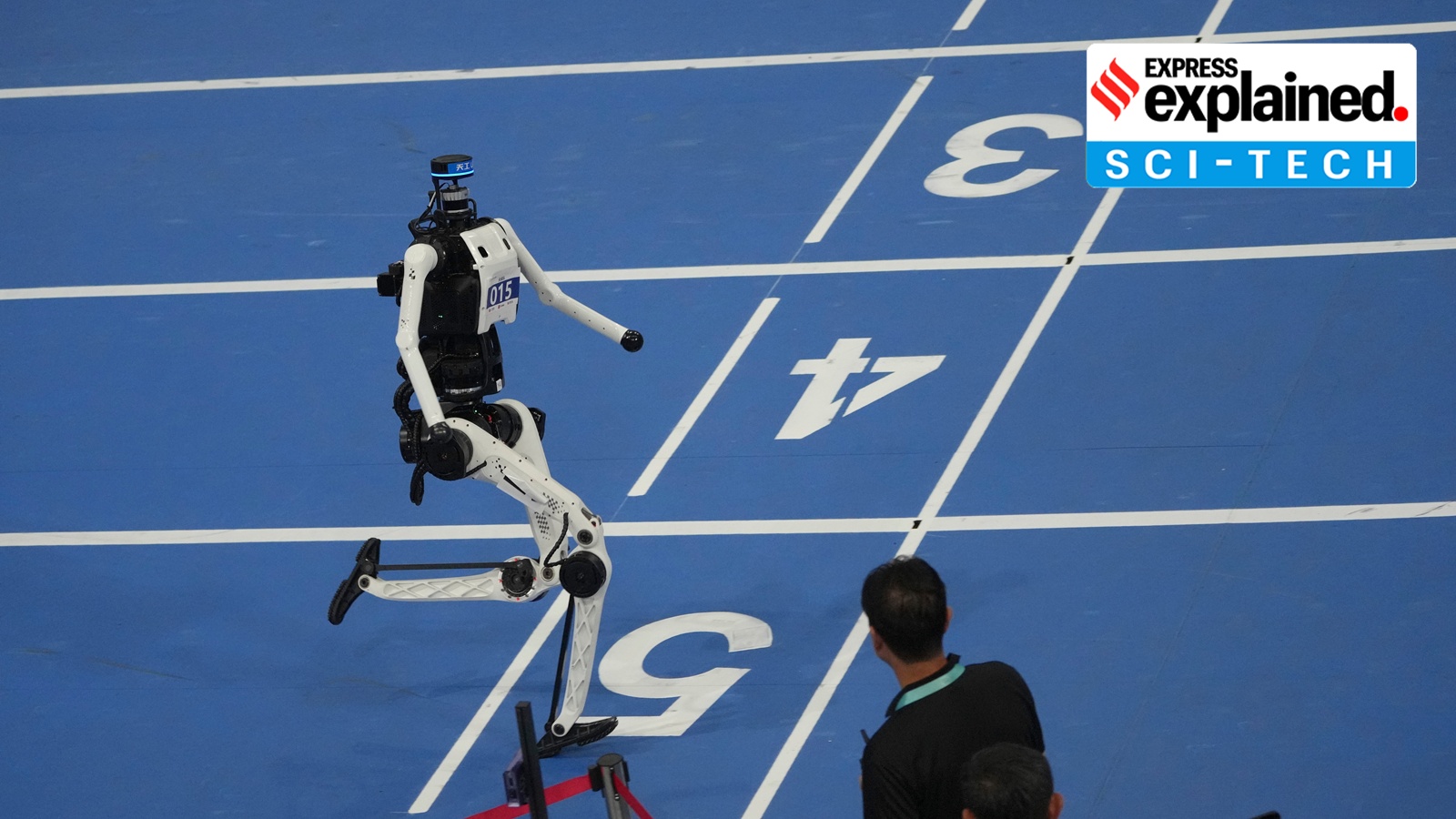
A humanoid robot in Beijing ran 100 meters in 8.86 seconds.
That was faster than the previous robot record.
It was also faster than the fastest human time for the men's 100 meters.
However, the robot fell after hitting a padded barrier at the finish line.
Sparks came from its waist when it fell.
Experts say running quickly on two legs is very difficult for robots.
They also want to know whether robots can stop safely and recover from mistakes.
The World Humanoid Robot Games include races, sports, dancing, household tasks, hotel services and emergency-response challenges.

A Chinese humanoid robot ran 100 meters in 8.86 seconds at the World Humanoid Robot Games in Beijing.
The time surpassed the previous robot record of 9.39 seconds, set three days earlier.
The robot also beat the men's human 100-meter world record of 9.58 seconds, set by Usain Bolt in 2009.
The robot fell into a padded barrier after finishing, with sparks reportedly coming from its waist.
The Games feature more than 2,000 robots competing in over 1,300 contests across 51 events.
- Who
- A Chinese humanoid robot competed against other robots.
- What
- It set a 100-meter robot sprint record of 8.86 seconds.
- Where
- At the World Humanoid Robot Games in Beijing.
- When
- The record was set on Tuesday; the previous robot record had been set the preceding Saturday.
- Why
- The Games showcase China's advances in robotics amid an intensifying technology rivalry with the United States.
Key facts
- New robot record
- 8.86 seconds
- Previous robot record
- 9.39 seconds, set three days earlier
- Men's human world record
- 9.58 seconds, set by Usain Bolt in 2009
- Event scale
- More than 1,300 competitions involving over 2,000 robots
- Number of events
- 51
- Robot's finish
- It fell after hitting a padded barrier, with sparks coming from its waist
- Expert cited
- Dennis Hong, a professor of mechanical and aerospace engineering at the University of California, Los Angeles
Quotes

Dennis Hong
Professor of mechanical and aerospace engineering at the University of California, Los Angeles
“This is a significant milestone — not simply because the robot ran faster than a human, but because of what it takes to make a bipedal robot run at this speed.”
 livemint.com
“As speed increases, balance, control, impacts, actuator performance, and mechanical robustness all become much more challenging.”
livemint.com
Sources
Related news

Robot sprinter breaks 100-meter record at China’s humanoid games

Chinese Humanoid Robots Surpass Bolt Benchmark at Beijing Games

Chinese Humanoid Robots Break Human Records at Beijing Games

Tiangong Ultra Runs 100 Metres in 8.86 Seconds
Chinese Robot Runs Faster Than Usain Bolt’s Record

Humanoid Robot Beats Usain Bolt’s 100-Meter World Record

India’s 7.8% Growth Broad-Based, but Jobs Remain Challenge

India Pursues Global Mineral Pacts to Secure Supply Chains

Nepal Plans New Landslide Warning System Along China Border

RBI Governor Meets US Fed Chief Kevin Warsh at G20

Tencent-Backed Enflame IPO Draws Massive Investor Demand