

1 week ago
Supreme Court Seeks States’ Response on Footpath Rights
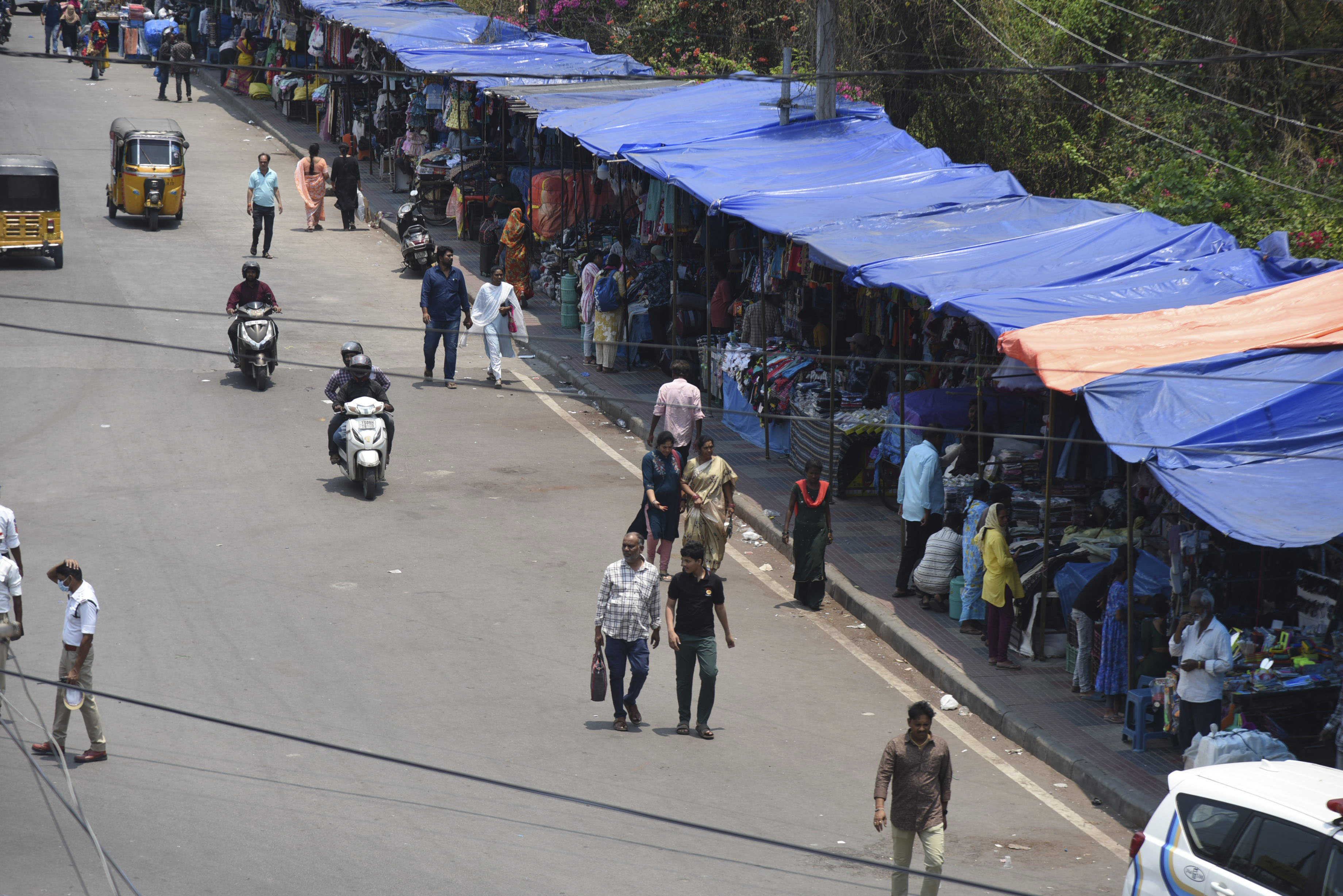
The Supreme Court said people need safe places to walk beside roads.
It asked every state and Union Territory to explain how it will follow footpath guidelines.
Footpaths should be clearly marked and kept free from encroachments.
They should also be separated from vehicles so people can walk without fear.
The Centre said roads are mainly handled by the states.
Government ministries have already sent advice to states and other authorities.
The court has called walking on a marked footpath a fundamental right.
It said local authorities must build, maintain and protect these walking spaces.

The Supreme Court directed all states and Union Territories to respond on implementing pedestrian footpath guidelines.
The court said every road should have a properly demarcated, safe and encroachment-free space for walkers.
The Centre said the road-related measures fall under state jurisdiction and that two ministries have issued advisories.
A June 19 ruling recognized walking on demarcated footpaths as a fundamental right under the Constitution.
The court said urban and local authorities must construct, maintain and protect footpaths, with citizens able to seek legal remedies for violations.
- Who
- The Supreme Court, the Centre, states, Union Territories and local authorities responsible for roads and pedestrian infrastructure.
- What
- The Supreme Court sought responses on implementing properly demarcated, maintained and encroachment-free footpaths.
- Where
- The proceedings were before the Supreme Court in New Delhi and concern roads across India.
- When
- The direction was issued on Monday, after earlier directions on August 3 and a fundamental-rights ruling on June 19.
- Why
- The court wants pedestrians to have safe walking space and recognized walking on demarcated footpaths as a fundamental right.
Key facts
- Case title
- “Re: Fundamental Right to Walk and Footpath”
- Court bench
- Justices PS Narasimha and Alok Aradhe
- Constitutional basis
- The court linked the right to walk with Articles 19(1)(d) and 21, among other provisions.
- Required infrastructure
- Roads should have properly demarcated, well-maintained and encroachment-free pedestrian space.
- Authorities named
- Urban development authorities, municipal corporations, municipalities and panchayats.
- Central advisories
- The Ministry of Road Transport and Highways and the Ministry of Housing and Urban Affairs issued advisories to states, Union Territories and the National Highways Authority of India.
- Legal remedies
- Citizens may seek constitutional and legal remedies, including restitution and compensation, for violations.
Quotes
Supreme Court bench
The bench of Justices PS Narasimha and Alok Aradhe hearing the suo motu footpath case
“The right to walk is a fundamental right under Part III of the Constitution. It is integral to the right to movement guaranteed under Article 19(1)(d), read with Article 19(1)(a), Article 19(1) (b), Article 19(1) (c) and Article 21 of the Constitution of India.”
 deccanchronicle.com
“The first step is proper demarcation of space for pedestrians. There should be confidence of safety in walking. Wherever there is a road, people should walk in the demarcated space.”
deccanchronicle.com
Sources
Related news

Supreme Court Seeks Responses on Demarcated Footpaths

Lawyers Demand Jaipur Footpath Encroachments Removed by September 30
Andhra Pradesh's Pioneering Pedestrian Safety Policy Targets Safer Footpaths

Encroachment Removal Drives Fail to Reclaim Hyderabad's Footpaths
Andhra Pradesh Advances Plan for Pedestrian-Friendly Visakhapatnam Roads
Centre Seeks Supreme Court Clarity on OBC CSE 2025 Rules

Supreme Court Special Bench to Review OBC Creamy Layer Criteria
Supreme Court Splits Over ‘Industry’ Definition Under Labour Law

Supreme Court Limits 1978 Industry Ruling Under 2020 Code
