1 week ago
Japan Sets July Export Record Despite Third-Month Trade Deficit

Japan sold more goods to other countries in July than it did in many previous months.
Its exports reached a record high.
Cars, semiconductors, and other electronic products helped drive those sales.
However, Japan also bought a record amount from abroad.
Much of the increase came from expensive energy imports.
A weak yen makes imported goods cost more in Japan.
Because imports were worth more than exports, Japan had a trade deficit for the third month in a row.
Japan is looking for other energy suppliers, including the United States.

Japan recorded a 634.5 billion yen trade deficit in July, the third consecutive monthly deficit.
Imports rose 27.8% year over year to 12.15 trillion yen, driven partly by higher energy costs and the weak yen.
Exports increased 23.2% to 11.51 trillion yen, supported by strong auto shipments and healthy semiconductor exports.
Both imports and exports reached their highest July levels since comparable records began in January 1979.
Japan is seeking alternative energy sources, including supplies from the United States, as oil prices rise and the Strait of Hormuz remains effectively closed.
- Who
- Japan, its exporters and importers, and the Finance Ministry, which released preliminary data.
- What
- Japan posted record July import and export values while recording a 634.5 billion yen trade deficit.
- Where
- Japan, with trade involving the United States, the Middle East, and other markets.
- When
- July; the preliminary data was released on Thursday.
- Why
- Higher energy costs and the weak yen increased import costs, while strong automobile and semiconductor shipments supported exports.
Export Strength
Import Pressure
What drove the trade figures?
Export Strength
Strong automobile exports to the United States and other countries, along with healthy semiconductor and electronic-device shipments, lifted exports by 23.2%.
Import Pressure
Imports rose faster, increasing 27.8% as energy costs climbed and the weak yen made imported goods more expensive.
Effect of the weak yen
Export Strength
The article indicates that Japan's exports continued growing, with shipments increasing nearly every month for about a year.
Import Pressure
The weak yen contributed to higher import costs, while the central bank's efforts to support the currency had little lasting effect.
Energy strategy
Export Strength
Japan is seeking alternative energy-import sources, including the United States, to support supply options.
Import Pressure
Japan remains highly dependent on imported oil, and the article says rising crude prices and disruption around the Strait of Hormuz are worsening trade pressures.
Key facts
- July trade balance
- 634.5 billion yen deficit, or about $4 billion
- Imports
- 12.15 trillion yen, up 27.8% from a year earlier
- Exports
- 11.51 trillion yen, up 23.2% from a year earlier
- Deficit streak
- Third consecutive month of trade deficits
- Record comparison
- Both imports and exports reached their highest July levels since comparable data began in January 1979
- Strong export sectors
- Automobiles, semiconductors, and other electronic devices
- Energy pressure
- Soaring crude oil prices and Japan's heavy reliance on imported oil raised import costs
Sources
Related news
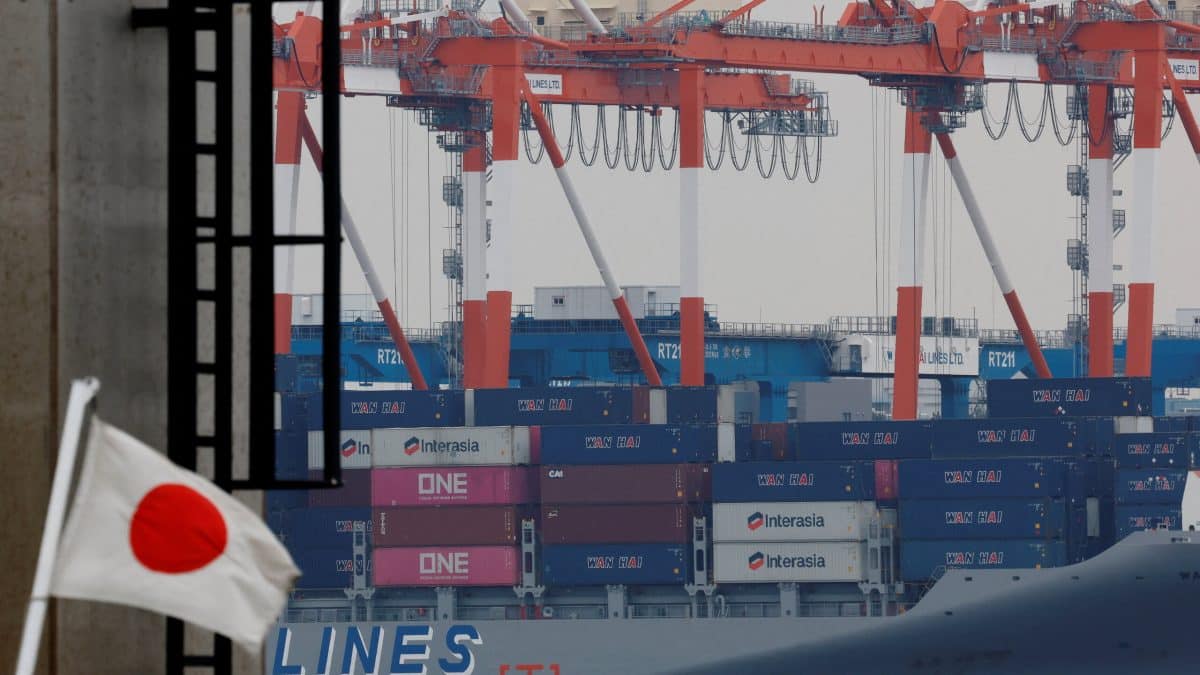
Japan’s July Exports Surge on US and China Demand

India's exports surge 19.6% as trade deficit hits six-month high
India's merchandise exports clock 19.6% growth in July despite headwinds

India's July Exports Hit Record High as Trade Deficit Widens

India's exports to US, China, West Asia rise

Japan wholesale inflation stays elevated, bolstering September rate hike bets

Iran Seizes Fuel-Smuggling Vessel in Gulf, Arrests 11 Crew

Trump Floats Renaming Strait of Hormuz as “Trump Strait”

Chevron Plans $7 Billion Venezuela Expansion Amid U.S. Oil Push

Saudi Tanker Hit in Hormuz, Killing Two Filipino Sailors

U.S.-Iran Exchange Escalates Across Middle East, Markets Slide