

2 weeks ago
India's exports surge 19.6% as trade deficit hits six-month high
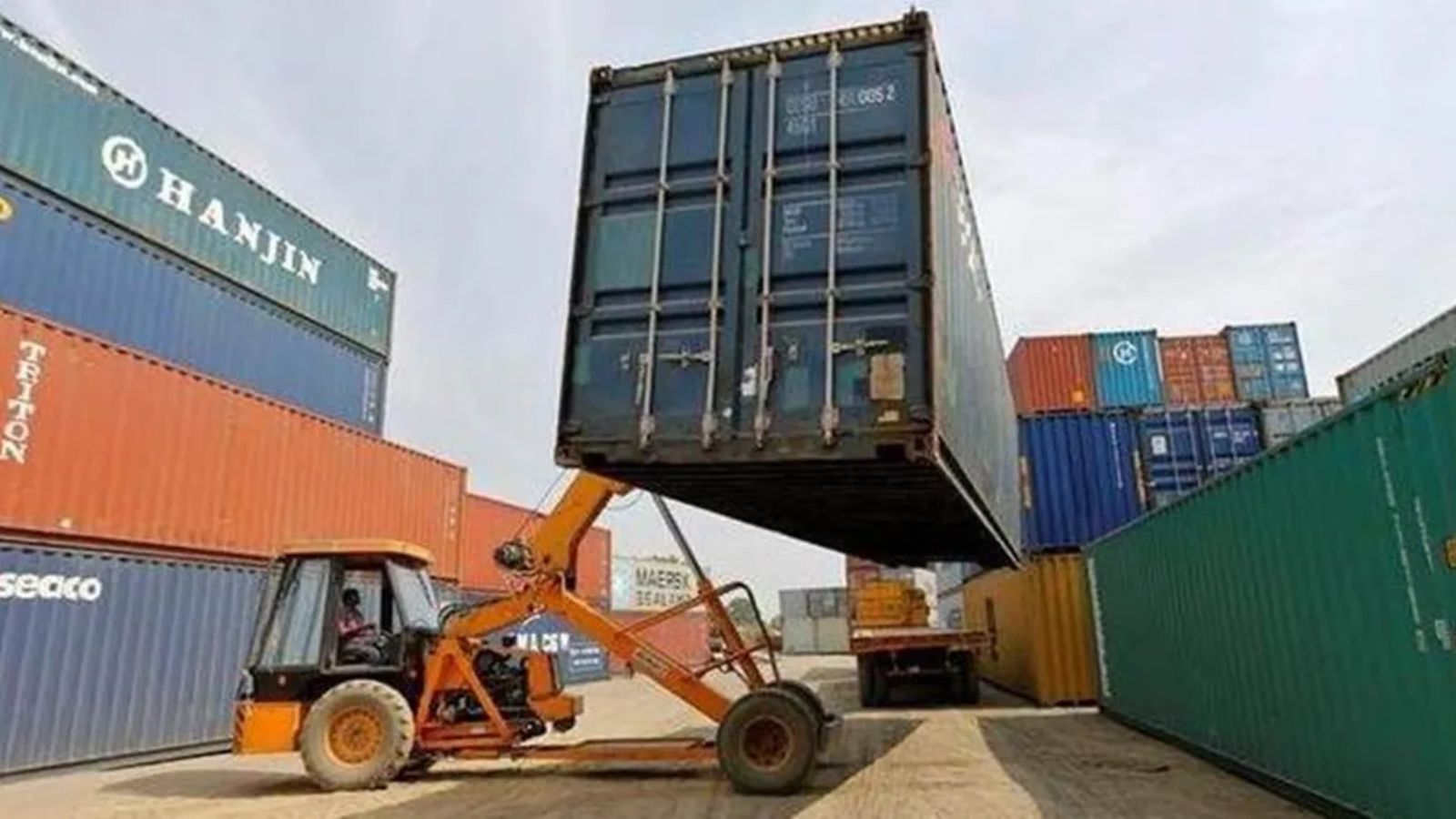
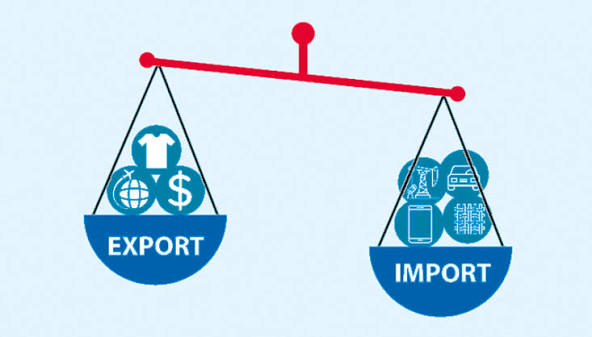
When a country buys more goods from other countries than it sells, the difference is called a trade deficit.
In July, India's trade deficit grew to about $32 billion, the biggest it has been in six months.
This happened because India bought a lot more from other countries, while also selling more than it did last year.
India sold $44.24 billion worth of goods, about 20 percent more than in the same month last year.
It bought $76.22 billion worth of goods, the most in nine months.
Higher prices for oil, coal, and other raw materials made the bills bigger.
Petroleum products and electronics were big winners that helped India sell more abroad.
Experts say the jump in trade mostly came from higher prices rather than just more goods being traded.
Officials say new trade deals with Oman and the United Kingdom could help India sell even more in the future.

India's merchandise trade deficit widened to a six-month high of $31.98 billion in July, up from $27.88 billion a year earlier.
Merchandise exports rose 19.6% year-on-year to $44.24 billion, the fastest growth since June 2022, while imports surged 17.5% to a nine-month high of $76.22 billion, marking the fourth consecutive month of double-digit growth.
Petroleum product exports jumped 67.64% to $6.92 billion, electronics exports rose 57.4% to $5.92 billion, and engineering goods exports grew 17.71% to $12.24 billion.
Crude and petroleum imports rose 17.6% to $18 billion, coal imports climbed 29% to $3 billion, and fertilizer imports grew 55% to $2.4 billion, reflecting elevated commodity prices and the West Asia crisis.
During April-July, exports grew 17.04% to $173.78 billion and the trade deficit widened to $118.60 billion from $96.66 billion a year earlier, with exports to Tanzania, Singapore, South Africa, and China up 131%, 97%, 69%, and 36% respectively, and July exports to the US up 12.8%.
- Who
- India's Commerce and Industry Ministry, Commerce Secretary Rajesh Agarwal, and economists including ICRA Chief Economist Aditi Nayar.
- What
- India's merchandise trade deficit widened to a six-month high of $31.98 billion in July as exports rose 19.6% and imports surged 17.5%.
- Where
- India, with the data released in New Delhi.
- When
- July 2026, with the data released and reported on Thursday.
- Why
- Elevated commodity price inflation boosted the value of trade, while higher crude oil, coal, and fertilizer imports and the West Asia crisis widened the deficit.
Key facts
- Trade deficit (July)
- $31.98 billion, a six-month high
- Merchandise exports
- $44.24 billion, up 19.6% year-on-year
- Merchandise imports
- $76.22 billion, up 17.5%, a nine-month high
- Deficit comparison
- $27.88 billion in July 2025; $30.43 billion in June 2026
- Crude oil imports
- $18.31 billion, up 17.64%, about 24% of total imports
- Petroleum product exports
- $6.92 billion, up 67.64%
- Coal and fertilizer imports
- Coal $3 billion (up 29%); fertilizer $2.4 billion (up 55%)
- April-July trade deficit
- $118.60 billion vs $96.66 billion a year earlier
Quotes
Aditi Nayar
Chief Economist, ICRA
“Merchandise imports touched the highest level in 9 months, boosted by a 20%-plus expansion in items like coal, fertilisers, electronic goods, and chemical materials and products. The merchandise trade deficit widened to a slightly higher-than-expected 6-month high of $32.0 billion in July 2026 from $27.9 billion in the year-ago month, while also exceeding the average monthly print of $29.0 billion seen in Q1 FY27”
 indianexpress.com
“India’s merchandise exports and imports expanded by double digits for the fourth consecutive month in July 2026, largely reflecting the impact of elevated commodity price inflation, which boosted the growth in trade value. Merchandise imports touched the highest level in 9 months, boosted by a 20 per cent-plus expansion in items like coal, fertilisers, electronic goods, and chemical materials and products.”
 deccanchronicle.com
Pankaj Chadha
Chairman, EEPC
“The positive impact of the India‑Oman free trade pact is already visible, and the free trade pact with the UK is expected to give a further push to exports. Together, they would partly offset the negative trend seen in some of the traditional markets.”
deccanchronicle.com
Sources

Related news

India's July Exports Hit Record High as Trade Deficit Widens
India's merchandise exports clock 19.6% growth in July despite headwinds

India's Merchandise Exports Hit Record High of $129.6 Billion

India's exports to US, China, West Asia rise
India’s Crude Import Bill Soars 57% to $63 Billion

India’s Current Account Deficit Widens Marginally in April-June

Saudi Arabia Says Iranian Tanker Attack Killed Two Sailors

Indian Seafarers Face Risks Sailing Through Strait of Hormuz
US Launches Strikes on Iran After Attacks on Bases

Bessent Predicts Pipelines Will Bypass Strait of Hormuz

Qatar Urges United States and Iran to Resume Talks
