2 weeks ago
Japan wholesale inflation stays elevated, bolstering September rate hike bets
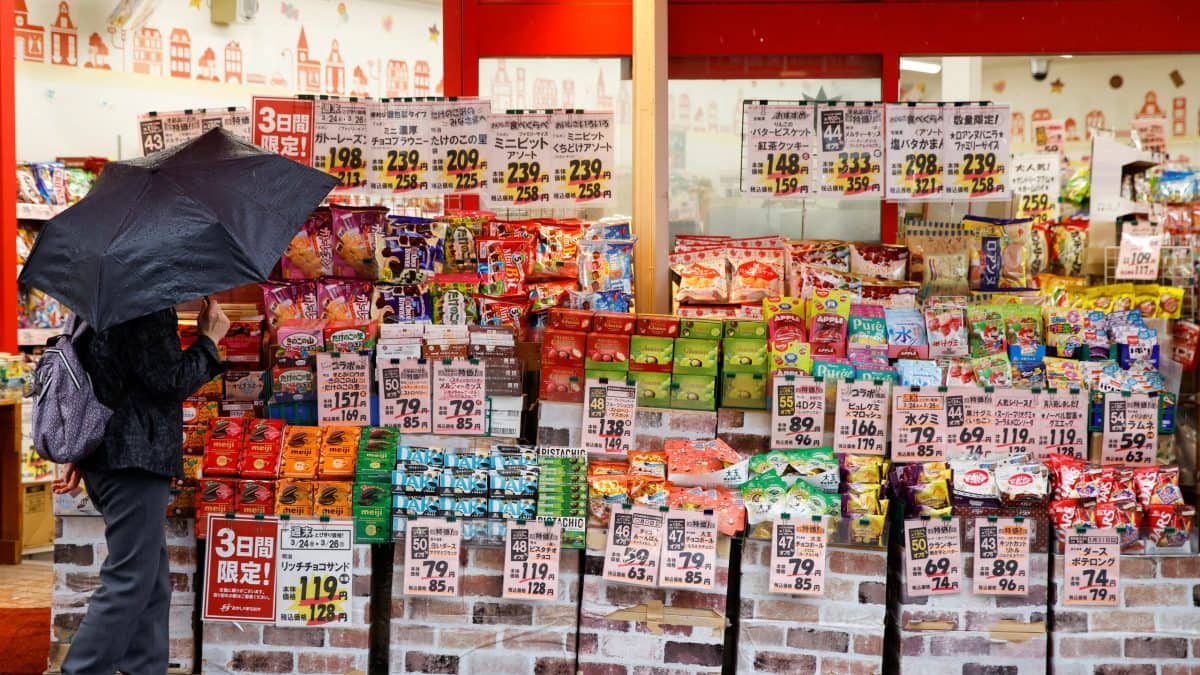
Prices are the amount of money you pay for things, and when they keep going up, that is called inflation.
In Japan, the prices that companies pay to make and move their goods went up a lot in July.
This is called wholesale inflation, and it rose by 7.2% compared with a year earlier.
That is still very high, and high wholesale inflation often means people will pay more for things later.
The Bank of Japan is the special bank that manages the country's money and prices.
It wants prices to rise steadily, not too fast.
Because prices are still rising quickly, many people think the Bank of Japan will make borrowing money more expensive in September.
The Japanese yen is also weak, which makes goods bought from other countries cost even more.
Making borrowing more expensive is one way to help slow down price increases.
That is why experts are watching the Bank of Japan's next decision closely.

Japan's producer price index rose 7.2% in July from a year earlier, below the 7.4% increase expected by economists.
The rise followed a revised 7.3% increase in June, while month-on-month growth slowed to 0.1% from a revised 0.5%.
The yen-based import price index rose 29.1% in July from a year earlier, easing from a revised 30.1% increase in June.
The Bank of Japan kept its policy rate unchanged at its July meeting but warned that underlying inflation could exceed its target.
Some policymakers argued for accelerating the pace of interest rate increases, and a hike could come as early as the September meeting.
- Who
- The Bank of Japan (BOJ) and Japanese policymakers.
- What
- Japan's wholesale inflation remained elevated in July, with the producer price index rising 7.2% year-on-year and strengthening expectations of a September rate hike.
- Where
- Japan.
- When
- July data, released on Thursday; a rate hike is possible as early as the BOJ's September meeting.
- Why
- Persistent price pressures and yen weakness continue to push up the cost of imported goods and feed into broader inflation.
Hawks (Faster Normalisation)
Cautious Approach (Status Quo)
Pace of interest rate increases
Hawks (Faster Normalisation)
Some BOJ policymakers argued for accelerating the pace of interest rate increases because price pressures remain elevated.
Cautious Approach (Status Quo)
The central bank kept its policy rate unchanged in July, preferring to continue its gradual shift away from ultra-loose monetary policy.
Key facts
- Producer price index (annual, July)
- 7.2%
- Producer price index (annual, June, revised)
- 7.3%
- Economists' forecast
- 7.4%
- Producer price index (month-on-month, July)
- 0.1%
- Import price index (annual, July)
- 29.1%
- Import price index (annual, June, revised)
- 30.1%
- BOJ policy rate (July meeting)
- Unchanged
- Possible rate hike timing
- As early as September
Sources
Related news
Japan July Inflation Strengthens Case for September BOJ Rate Hike

Japan Faces Policy Reckoning as Bessent Presses Rate Hikes

BOJ Signals Could Shape Rising September Rate-Hike Bets
Japan’s July Exports Surge on US and China Demand

BlackRock's Rieder Says Yen Rebound Hinges on BOJ Hawkishness
Sticky US inflation lifts dollar, revives Fed hike bets

Bangladesh Recall Shanto, Mahmud for Asian Games T20 Squad

Japan Cricket Boss Defends Asian Games Facilities Against Concerns

Mitsubishi Revives Pajero With 201PS Fifth-Generation SUV

Europe's Bond Selloff Deepens as Middle East Tensions Lift Oil

Uday Kotak Warns Global Bond Markets Face Roller-Coaster Volatility