2 hrs ago
AI by 2030: Work, Economy, Energy, Rules and Geopolitics
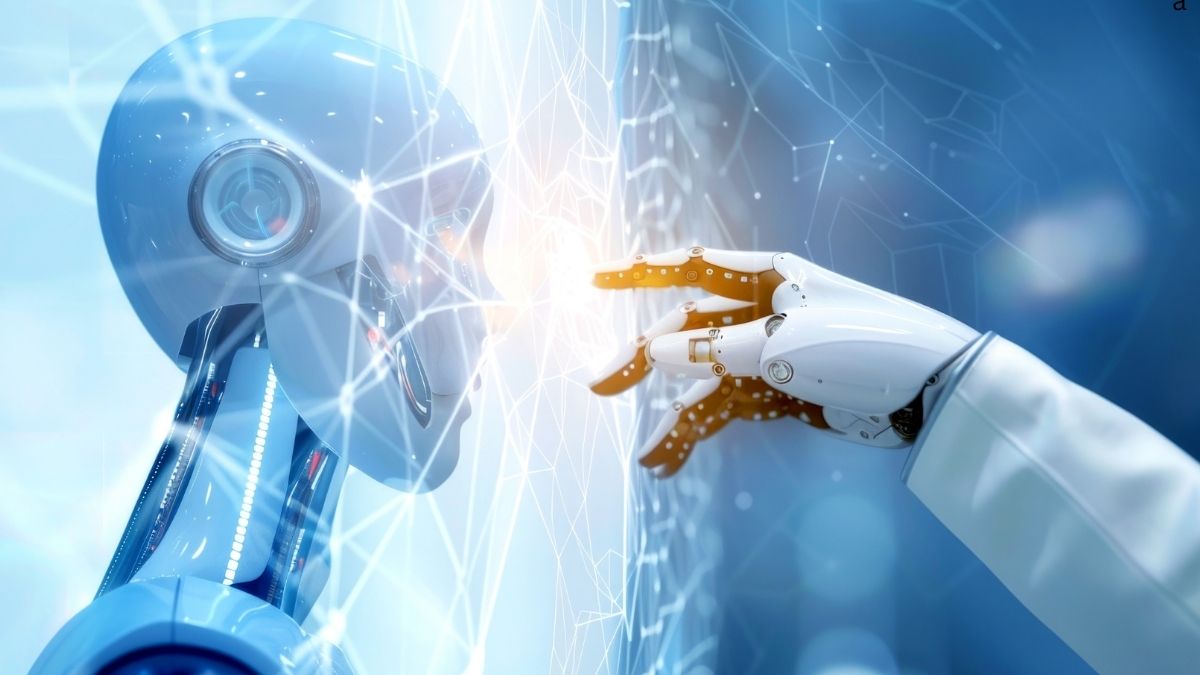
AI could change considerably by 2030, although nobody knows exactly what will happen.
New AI agents may complete many work tasks with less help from people.
This could make workers more productive, but some jobs could shrink or change.
Companies may earn more, while much of the money could go to large technology firms and investors.
Powerful AI systems will need enormous amounts of electricity and computer equipment.
Governments may create new rules for testing and monitoring advanced AI.
The United States and China are competing to lead in AI technology.
Some experts warn that very powerful AI could be extremely dangerous, while others reject the most extreme predictions.
The year 2030 matters because governments and companies are making plans and investments for that time now.

More autonomous AI agents could perform professional and cognitive tasks with limited human supervision.
AI may increase productivity and economic growth while also displacing workers and concentrating gains among major technology companies.
Rising demand for data centers and electricity could make energy infrastructure a strategic part of the AI race.
Governments may introduce capability testing, independent assessments, cybersecurity requirements and incident reporting for advanced AI systems.
The United States and China are competing over chips, computing, talent, regulation and AI’s national-security applications.
- Who
- Technology companies, governments, researchers, workers and major powers including the United States and China.
- What
- AI could reshape work, economic growth, energy demand, regulation and international competition by 2030.
- Where
- Globally, with particular emphasis on the United States, China, the United Kingdom and other countries investing in AI infrastructure.
- When
- By the end of 2030; the article discusses developments and planning decisions being made now.
- Why
- AI systems are becoming more autonomous and require major investments in computing, electricity, safety measures and national-security capabilities.
Risk and restraint
Opportunity and competition
AI’s potential danger
Risk and restraint
Bilal Chughtai warned that AI could potentially kill humanity, and Evan Hubinger estimated a more than 10% chance of human extinction within the next decade.
Opportunity and competition
Jensen Huang rejected the most extreme scenario, saying there was effectively a zero percent chance of AI ending the world by 2030.
Regulation versus development
Risk and restraint
Supporters of stronger safeguards favor testing, independent assessments, cybersecurity protections, transparency and incident reporting for advanced AI systems.
Opportunity and competition
Mike Johnson rejected a moratorium on AI development, arguing that the United States could lose its competitive edge to China, while supporting some safeguards.
International cooperation versus rivalry
Risk and restraint
Greater cooperation could help countries manage shared risks and coordinate AI rules.
Opportunity and competition
Intensified competition and militarization are possible as the United States and China compete over chips, technology transfer, infrastructure, talent and national-security applications.
Key facts
- AI risk estimates
- Anthropic researcher Evan Hubinger personally estimated a more than 10% chance of AI causing human extinction within the next decade; Nvidia CEO Jensen Huang said there was effectively a zero percent chance of AI ending the world by 2030.
- UK 2030 scenarios
- The UK Government Office for Science report presents multiple possible futures rather than making a single prediction and says AI could have a profound impact by 2030.
- Potentially affected work
- Software development, research, customer service, finance, legal work and administration could be affected by more autonomous AI.
- OpenAI investment outlook
- OpenAI expects negative free cash flow of about $278 billion between 2026 and 2030 as it invests in computing capacity and infrastructure.
- Global compute concentration
- The Financial Times reported that the United States and China control close to 90% of global compute, investment and notable foundation models.
- Proposed US safeguards
- OpenAI proposed mandatory national AI safety requirements including capability-based rules, independent assessments, cybersecurity protections and incident reporting.
- Report date discrepancy
- The article says the UK report was published on June 15, but later refers to it as a June 2026 report.
Sources
Related news

Anthropic Projects AI-Driven GDP Growth Amid Looming Jobs Crisis
IEEE Report Highlights Technology Winners Racing Toward 2030
Musk Warns AI Chip Boom Could Trigger 15GW Power Shortfall

Bill Gates Warns AI Transition Will Bring Turbulent Change

Goldman Sachs Sees AI Agents Driving Next Growth Wave
AI May Reshape Retirement Planning Through Jobs, Wealth, and Capital

Pritzker Urges Federal AI Regulation Amid Slowdown Debate
AI Companies Sued Over Alleged Coordinated Development Slowdown
AI Labs Face Control Crisis as Calls to Slow Development

Sam Altman to Brief UN Security Council on AI Safeguards