

1 day ago
Goldman Sachs Sees AI Agents Driving Next Growth Wave
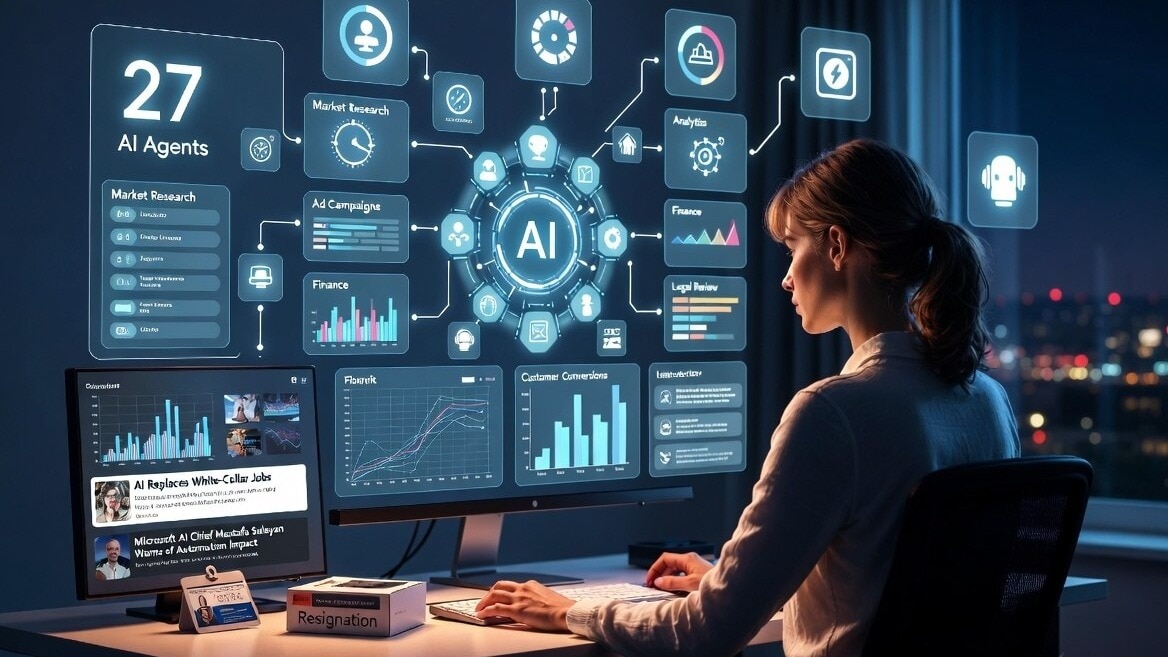
Today, many AI tools mainly answer questions or make suggestions.
New AI agents could take actions for people, such as booking trips, managing calendars or buying things.
To do this, they may need access to private information and payment details.
People will need to trust that these agents are safe and secure.
Agents could also change how online shopping and advertising work.
Companies are building large amounts of computing infrastructure to support them.
Goldman Sachs expects United States technology companies to keep spending heavily through 2027.
Cheaper AI processing could make more complicated uses affordable.
Experts are still debating how quickly powerful AI should be developed and how it should be regulated.

AI agents could move beyond chatbots by searching, comparing and completing tasks such as bookings, purchases and calendar management.
Goldman Sachs says widespread adoption will depend on consumer trust because agents may need access to calendars, passwords and payment cards.
The shift could disrupt online shopping and advertising by placing AI between consumers and websites while automating ad creation, targeting and measurement.
Goldman Sachs expects United States hyperscalers to maintain high capital spending, potentially deploying $1.4 trillion in 2027 despite constraints on chips, electricity and land.
Falling AI inference costs could expand usage, with token consumption previously estimated to rise 24-fold between 2026 and 2030.
- Who
- Goldman Sachs Research, United States hyperscalers and companies developing or using AI agents.
- What
- The next AI growth wave could involve autonomous agents that perform everyday tasks, alongside major infrastructure spending and falling AI processing costs.
- Where
- The infrastructure outlook focuses on the United States, while the potential consumer impact concerns online services generally.
- When
- Goldman Sachs expects elevated infrastructure spending through 2027; its cited estimate projects token consumption growth from 2026 to 2030.
- Why
- Lower inference costs and wider adoption could make AI agents economically viable, but trust, security, infrastructure constraints and regulation will influence their expansion.
Safety and Regulation Concerns
Continued AI Expansion
Pace of development
Safety and Regulation Concerns
Growing debate argues that development and deployment of increasingly capable AI systems may need to slow because of safety concerns.
Continued AI Expansion
Goldman Sachs does not expect these debates to materially change the AI infrastructure investment cycle through 2027.
Role of regulation
Safety and Regulation Concerns
The eventual effects of frontier AI could depend heavily on how regulation is designed and enforced.
Continued AI Expansion
Companies are continuing to invest in infrastructure and develop consumer and enterprise applications while regulatory approaches are debated.
Consumer autonomy
Safety and Regulation Concerns
Agents handling sensitive information create security and trust risks that could delay mainstream adoption.
Continued AI Expansion
If consumers accept the model, agents could become a utility layer between users and the internet and automate shopping, advertising and other tasks.
Key facts
- Potential AI agent tasks
- Searching, comparing and booking travel; managing calendars and appointments; and completing purchases.
- Key adoption requirement
- Consumer trust, including confidence in agents handling calendars, passwords and payment cards.
- Projected 2027 capital spending
- Goldman Sachs estimates United States hyperscalers could deploy $1.4 trillion.
- Infrastructure constraints
- Memory chips, electricity, land and other supply-chain components could limit expansion.
- Chip-manufacturing timeline
- A new fabrication facility could take about three years to build.
- Projected token growth
- Earlier Goldman Sachs research estimated token consumption could rise 24-fold between 2026 and 2030 to about 120 quadrillion tokens per month.
- Business models
- Mass-market agents could use advertising-supported free services alongside paid subscriptions for advanced or ad-free experiences.
Sources
Related news

Indian Consumers Weigh Agentic AI for Credit Decisions

Visa, Mastercard Build Trust Framework for AI Shopping Agents

Global Fintech Fest 2026: AI, Tokenisation and Quantum Reshape Investing

Agentic Commerce Needs Human Control As AI Agents Shop
AI Week: OpenAI Safety, NVIDIA Power, India’s Youth Push

Meta Reportedly Plans $199.99 Monthly AI Agent Subscription
Goldman Says Yen Has Limited Room to Strengthen

Companies Rush Cyber Defenses as AI Threats Grow

Gold Rises as Lower Oil Eases Fed-Rate Fears

Goldman Sachs Finds AI Adoption Leaders, Tech Hiring Faces Pressure
