12 hrs ago
AI May Reshape Retirement Planning Through Jobs, Wealth, and Capital
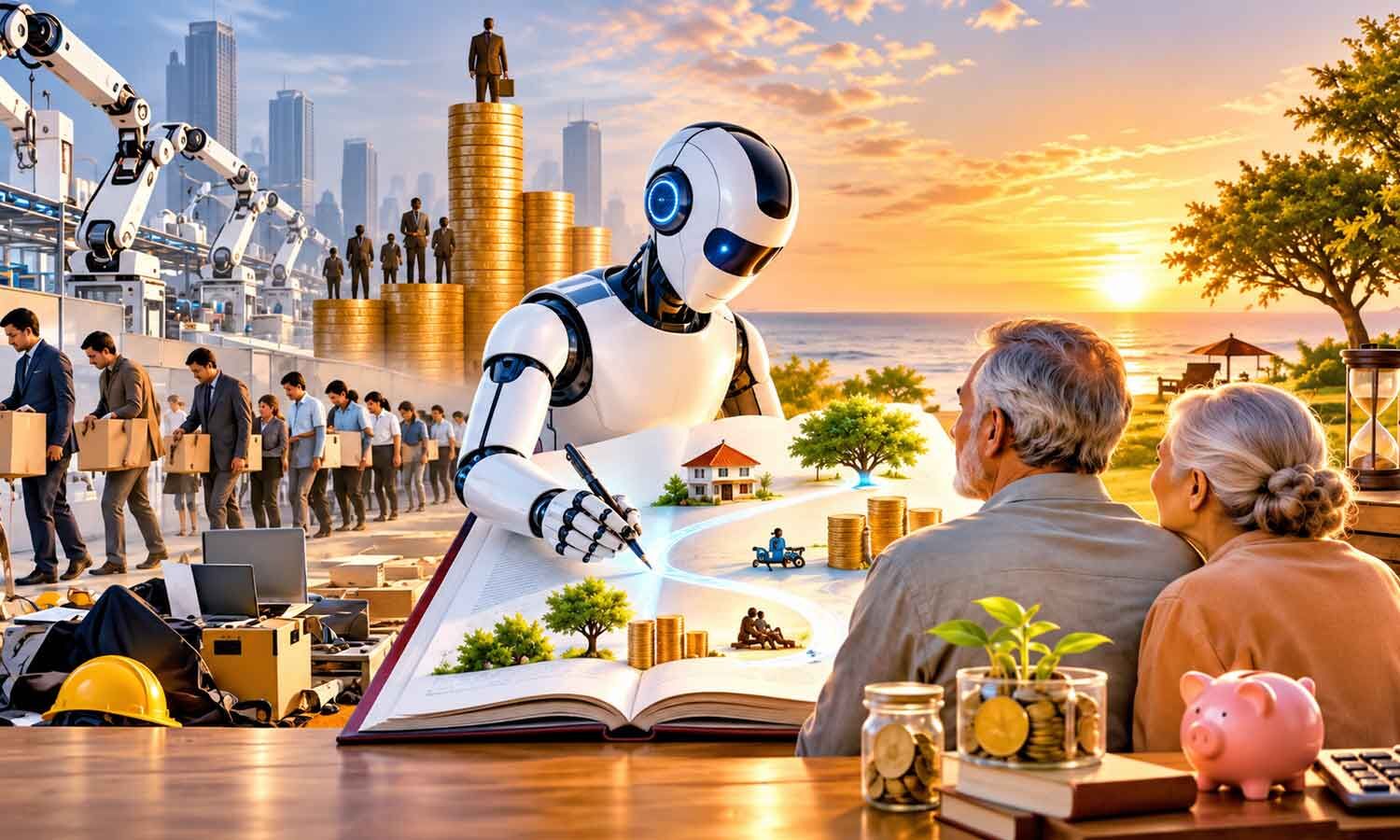
A new paper from Anthropic explores what might happen if AI becomes very powerful.
AI could help the economy produce more goods and services.
However, some people, especially those doing computer-based or knowledge work, could lose jobs during the change.
New jobs might not appear quickly enough for everyone who is displaced.
This could make the economy richer while some workers become less financially secure.
People retiring soon may need enough safe and easily accessible money to cover several years of essential expenses.
People retiring later may also need to own a broad mix of investments that can benefit from economic growth.
The article says retirement planning should focus not only on saving money but also on owning part of the productive economy.

An Anthropic paper models how transformative AI could affect GDP, employment, wages, capital, and unemployment between 2026 and 2030.
Its extreme scenario projects GDP 32.4% above the no-AI path by 2030, while cognitive employment falls 21.5% and unemployment reaches 17.9%.
The paper suggests AI gains may increasingly benefit capital owners, with labor receiving a smaller share of economic output.
People retiring around 2030 may face transition, income, and sequence-of-returns risks as employment and asset values are reshaped.
The article recommends diversified portfolios, five-to-seven years of essential expenses, productive-capital exposure, and more flexible withdrawals.
- Who
- Anthropic researchers, workers in cognitive occupations, and people planning for retirement.
- What
- The article examines how transformative AI could alter employment, wealth distribution, investment returns, and retirement planning.
- Where
- When
- The paper models 2026-2030; the article discusses retirement around 2030 and 2040-2041.
- Why
- AI could increase productivity and GDP while displacing workers, reducing labor's share of income, and increasing the importance of capital ownership.
Key facts
- Modeling period
- Anthropic's framework examines economic consequences of AI between 2026 and 2030.
- Extreme-scenario GDP
- GDP is projected to be 32.4% higher than the no-AI path by 2030.
- Extreme-scenario employment
- Cognitive employment is projected to decline by 21.5%.
- Extreme-scenario unemployment
- Unemployment could reach 17.9%.
- Wage differences
- Average wages rise 9.7%, cognitive wages fall 11.5%, and wages in other occupations rise 33.6%.
- Recommended liquidity
- The article recommends holding five-to-seven years of essential retirement expenses in liquid, high-quality assets.
- Suggested portfolio
- A three-bucket approach includes essential-expense reserves, diversified core assets, and a productive-capital or AI participation component.
Sources
Related news

Anthropic Projects AI-Driven GDP Growth Amid Looming Jobs Crisis

Bill Gates Warns AI Transition Will Bring Turbulent Change

AI Reskilling May Become Essential as White-Collar Work Changes

AI Tax Debate Weighs Worker Safety Nets Against Growth

Three Retirement Money Buckets Balance Safety, Income And Growth

Rajan Proposes AI Tax as Firms Confront Potential Job Losses

Anthropic Expects Second Straight Profitable Quarter Amid AI Scrutiny

Anthropic Eyes October Nasdaq IPO at $2 Trillion Valuation
Who Will Put the Brakes on Frontier AI First?

Obama Urges Democrats to Act on Rapidly Advancing AI