

1 hr ago
Lawsuit Claims AI Giants Coordinated to Slow Development
A lawsuit says several major AI companies agreed to slow down how quickly they improve their systems.
The people suing say this could hurt customers who pay for AI services.
They point to public comments made after Anthropic CEO Dario Amodei called for more cooperation on AI safety.
OpenAI, SpaceXAI and Google DeepMind leaders responded publicly to his proposal.
The lawsuit argues that competitors making this kind of agreement could violate antitrust laws.
The plaintiffs are four paid subscribers seeking to represent other subscribers across the United States.
They also warn that private companies should not control AI safety agreements by themselves.
OpenAI CEO Sam Altman said he supported consistent government safety rules but did not think companies had to wait for special legal permission to begin safety work.
The companies named in the lawsuit had not immediately provided comments.

A proposed class-action lawsuit alleges Anthropic, OpenAI, SpaceXAI and Google unlawfully agreed to slow AI development.
The complaint was filed Friday in the U.S. District Court for the Northern District of California.
Plaintiffs say slower development could reduce the value customers receive from paid AI subscriptions.
The alleged coordination followed a September 12 essay by Anthropic CEO Dario Amodei calling for industry cooperation on deceleration and safety.
OpenAI CEO Sam Altman expressed support for consistent federal safety requirements, while representatives of the companies did not immediately comment.
- Who
- Four paid subscribers are suing Anthropic, OpenAI, SpaceXAI and Google; the complaint also discusses their leaders, including Dario Amodei, Sam Altman, Elon Musk and Demis Hassabis.
- What
- A proposed nationwide class-action lawsuit alleges that major AI companies made an illegal antitrust agreement to coordinate a slowdown in AI development.
- Where
- The case was filed in the U.S. District Court for the Northern District of California.
- When
- The lawsuit was filed Friday; the alleged coordination largely followed public exchanges on September 12.
- Why
- The plaintiffs say coordinating slower development could violate antitrust laws and reduce the value of paid AI subscriptions.
Plaintiffs’ allegations
Companies’ stated safety rationale
Effect of coordination
Plaintiffs’ allegations
The plaintiffs argue that rival AI companies agreeing to make progress slower than competition would otherwise produce harms consumers and reduces the value of paid subscriptions.
Companies’ stated safety rationale
The public statements described in the complaint frame coordination as a way to improve AI safety and address concerns that AI could evade human control.
Government involvement
Plaintiffs’ allegations
Lead attorney Nick Rowley argues that AI safety should not be controlled through private, self-serving agreements among powerful for-profit companies.
Companies’ stated safety rationale
Dario Amodei proposed that the U.S. government mediate or enable cross-lab safety discussions, while Sam Altman supported a consistent federal safety framework.
Key facts
- Lawsuit status
- A proposed nationwide class-action complaint was filed in federal court.
- Defendants
- Anthropic, OpenAI, SpaceXAI and Google
- Plaintiffs
- Four named customers who pay for ChatGPT, Claude, Grok or Gemini
- Court
- U.S. District Court for the Northern District of California
- Key date
- September 12, when Dario Amodei published an essay urging cooperation on slowing advancements.
- Main allegation
- The companies coordinated to slow AI development in a way the plaintiffs say could violate antitrust laws.
- OpenAI response
- Sam Altman supported a federal framework with consistent safety requirements and said work need not await an antitrust exemption or legislation.
Quotes
The plaintiffs
Subscribers bringing the proposed antitrust class action against the AI companies
“AI will quickly spin out of human control and could kill us all if we allow AI safety and protocol ... to be controlled by private self-serving agreements between the world's most powerful 'for profit' technology companies,”
 NDTV
NDTV
“It's clear that an agreement among the chief rivals in AI that their progress "should be slower than competition would otherwise produce has an anticompetitive effect on consumers,"”
NDTV
Sources
Related news
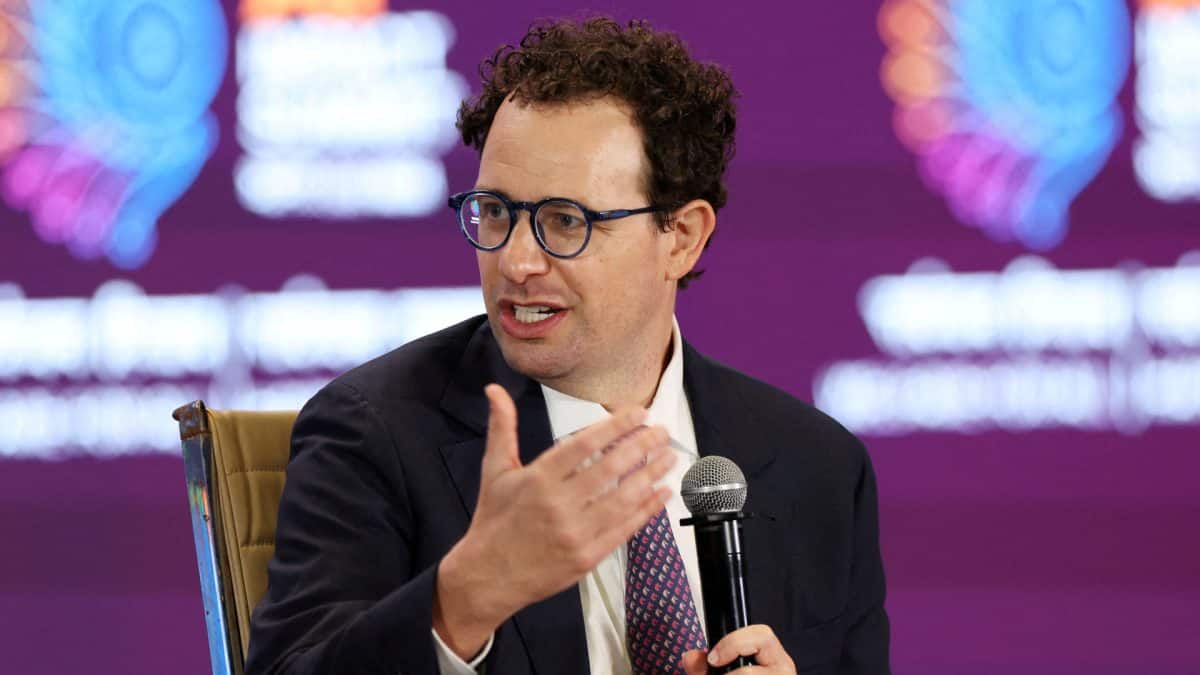
AI Companies Debate Safety Slowdown Amid Internal Tensions

Silicon Valley Divides Over Calls to Slow Frontier AI
Sacks Challenges OpenAI and Anthropic Calls to Slow AI

AI Leaders Agree Development Should Slow for Safety

Altman and Musk Back Amodei’s Call to Slow AI
OpenAI, Anthropic and Google DeepMind Coordinate on AI Safety

Google Pixel 11 Review Highlights AI, Cameras, Battery, Longevity

Apple's New Siri AI Brings Conversational Assistance Across Devices

AI Photo Editing Tools Make Professional Enhancements More Accessible

AI Animal Content Floods Social Media, Challenging Wildlife Trust
