3 days ago
IEEE Report Highlights Technology Winners Racing Toward 2030
The IEEE studied 30 technologies that could change the world by 2030.
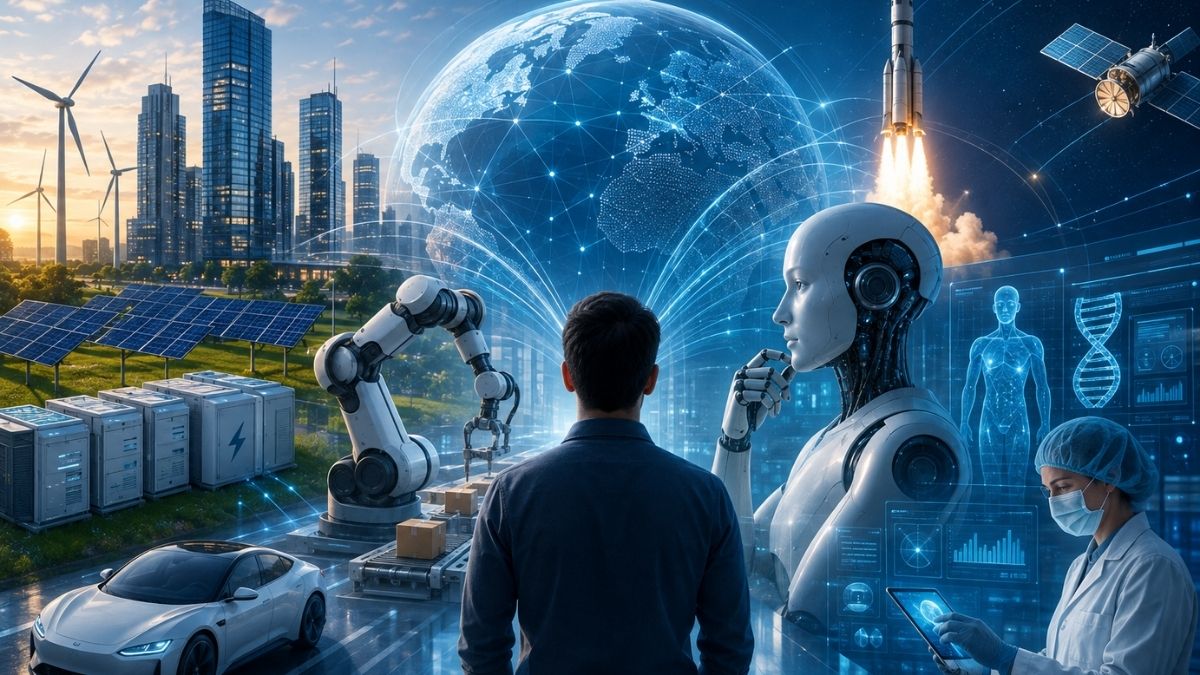
They looked at areas such as artificial intelligence, robots, energy, healthcare and space.
AI and physical AI, which means smart machines that work in the real world, could advance quickly.
Energy storage could become especially important because computers and data centers need a lot of electricity.
Personalized medicine could help doctors choose treatments for individual patients.
Some technologies, such as fusion power and space-based energy, may need many more years.
The technologies may work together instead of succeeding alone.
For example, robots need AI, sensors and advanced materials.
The report says the biggest winners will be technologies that become useful, affordable, safe and trusted.

IEEE assessed 30 technologies across AI, energy, health, space and physical AI.
AI, physical AI, human-AI interaction, energy storage and personalized medicine show the strongest near-term potential.
Energy storage is described as the most mature technology, while personalized medicine has the greatest potential impact on humanity.
Fusion, space-based energy, orbital debris removal and deeper research into life are expected to take longer to mature.
The report says technology winners will depend on convergence, affordability, reliability, safety and public trust rather than one breakthrough alone.
- Who
- The Institute of Electrical and Electronics Engineers (IEEE), drawing on views from 166 members of its Santa Clara Valley Section/Future Directions Industry Advisory Board Committee, assessed the technologies.
- What
- A report evaluated 30 technologies and their expected success, maturity, adoption, human impact and time to adoption through 2030.
- Where
- The technologies are assessed globally, with the report specifically discussing developed countries, cities, factories, healthcare systems and space.
- When
- The assessment focuses on progress through 2030, with individual technologies given timelines ranging from less than two years to 10–15 years.
- Why
- The report aims to identify technologies likely to advance, become widely adopted or support other technologies, while considering risks and interdependencies.
Key facts
- Organization
- Institute of Electrical and Electronics Engineers (IEEE)
- Technologies assessed
- 30
- Main areas
- AI, energy, health, space technology and physical AI
- Assessment contributors
- 166 IEEE Santa Clara Valley Section/Future Directions Industry Advisory Board Committee members
- Most mature technology
- Energy storage
- Highest potential human impact
- Personalized medicine
- Long-term technology
- Fusion, with an estimated arrival of around 10–15 years
- Key theme
- Convergence among AI, energy, computing, robotics, healthcare and space technologies
Quotes
IEEE Future Directions Megatrends 2030 report
A report from the Institute of Electrical and Electronics Engineers assessing technology trends toward 2030
“The next decade will be shaped not by isolated breakthroughs, but by interdependencies among AI, energy, and physical systems.”
 financialexpress.com