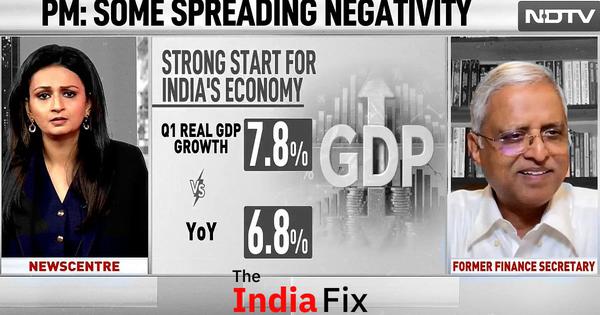
5 days ago
India’s 7.8% GDP Growth Faces Transparency and Trust Questions
India reported that its economy grew by 7.8% using a new way of calculating GDP.
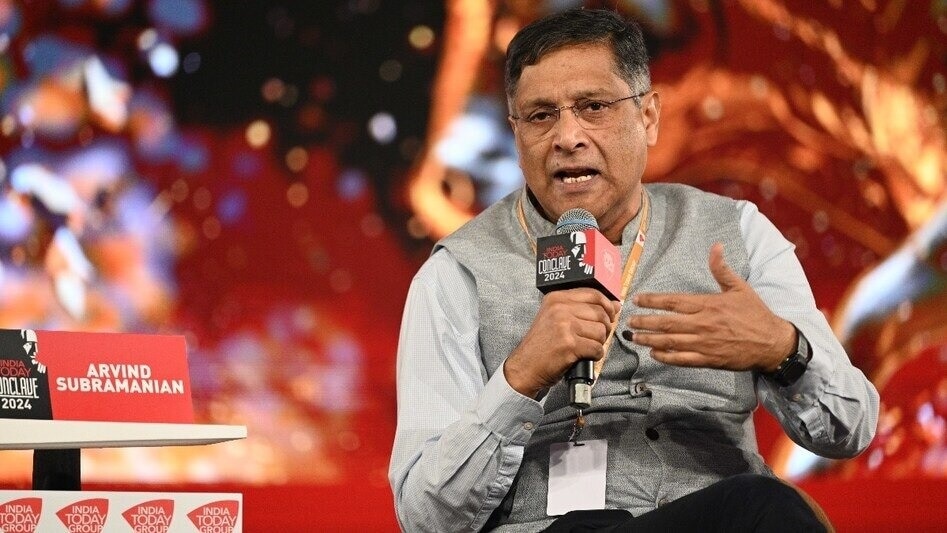
Arvind Subramanian said the number may be possible when the new method is used consistently.
He also noted that company sales, lending and exports were growing strongly.
But he said many people do not fully trust the official economic data.
Some important surveys have been delayed, withdrawn or not released.
He also said fuel shortages and higher energy costs made the strong growth figure harder to understand.
The government says comparisons between the old and new methods are not fair.
Subramanian wants the government to show more data and explain exactly how the number was calculated.

Arvind Subramanian said India’s 7.8% real GDP growth figure is technically valid under the new methodology but remains difficult to assess.
He said listed-company sales, non-food credit and exports showed strong growth, supporting the possibility of a robust expansion.
Subramanian questioned the credibility of official data, citing the delayed Census, withdrawn consumption survey and unreleased methodology details.
He said fuel shortages, rationing, higher energy costs, weak job creation and currency pressure appear inconsistent with accelerated growth.
He called on the government to publish underlying data and a complete “Sources and Methods” document explaining the estimates and revisions.
- Who
- Arvind Subramanian, with India’s Ministry of Statistics and Programme Implementation (MoSPI) defending the methodological comparability of the estimate.
- What
- A debate over India’s reported 7.8% real GDP growth and the transparency, credibility and methodology behind the figure.
- Where
- India.
- When
- The latest estimate concerns FY2025-26; Subramanian specifically discussed conditions in April and May 2026 and a first-quarter revision.
- Why
- Subramanian said the estimate appears difficult to reconcile with energy shortages, higher costs, weak job creation and other economic pressures, while MoSPI says old- and new-method estimates cannot be directly compared.
Subramanian’s concerns
MoSPI’s methodological defense
Validity of the 7.8% estimate
Subramanian’s concerns
Subramanian said the number is plausible but requires a credible, research-backed explanation because it appears disconnected from economic conditions in April and May 2026.
MoSPI’s methodological defense
MoSPI said estimates calculated using the new methodology should not be directly compared with estimates based on the earlier methodology; applied consistently, the new method produces 7.8% real growth.
Evidence supporting growth
Subramanian’s concerns
Subramanian acknowledged that company sales, non-food credit and exports were strong, but said the government must explain inconsistencies involving GST revenue, imports and the manufacturing deflator.
MoSPI’s methodological defense
The indicators cited in the discussion—including 14.9% growth in listed-company sales and non-food credit and 12.1% growth in real exports—support the possibility of strong growth.
Transparency and revisions
Subramanian’s concerns
Subramanian called for the full “Sources and Methods” document, underlying data and an explanation for the 7% first-quarter revision and the absence of a long-back series.
MoSPI’s methodological defense
MoSPI’s stated position, as reported, is that comparisons across the two methodologies are not directly comparable, though the article does not provide a detailed response to each transparency concern.
Key facts
- Reported real GDP growth
- 7.8% under the new methodology
- Listed-company real sales growth
- 14.9%
- Real non-food credit growth
- 14.9%
- Real export growth
- 12.1%
- Energy-cost impact cited by Subramanian
- About 1.5% of GDP, described as effectively a tax increase
- Nominal net GST revenue growth
- 5%
- First-quarter revision questioned
- FY2025-26 GDP was revised down by 7% after the methodology changed
Quotes

Arvind Subramanian
Economist and former chief economic adviser who criticized gaps in India’s official GDP data and methodology.
“The latest numbers are plausible”
 businesstoday.in
Sources
Related news
India’s GDP Debate Intensifies as Calls for Data Transparency Grow
India’s Strong GDP Growth Faces Questions Over Official Data

Mishra Defends India’s 7.8% GDP Growth Against Critics

Government Defends India’s 7.8% Q1 GDP Growth Amid Debate
India’s GDP Growth Debate Extends Beyond Conflicting Statistics
SBI Research Defends India’s 7.8% GDP Growth Estimate

MoSPI Defends Lower GDP Estimates With Better Informal-Sector Data
Economist Defends India’s Revised GDP Estimates Amid Criticism