2 days ago
Economist Defends India’s Revised GDP Estimates Amid Criticism
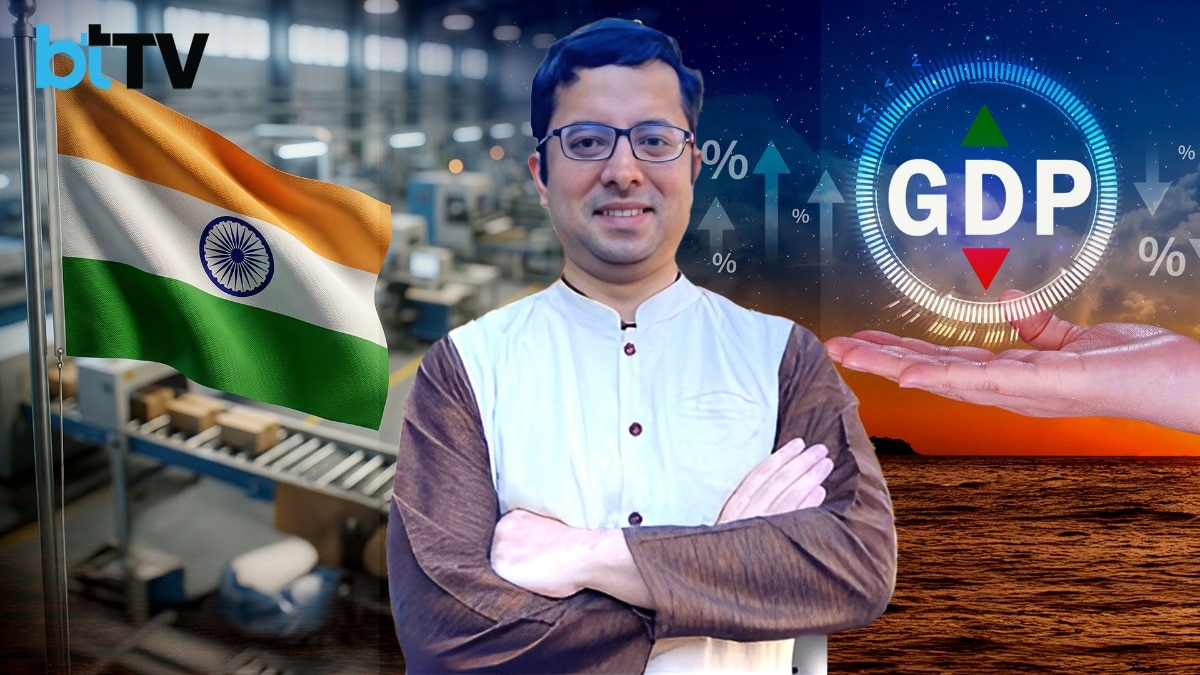
India changed the way it calculates its economy by using newer data and a new base year.
This caused some earlier GDP numbers to be revised downward.
The newest figures showed the economy grew 7.8% in April–June 2026.
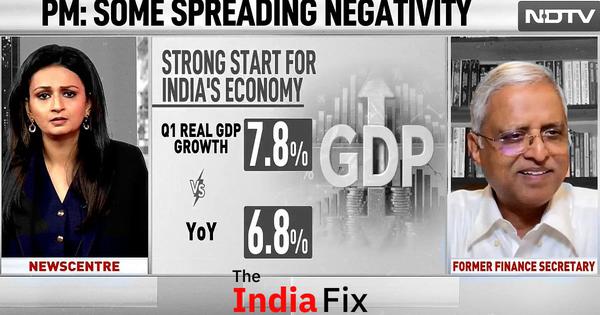
Former Finance Secretary Subhash Garg questioned why the older estimate was reduced so much.
Economist Balasubramanian said much of the change came from trade, repairs, hotels and restaurants.
He said these sectors can change a lot over many years.
He also defended a method that considers price changes for both materials and finished products.
Critics and supporters disagree about whether the revisions make current growth look better, but Balasubramanian said the overall trend is credible.

India’s real GDP grew 7.8% in April–June 2026 under the revised national-accounts series.
The April–June 2025 estimate fell from about ₹86.1 lakh crore under the old series to ₹80.3 lakh crore under the new one.
Former Finance Secretary Subhash Garg questioned whether downward revisions mechanically increased the latest growth rate.
Economist Balasubramanian said trade, repairs, hotels and restaurants accounted for much of the revision.
He defended updated data methods, including double deflation, while acknowledging that the roughly 7% revision merits examination.
- Who
- India’s Ministry of Statistics and Programme Implementation data officials, economist Balasubramanian, former Finance Secretary Subhash Garg, and critics including Arvind Subramanian.
- What
- India reported revised GDP figures showing 7.8% real growth in April–June 2026, while economists debated the revisions and calculation methods.
- Where
- India; the discussion also cited Vietnam’s 2019 GDP revision as an international comparison.
- When
- The figures were reported on August 31, with comparisons involving April–June 2025 and data for 2022–23 and 2023–24.
- Why
- The figures changed after India rebased its national accounts to 2022–23 and incorporated updated data and methods, including double deflation.
Critics of the Revision
Defenders of the Revision
Downward revisions and growth rates
Critics of the Revision
Subhash Garg questioned the sharp reduction in the April–June 2025 estimate and argued that repeated downward revisions could mechanically make current growth appear higher.
Defenders of the Revision
Balasubramanian said revisions can occur when national accounts are rebased using updated data and that the figures should be assessed alongside other macroeconomic indicators.
Size of the revision
Critics of the Revision
Critics have raised concerns about the scale of the approximately 7% revision and alleged that the informal sector may have been overestimated by about 22%.
Defenders of the Revision
Balasubramanian said comparisons of NAS 2026 and NAS 2025 indicated differences of about 3.7% in 2023–24 and 3.34% in 2022–23, smaller than some critics claim.
Double-deflation method
Critics of the Revision
Some critics question whether India should continue using double deflation, which accounts for price changes in both inputs and outputs.
Defenders of the Revision
Balasubramanian defended the approach, noting that the International Monetary Fund had recommended it and arguing that it better measures manufacturing value added.
Key facts
- Latest real GDP growth
- 7.8% in April–June 2026
- New base year
- 2022–23
- Old base year
- 2011–12
- April–June 2025 estimate, new series
- About ₹80.3 lakh crore
- April–June 2025 estimate, old series
- About ₹86.1 lakh crore
- April–June 2026 nominal GDP
- ₹88.3 lakh crore
- Major source of revision
- Trade, repairs, hotels and restaurants
- International comparison
- Vietnam revised its GDP upward by almost 25% in 2019
Quotes
Saurabh Balasubramanian
Economist discussing international GDP rebasing revisions
“Basically, in simpler terms, if you take out this section, the revision between the previous numbers and the current numbers are fairly limited.”
 businesstoday.in
“For instance, countries like Vietnam, for example, in 2019 had a revision of almost 25% percent on their GDP to the positive”
businesstoday.in
Sources
Related news

Government Defends Revised GDP Estimates Amid Growth Manipulation Claims

India’s GDP Revisions Explained: Why Deflators Changed Growth Data

India’s GDP Growth Figure Rekindles Debate Over Data Credibility
Government Defends India’s 7.8% Q1 GDP Growth Amid Debate

India GDP Base-Year Revision Triggers Political Growth Data Storm
SBI Research Defends India’s 7.8% GDP Growth Estimate
MoSPI Defends Lower GDP Estimates With Better Informal-Sector Data

India’s 7.8% GDP Growth Faces Transparency and Trust Questions
Why Distrust Is Undermining India’s Official GDP Data