2 days ago
India’s GDP Debate Intensifies as Calls for Data Transparency Grow
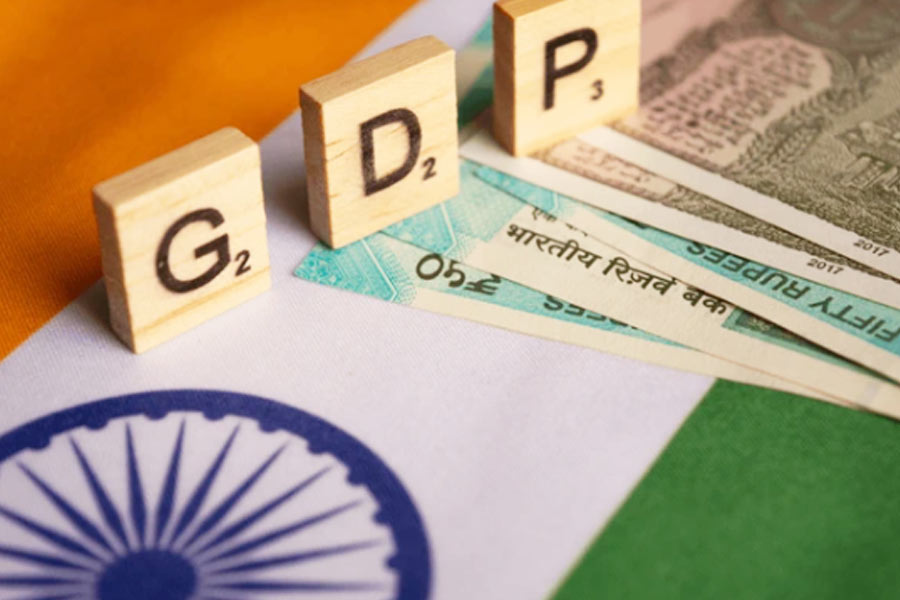
India says its economy grew by 7.8% in the first quarter of 2026-27.
Some people think this number may look better because the earlier comparison number was changed.
Subhash Chandra Garg questioned whether the revised starting point made the growth rate seem larger.
Other experts said he compared numbers made using different systems.
They also pointed to credit, exports, investment, vehicle sales and industrial production as signs of strong activity.
The editorial says the government should explain exactly how it calculated the number.
It should publish its data sources, methods and price adjustments.
This could help people understand whether the economy is truly growing strongly.
The editorial also says growth should eventually bring more jobs, investment, savings and financial security to households.

The government reported real GDP growth of 7.8% for India in the first quarter of 2026-27.
Former finance secretary Subhash Chandra Garg questioned the estimate after a major revision to the comparison-year GDP figure.
Critics of Subhash Chandra Garg said he compared figures based on different methodologies and base years.
Credit, exports, investment, vehicle sales and industrial production were cited as signs of economic strength.
The editorial urged the Centre to publish detailed methods, deflators and sector-wise reconciliations to restore confidence in official data.
- Who
- The Indian government, Subhash Chandra Garg, critics of his analysis and other economic experts are involved in the debate.
- What
- A debate is underway over the reported real GDP growth rate of 7.8% and the transparency of the underlying data and methods.
- Where
- India.
- When
- The reported growth concerns the first quarter of 2026-27; the comparison figure is from the corresponding quarter of 2025-26.
- Why
- The estimate is disputed because the comparison-year GDP was revised substantially, while official data transparency has previously faced criticism.
GDP Defenders
GDP Skeptics
Reliability of the 7.8% estimate
GDP Defenders
Defenders say Subhash Chandra Garg compared figures produced under different base years and methodologies, making his criticism unreliable.
GDP Skeptics
Skeptics argue that revising the comparison-year nominal GDP from about Rs 86 lakh crore to Rs 80 lakh crore may have created a lower starting point and a higher reported growth rate.
Signs of economic strength
GDP Defenders
Supporters point to rising credit, exports, investment, vehicle sales and industrial production as evidence of robust activity.
GDP Skeptics
Skeptics say strong headline GDP growth is difficult to reconcile with weak private investment, limited foreign direct investment, insufficient job creation, inflationary pressures and lower household savings.
Need for government disclosure
GDP Defenders
The government’s published estimate and the new system’s separate treatment of input and output prices are presented as potentially valid explanations for the result.
GDP Skeptics
The editorial argues that the Centre must publish its sources, methods, deflators and sector-level reconciliation because earlier delays and withdrawals of official data have created public suspicion.
Key facts
- Reported growth
- Real GDP growth of 7.8% in the first quarter of 2026-27
- Comparison-year revision
- Nominal GDP for the corresponding quarter of 2025-26 was revised from about Rs 86 lakh crore to Rs 80 lakh crore under the new series
- Main critic
- Former finance secretary Subhash Chandra Garg
- Evidence cited by defenders
- Rising credit, exports, investment, vehicle sales and industrial production
- Requested disclosure
- Complete sources and methods, deflators used, and sector-wise reconciliation of old and new estimates
- Broader concern
- Strong reported growth has not clearly translated into private investment, foreign direct investment or sufficient employment
- Previous data concerns
- The editorial cites the delayed Census, withdrawal of the 2017 consumption survey and delayed government datasets
Sources
Related news
India’s Strong GDP Growth Faces Questions Over Official Data
India’s 7.8% GDP Growth Faces Transparency and Trust Questions
India’s GDP Growth Debate Extends Beyond Conflicting Statistics

Government Defends India’s 7.8% Q1 GDP Growth Amid Debate
Subhash Garg Says GDP Revision FAQs Lack Supporting Data
India’s 7.8% Growth Sparks Debate Over GDP Credibility

Centre Defends GST Growth Figures Amid Base Comparison Dispute
India’s 7.8% GDP Growth Sparks Debate Over Economic Data
GDP Growth Dispute Turns Into Economic Math And Politics

Modi Defends 7.8% Growth as Critics Question India’s GDP