3 hrs ago
Contempt Plea Challenges Delhi Metro Closures During CJP Protest

A petition has asked India’s Supreme Court to take action over metro and train restrictions in Delhi.
The petition says authorities did not follow the court’s direction about keeping transport running in some regulated way.
The court had said there should not be a complete ban on metro and rail movement on October 10.
It also said travel and traffic information should be shared with the public.
Delhi Metro said 45 stations were closed for security reasons from Friday night until Saturday evening.
The restrictions were linked to a protest against the chief election commissioner.
The petition says the closures and cancellations caused people trouble.
These are allegations in the petition, not a reported finding that authorities committed contempt.

A plea filed by advocate Shailendra Mani Tripathi seeks contempt proceedings over alleged violations of the Supreme Court’s October 9 order.
The order called for no complete prohibition of metro and rail movements into Delhi on October 10, while allowing regulated restrictions.
The plea alleges blanket transit shutdowns, train cancellations, inadequate public advisories, and hardship for travelers.
Delhi Metro said 45 stations were closed from 9 p.m. Friday until 6 p.m. Saturday for security reasons.
The closures related to a protest called by the Cockroach Janta Party and student organisations against Chief Election Commissioner Gyanesh Kumar over alleged Election Commission irregularities.
- Who
- Advocate Shailendra Mani Tripathi filed the plea; it names Union Home Secretary Govind Mohan, Delhi Police Commissioner Anurag Kumar, and Delhi Metro Rail Corporation chairperson D Thara as respondents.
- What
- The plea seeks contempt proceedings over alleged failure to comply with the Supreme Court’s direction on metro and rail movement.
- Where
- The Supreme Court of India; the alleged transport restrictions were in Delhi.
- When
- The plea was filed Saturday, October 10; the court’s direction was issued October 9.
- Why
- The petitioner alleges that authorities maintained transit shutdowns and cancellations despite the court’s direction and an assurance to reassess restrictions.
Petitioner's allegations
Court direction and authorities' stated position
Whether restrictions breached the order
Petitioner's allegations
The plea alleges authorities continued blanket shutdowns and cancellations despite the Supreme Court’s October 9 direction.
Court direction and authorities' stated position
The court’s order allowed prudent, regulated operations and said law enforcement could restrict unruly movement; the Solicitor General said he would consult the government and that restrictions could be regulated and reviewed.
Purpose and effects of closures
Petitioner's allegations
The plea says the closures and lack of clear advisories disrupted public life and stranded essential travelers.
Court direction and authorities' stated position
Delhi Metro’s advisory said 45 stations were closed for security reasons; the reports do not provide a fuller response from the named authorities to the contempt allegations.
Key facts
- Court direction
- On October 9, the Supreme Court said there should be no outright prohibition of metro movement on October 10, while allowing suitable regulation.
- Petitioner
- Shailendra Mani Tripathi
- Named respondents
- Union Home Secretary Govind Mohan, Delhi Police Commissioner Anurag Kumar, and DMRC chairperson D Thara
- Metro closures
- Delhi Metro said 45 stations were closed from 9 p.m. Friday until 6 p.m. Saturday for security reasons.
- Protest
- Called by the Cockroach Janta Party and some student organisations against Chief Election Commissioner Gyanesh Kumar.
- Petition claims
- Blanket shutdowns, train cancellations, inadequate advisories, and hardship to travelers; these remain allegations in the provided reports.
- Relief requested
- The plea seeks revocation of blanket prohibitory orders, regulated operations with public notice, and contempt proceedings.
Quotes
Supreme Court bench
The bench hearing the earlier petition concerning transit restrictions during the protest.
“It appears that the notifications are overreaching, as they impose a complete ban upon essential public transportation. Upon our indication that a distinction exists between total ‘prohibition’ and the ‘regulation’ of metro and other train movements, Solicitor General of India has fairly agreed to impress upon the authorities to reassess such prohibitions.”
 theprint.in
“This brutal assault on the fundamental rights of the citizens and sheer disregard to the orders of this court amounts to deliberate, intentional attempt on the part of Delhi Metro, Delhi Police and the Union government which must be dealt with an iron hand.”
theprint.in
Sources


Related news
Supreme Court Bars Complete Metro Shutdown Amid Protest
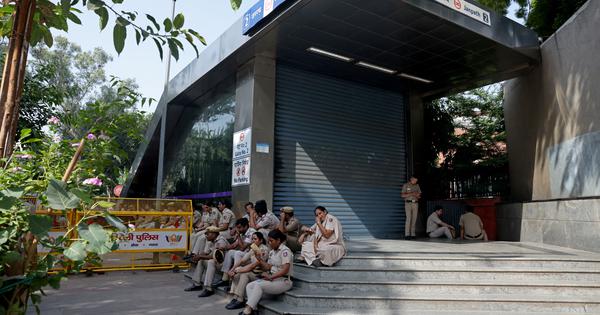
Supreme Court Bars Blanket Delhi Metro Shutdown Ahead of Protest
Supreme Court Seeks Regulated Delhi Metro Services Ahead of Protests

Supreme Court Seeks Answers Over 17 Metro Station Closures
Supreme Court Hears Urgent Plea Over Delhi Protest Curbs

Supreme Court Told Closures Could Restrict Delhi Protest Rights
Delhi Plans Extensive Security Ahead of CJP Protest
Delhi Plans Extensive Security and Travel Curbs for CJP Protest

Delhi Officer Seeks Hold on Additional DCP Charge
Gurugram Police Chief Apologises for Lapses in Cremation Case