1 week ago
Indian Geologists Link Jharkhand Rocks to 3.5-Billion-Year-Old Life
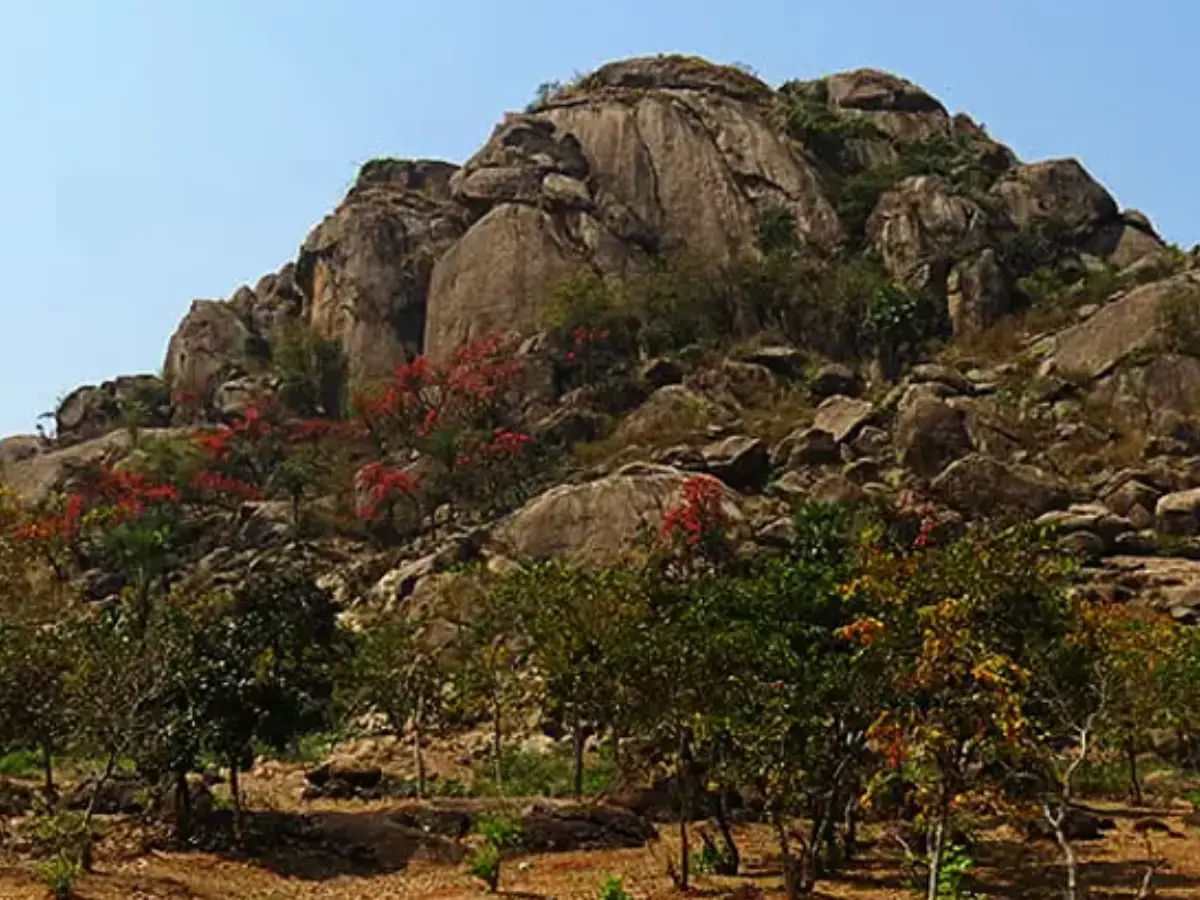
Scientists found very old rocks in Jharkhand, India.
The rocks are about 3.5 billion years old.
Inside them were patterns that may be the remains of tiny living things called microbes.
These microbes may have lived together in thin mats.
The researchers studied carbon trapped inside the rocks.
They used lasers to check whether the carbon came from living organisms or from volcanoes and other non-living processes.
Their tests suggested that the carbon was part of the original rock.
This helps scientists understand how early life may have lived on Earth.

Geologist Trisrota Chaudhuri and her team found evidence of an ancient microbial community in rocks from Jharkhand.
The discovery was made near Bhitardari, Jamshedpur, in the 3.5-billion-year-old Singhbhum Craton.
Black-and-white bands in the rock were identified as fossilised microbial mats containing carbon layers.
Raman spectroscopy indicated the carbon was part of the original rock and had endured temperatures of 324–369°C.
The study, published in the Proceedings of the National Academy of Sciences, directly linked the rock’s age with evidence of life.
- Who
- Geologist Trisrota Chaudhuri, the Geological Survey of India, and collaborating scientists in Europe and the United States.
- What
- Researchers discovered and directly dated evidence interpreted as fossilised microbial mats from about 3.5 billion years ago.
- Where
- Near Bhitardari, Jamshedpur, in Jharkhand, within the Singhbhum Craton.
- When
- The organisms lived and died about 3.5 billion years ago; the discovery was reported in a study published in the Proceedings of the National Academy of Sciences.
- Why
- To identify and date some of Earth’s earliest evidence of life and determine whether the carbon came from biological or non-biological processes.
Biological Origin
Non-Biological Origin
Source of the carbon
Biological Origin
The researchers interpreted the carbon layers and patterns as remnants of microbial mats, meaning they came from organisms that lived in the rock’s ancient environment.
Non-Biological Origin
The article notes that the carbon could instead have resulted from non-biological processes, such as volcanism.
Evidence from the rock
Biological Origin
The team said the carbon was indigenous to the original rock because it experienced lower temperatures than later quartz veins, supporting its interpretation as ancient biological material.
Non-Biological Origin
A non-biological explanation remained an alternative that the researchers specifically tested using Raman spectroscopy.
Key facts
- Estimated age
- Approximately 3.5 billion years
- Discovery location
- Bhitardari near Jamshedpur, Jharkhand
- Geological setting
- The Singhbhum Craton, one of Earth’s oldest surviving continental-crust blocks
- Evidence identified
- Black-and-white bands interpreted as fossilised microbial mats
- Testing method
- Raman spectroscopy, using a laser to study the carbon’s structure
- Carbon temperature range
- The carbon endured approximately 324–369°C
- Publication
- Proceedings of the National Academy of Sciences
Sources
Related news
Ancient Million-Atomic-Bomb Volcano Discovered Beneath England’s East Coast by Scientists
1,000-Year-Old Sealed Skeleton's DNA May Reveal Its Past
Study Suggests Bacteria and Archaea Took Two Paths to Life
10,000-Year-Old Rock Art and Caves Found at Indrapalanagaram

Lunar South Pole May Preserve Earth Microbes, Study Finds

Researchers Defend Monte Verde’s Older Age in Chile

East Godavari Committee Orders 22 Lift Tanks Filled Amid El Nino