

2 weeks ago
Study Suggests Bacteria and Archaea Took Two Paths to Life
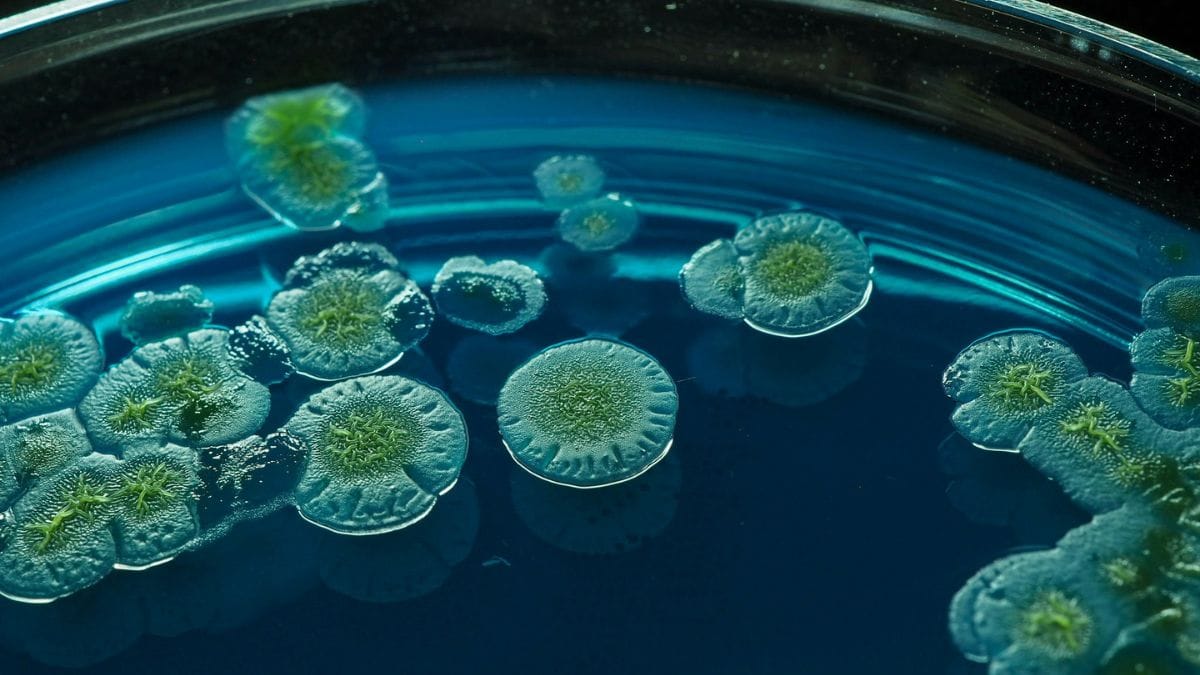
Billions of years ago, scientists think tiny living things may have started near hot vents deep under the ocean.
A group of scientists in Germany studied how the very first cells began to make the parts they need to live.
They found that early life probably used metals from the water to help run important chemical reactions.
Later, living cells learned to use special helpers called enzymes.
The scientists discovered that two big groups of tiny life, bacteria and archaea, may have each become free-living on their own.
The two groups sometimes invented different versions of the same enzyme, even though they came from the same starting code.
This means life may have begun as one shared code but then took two separate paths to independence.
The study also suggests some of the earliest energy reactions used a chemical called phosphite with the help of the metal palladium.
This research gives scientists new clues about how life began on Earth.

Researchers at Heinrich Heine University Düsseldorf published a study in Science Advances on 5 August suggesting bacteria and archaea evolved separately into free-living cells.
The team built a network of around 420 reactions by which cells make key compounds such as amino acids and nucleotides.
The findings suggest LUCA, the last universal common ancestor, had enzymes for only about half of metabolism's reactions, with environmental metals possibly catalysing the rest.
Researchers found cases where the ancestors of bacteria and archaea independently developed structurally different enzymes to perform the same essential metabolic reaction.
Senior author William F Martin said the work points to 'one origin of the genetic code, but two origins of life.'
- Who
- Researchers at Heinrich Heine University Düsseldorf, led by biologist Natalia Mrnjavac with senior author William F Martin
- What
- A study proposing that bacteria and archaea evolved separately into independent free-living cells, despite sharing an ancient genetic code
- Where
- Led at Heinrich Heine University Düsseldorf, Germany; findings relate to early life emerging around hydrothermal vents
- When
- Published in Science Advances on 5 August
- Why
- To understand how early metabolism developed in stages and how the ancestors of bacteria and archaea became free-living cells
Key facts
- Study title
- Intermediate stages in the origin of metabolism at a phosphorylating hydrothermal vent
- Journal
- Science Advances
- Publication date
- 5 August
- Lead author
- Natalia Mrnjavac
- Senior author
- William F Martin
- Institution
- Heinrich Heine University Düsseldorf
- Reaction network
- Around 420 reactions for making amino acids and nucleotides
- Key finding
- One origin of the genetic code, but two origins of life
Quotes
Natalia Mrnjavac
Lead author, biologist, Heinrich Heine University Düsseldorf
““Such parallel inventions could have paved the way to the independent emergence of free‑living bacteria and archaea.””
 theprint.in
William F. Martin
Senior author, biologist, Heinrich Heine University Düsseldorf
““We are looking at one origin of the genetic code, but two origins of life.””
theprint.in
Sources
Related news

Indian Geologists Link Jharkhand Rocks to 3.5-Billion-Year-Old Life
Ancient poop may have driven Earth's Cambrian explosion, study says

AI Helps Scientists Create 16 New Viruses Targeting Resistant Bacteria
AI-Designed Viruses Created From Scratch for the First Time

NASA Finds Earth Microbes Could Survive Near Moon’s South Pole
