

3 weeks ago
10,000-Year-Old Rock Art and Caves Found at Indrapalanagaram
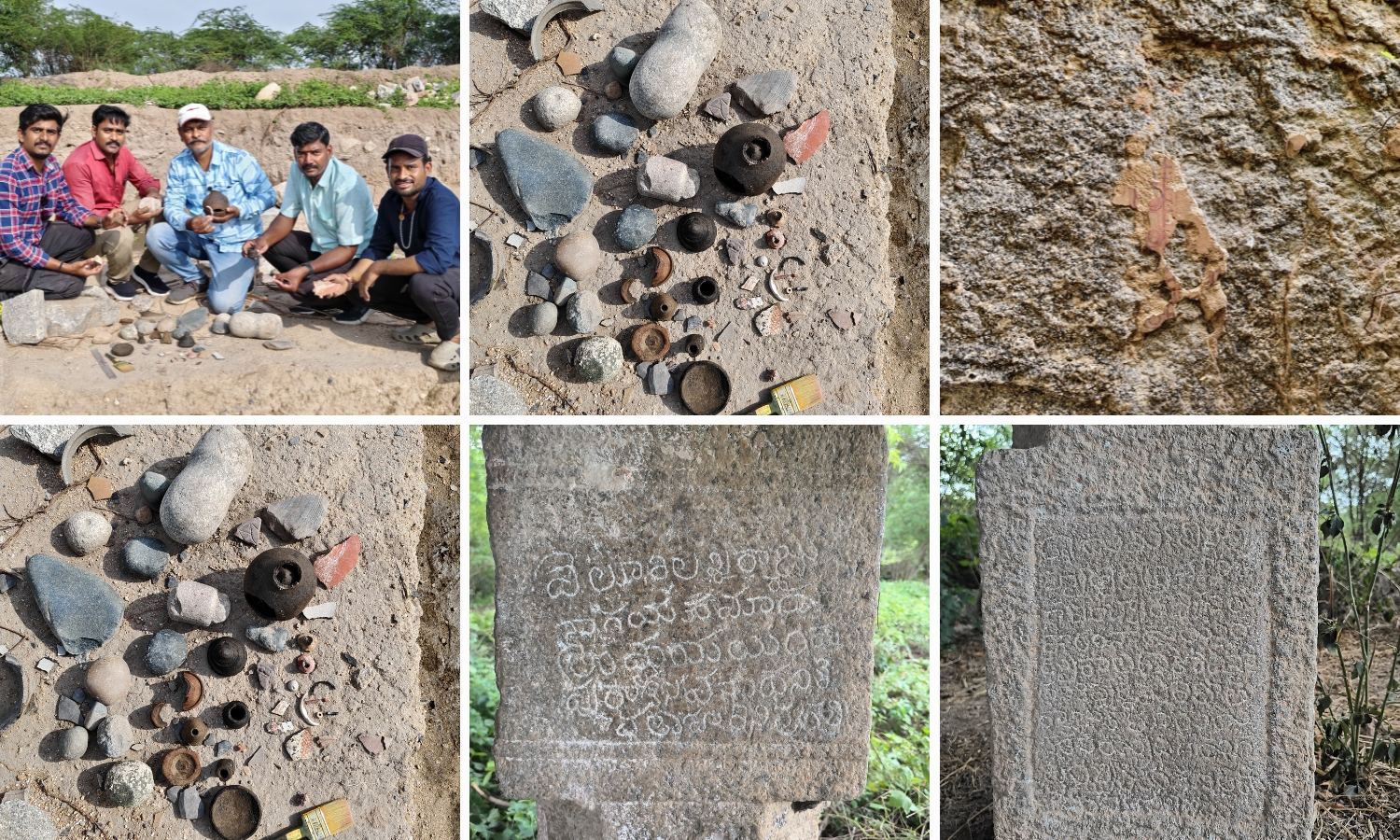
People who study very old things found very old caves and rock paintings in a place called Indrapalanagaram in India.
The caves could be about 10,000 years old.
That is much older than anything your grandparents would remember!
The paintings are faded red drawings on a large rock, about 15 feet above the ground.
They were found along the path that leads to the Yellamma temple.
The people who found them think the paintings may come from a very old time called the Kakatiya era.
Workers also found stone tools, pottery pieces, beads and even ivory bangles while digging for a government job scheme.
A man named Ratnakar Reddy led the team that found the caves.
He is worried that digging might destroy old treasures because people do not know they are there.
He asked the heritage department to protect the paintings and dig carefully so the history is not lost.

Prehistoric caves believed to be around 10,000 years old and rock art paintings were found at Indrapalanagaram, the first capital of the Vishnukundin dynasty, in Yadadri Bhuvanagiri.
A team led by heritage enthusiast Reddy Ratnakar Reddy of the Matti Foundation identified the caves at the base and upper reaches of Shankaram hill.
Faded red-coloured paintings were found on a rock face about 15 feet above the ground along the path to the Yellamma temple, and researchers say they may date to the Kakatiya era.
Digging at Patigadda under the 100-day employment guarantee scheme yielded microlithic tools, neolithic stone axes, megalithic mortars, pottery fragments, golden-glazed vessels, ivory bangles and beads.
Ratnakar Reddy urged the heritage department to conduct official excavations, re-erect the broken inscription on Shankaram Gutta, and protect the fading paintings and the Vishnukundina-period Vinayaka idol.
- Who
- A team led by heritage enthusiast Reddy Ratnakar Reddy of the Matti Foundation, along with Vinay Goli, Abhishek, Samudrala Raju and Samudrala Srinivas.
- What
- Discovery of prehistoric caves believed to be around 10,000 years old, faded red rock art paintings, and artefacts including microlithic tools, stone axes, pottery, ivory bangles and beads.
- Where
- Indrapalanagaram, on Shankaram hill in Yadadri Bhuvanagiri, Telangana, reported from Hyderabad.
- When
- The findings were made during ongoing work under the rural jobs scheme; the articles do not specify a date.
- Why
- The artefacts were uncovered during digging under the 100-day employment guarantee scheme, and researchers want official excavations and protection because evidence is at risk of being destroyed.
Heritage Preservation
Rural Employment Works
Digging under the employment guarantee scheme
Heritage Preservation
Heritage enthusiast Ratnakar Reddy warns that crucial historical evidence is being destroyed during work under the employment guarantee scheme due to a lack of awareness, and urges the heritage department to conduct official excavations and protect the finds.
Rural Employment Works
Work under the 100-day employment guarantee scheme is ongoing and productive; the same digging at Patigadda actually brought the ancient artefacts to light, enabling the discoveries to be made.
Key facts
- Discovery site
- Indrapalanagaram, Yadadri Bhuvanagiri, Telangana
- Estimated age of caves
- Around 10,000 years
- Historical significance
- First capital of the Vishnukundin dynasty
- Key artefacts found
- Microlithic tools, neolithic stone axes, megalithic mortars, pottery fragments, golden-glazed vessels, ivory bangles, beads
- Rock art
- Faded red paintings about 15 feet above the ground along the path to Yellamma temple
- Possible era of paintings
- Kakatiya era, linked to Pancheshwar Alayam temple built under Rani Rudramadevi
- Discovery team
- Matti Foundation team led by Reddy Ratnakar Reddy
- Request made
- Official excavations and protection of paintings, broken inscription and Vinayaka idol
Sources
Related news

Rayalaseema’s Ancient Heritage Faces Growing Neglect and Vandalism
Rare Nagini and Garuda Sculptures Unearthed Near Hampi Jain Temple

Tunnel Discovery Near Qutb Shahi Tombs Revives Golconda-Charminar Mystery
Gajapati-Era Odia Inscription Found Inside Tekkali Royal Palace
11th-Century Jain Inscription Discovered at Dundigal Temple
ASI Digitises 3,500 Ancient Inscriptions for Online Access

All-Party Meeting Seeks Eligibility Cards for Telangana Tenant Farmers

Telangana BJP Alleges Congress, BRS Avoid Hyderabad Liberation Day

BRS Charges Telangana CM Revanth With Corruption, Misrule

BRS Accuses Telangana Congress Government of Failing Poll Promises

Telangana Government Marks 1,000 Days With Welfare Push