

1 week ago
IMA Warns Against Self-Medication Amid India’s Seasonal H1N1 Surge

India is seeing more seasonal H1N1 flu during the monsoon.
The Indian Medical Association says most infections are mild and improve on their own.
Testing has not found new genetic changes in the virus.
Antibiotics do not kill viruses, so people should not take them for flu unless a doctor finds a bacterial infection.
Oseltamivir is a prescription antiviral that should be used only with medical supervision.
Trouble breathing, chest pain, confusion, seizures or persistent vomiting are warning signs.
Children who cannot feed, become very tired or have serious breathing problems also need urgent help.
Washing hands, covering coughs, wearing masks in crowded indoor places and staying home while sick can reduce spread.
The IMA recommends annual flu vaccination for healthcare workers, pregnant women, older people and those with chronic illnesses.

The Indian Medical Association issued an advisory on India’s monsoon-related seasonal H1N1 increase.
Reports cited differing Delhi figures: more than 1,770 laboratory-confirmed cases, or 3,000 influenza cases including 2,308 H1N1 infections.
Indian Council of Medical Research surveillance found seasonal Influenza A (H1N1), with no novel genetic mutations detected.
The IMA urged people not to self-medicate with antibiotics or antivirals and listed symptoms requiring emergency care.
It recommended hygiene measures, masks in crowded indoor spaces, staying home after fever and annual vaccination for higher-risk groups.
- Who
- The Indian Medical Association issued the advisory, citing surveillance by the Indian Council of Medical Research.
- What
- The IMA warned against self-medication during a seasonal Influenza A (H1N1) surge and identified symptoms requiring urgent care.
- Where
- The surge is occurring in India, with cases reported in Delhi, Maharashtra, Karnataka and West Bengal.
- When
- The advisory was issued on Wednesday, August 26, 2026, during the monsoon period.
- Why
- The IMA aims to discourage unnecessary antibiotic and antiviral use, limit antimicrobial-resistance risks and encourage timely treatment for severe illness.
Key facts
- Reported Delhi figures
- Sources cited either more than 1,770 laboratory-confirmed H1N1 cases or 3,000 influenza cases, including 2,308 H1N1 infections.
- Virus status
- The circulating virus was identified as seasonal Influenza A (H1N1), with no novel genetic mutations detected.
- Antibiotic guidance
- The IMA advised against using azithromycin, amoxicillin-clavulanate, cefixime or other antibiotics for flu symptoms unless a physician diagnoses a secondary bacterial infection.
- Antiviral guidance
- Oseltamivir is prescription-only and should be used for specific clinical categories under medical supervision.
- Emergency warning signs
- Difficulty breathing, chest pain, bluish lips or fingers, coughing blood, confusion, seizures, persistent vomiting or inability to tolerate fluids require urgent attention.
- Prevention
- The advisory recommends handwashing for at least 20 seconds, covering coughs and sneezes, masking in crowded enclosed spaces and staying home for at least 24 hours after fever resolves without medication.
- Priority vaccination groups
- Healthcare personnel, pregnant women, elderly people and those with underlying chronic medical conditions.
Quotes
Indian Medical Association (IMA)
The national medical association that issued the H1N1 public health advisory
“India is witnessing a seasonal surge in Influenza A (H1N1) / Swine Flu cases during the monsoon period, making heightened vigilance necessary, but there is no cause for panic.””
 m.rediff.com
 thestatesman.com
 freepressjournal.in
 republicworld.com
“Do not consume Azithromycin, Amoxicillin-Clavulanate, Cefixime, or other antibiotics for flu symptoms.”
m.rediff.com
thestatesman.com
freepressjournal.in
Sources


Related news
Delhi Medical Association Issues Advisory Amid Rising H1N1 Cases

India's Seasonal H1N1 Surge Prompts Advisories, Doctors Urge Calm

ICMR Says Seasonal H1N1 Surge Needs No Masks
ICMR Says Seasonal H1N1 Flu Rise Needs No Panic
Delhi H1N1 Cases Rise as Government Urges Mask Use
Health Ministry Reviews Preparedness as H1N1 Infections Surge
Maharashtra Starts DNA Profiling After Nepal Disaster Deaths
Maharashtra Launches Campaign to Improve Schools and Student Facilities
Maharashtra CET Cell Tightens Technical Admissions With Transparency Measures
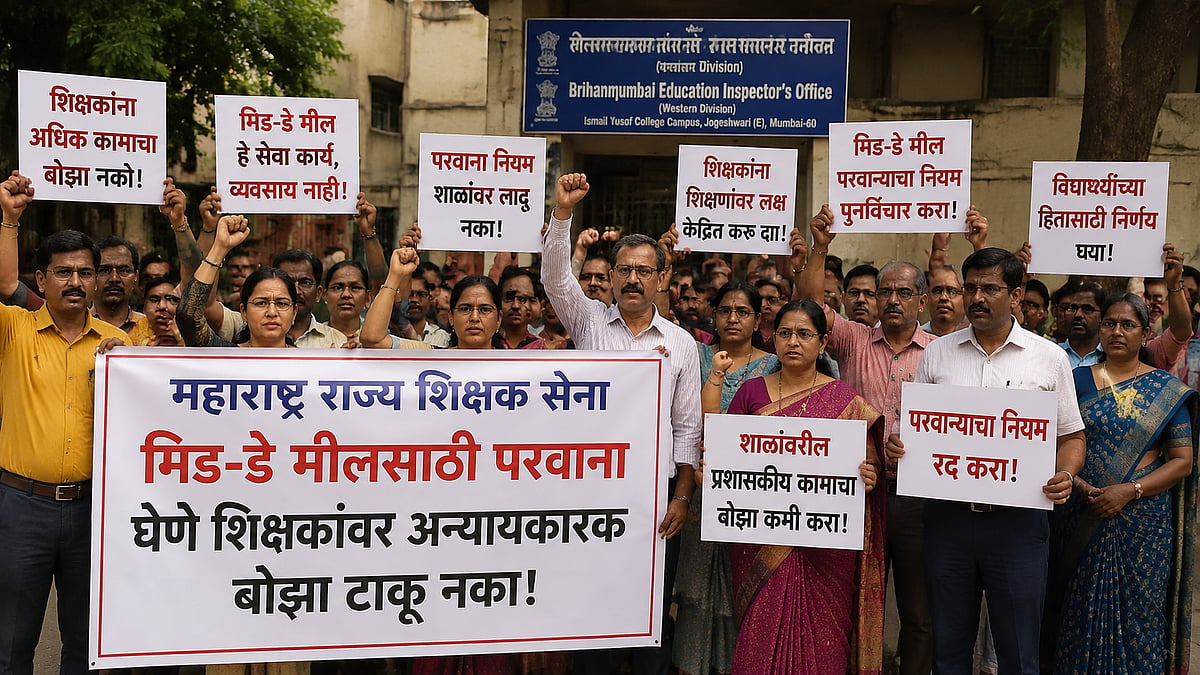
Maharashtra Teachers Protest Food Licence Rule For Mid-Day Meals

Maharashtra, Australia Plan Biomanufacturing Task Force for Joint Growth
