

1 hr ago
OECD Reading and Math Scores Hit Record Lows
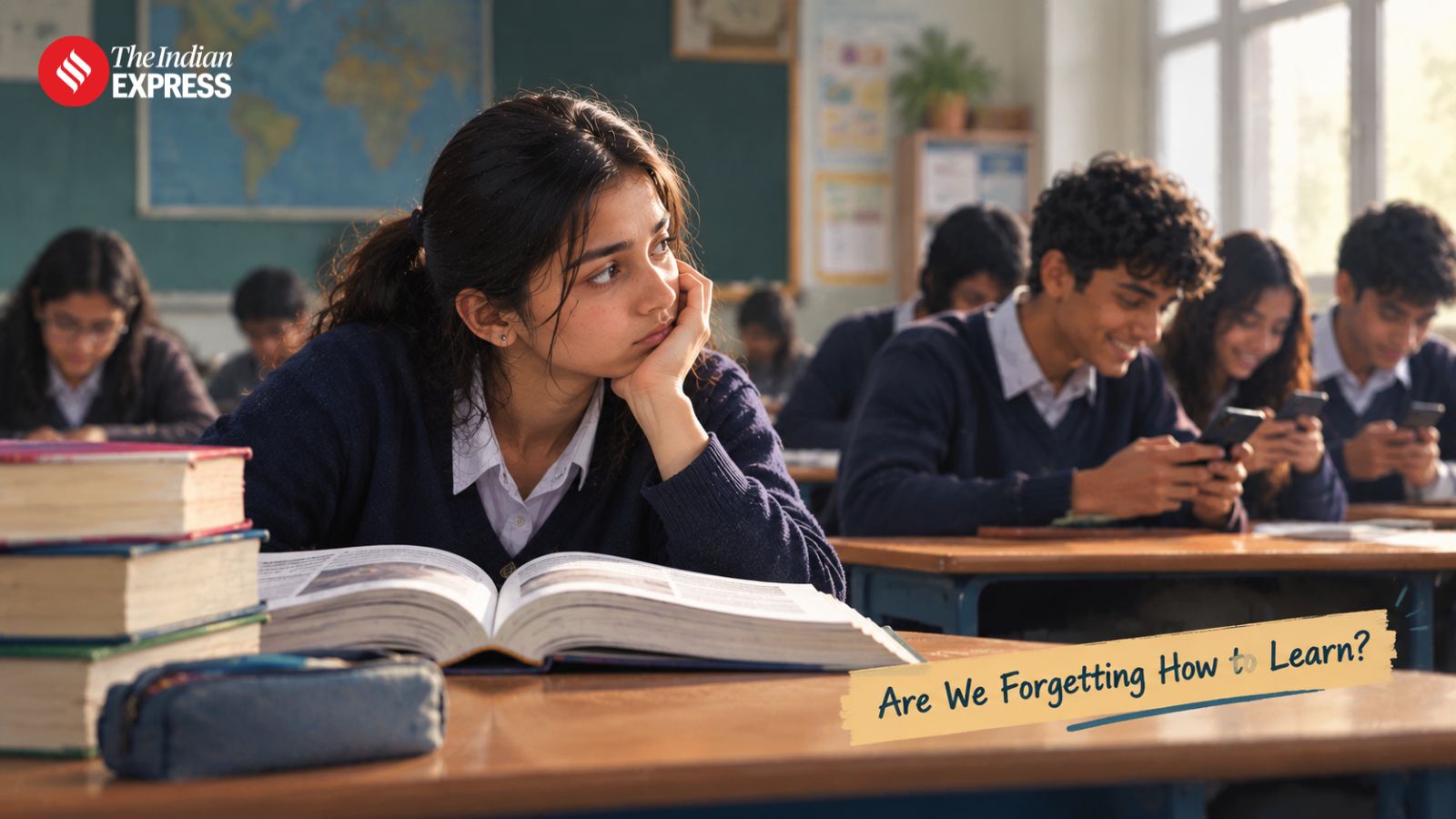
A major international test found that many 15-year-olds are doing worse in reading and mathematics than students did years ago.
The test was given to more than 760,000 students in 91 countries and economies.
Reading scores fell the most, dropping by 28 points in OECD countries since 2015.
Mathematics scores fell by 22 points.
Science scores did not change much between 2022 and 2025.
Students from wealthier families generally scored much higher than students from poorer families.
Many students use AI chatbots to help them learn, but they do better when teachers show them how to check AI answers.
Digital devices can also distract students, so technology works best when it is used carefully.

Average reading scores across OECD countries fell 28 points since 2015, while mathematics scores dropped 22 points.
PISA 2025 assessed more than 760,000 15-year-olds across 91 countries and economies.
The OECD said the reading decline equates to about one-and-a-half years of learning, and the mathematics decline to just over one year.
Science scores were broadly stable from 2022 to 2025, although they had declined between 2009 and 2022.
Students from advantaged backgrounds scored 85 points higher in science than disadvantaged students, while unguided or leisure-focused device use was associated with weaker performance.
- Who
- The OECD and its Programme for International Student Assessment tested 15-year-old students across 91 countries and economies.
- What
- PISA 2025 found record-low OECD-average performance in reading, mathematics and science, with the largest long-term declines in reading and mathematics.
- Where
- Across OECD countries and other participating education systems worldwide.
- When
- The latest results were reported for PISA 2025, with comparisons extending back to 2015 and earlier assessment cycles.
- Why
- The results reflect long-term declines in learning, unequal performance linked to socioeconomic background, and the effects of how digital devices and AI are used in education.
Guided Technology Use
Unmanaged Technology Use
Role of AI and devices in learning
Guided Technology Use
Students who used AI to learn and were taught to assess the quality of AI-generated information tended to perform better.
Unmanaged Technology Use
Frequent AI use without guidance, as well as excessive or leisure-oriented device use, was associated with weaker performance and classroom distraction.
Key facts
- Reading decline
- OECD average reading scores fell 28 points from 2015 to 2025.
- Mathematics decline
- OECD average mathematics scores fell 22 points from 2015 to 2025.
- Science score
- The OECD average science score in 2025 was 482 points.
- Mathematics score
- The OECD average mathematics score in 2025 was 463 points.
- Reading score
- The OECD average reading score in 2025 was 461 points.
- Assessment size
- PISA 2025 covered more than 760,000 students across 91 countries and economies.
- Socioeconomic gap
- Advantaged students scored 85 points higher in science than disadvantaged students across OECD countries.
Sources
Related news

Nithin Kamath Warns AI and Falling Scores Threaten Learning

Nithin Kamath Raises Concerns About AI and Student Skills

Bangladesh Children Struggle With Reading Despite Literacy Progress

India’s School Crisis Deepens As Learning Outcomes Decline

Report: Nearly 23% of US children chronically absent from school
OpenAI Urges Responsible AI Use While Preserving Student Learning
NATO Chief Warns China Could Coordinate Russia During Taiwan Attack

Modi, Xi Emphasize Border Peace and Long-Term India-China Ties

Rebecca F Kuang’s Taipei Story Explores Language and Belonging

BRICS Plans New Policy Levers to Expand Intra-Bloc Trade

Body Language Expert Decodes Modi’s BRICS Hugs and Handshakes
