1 hr ago
BRICS Plans New Policy Levers to Expand Intra-Bloc Trade
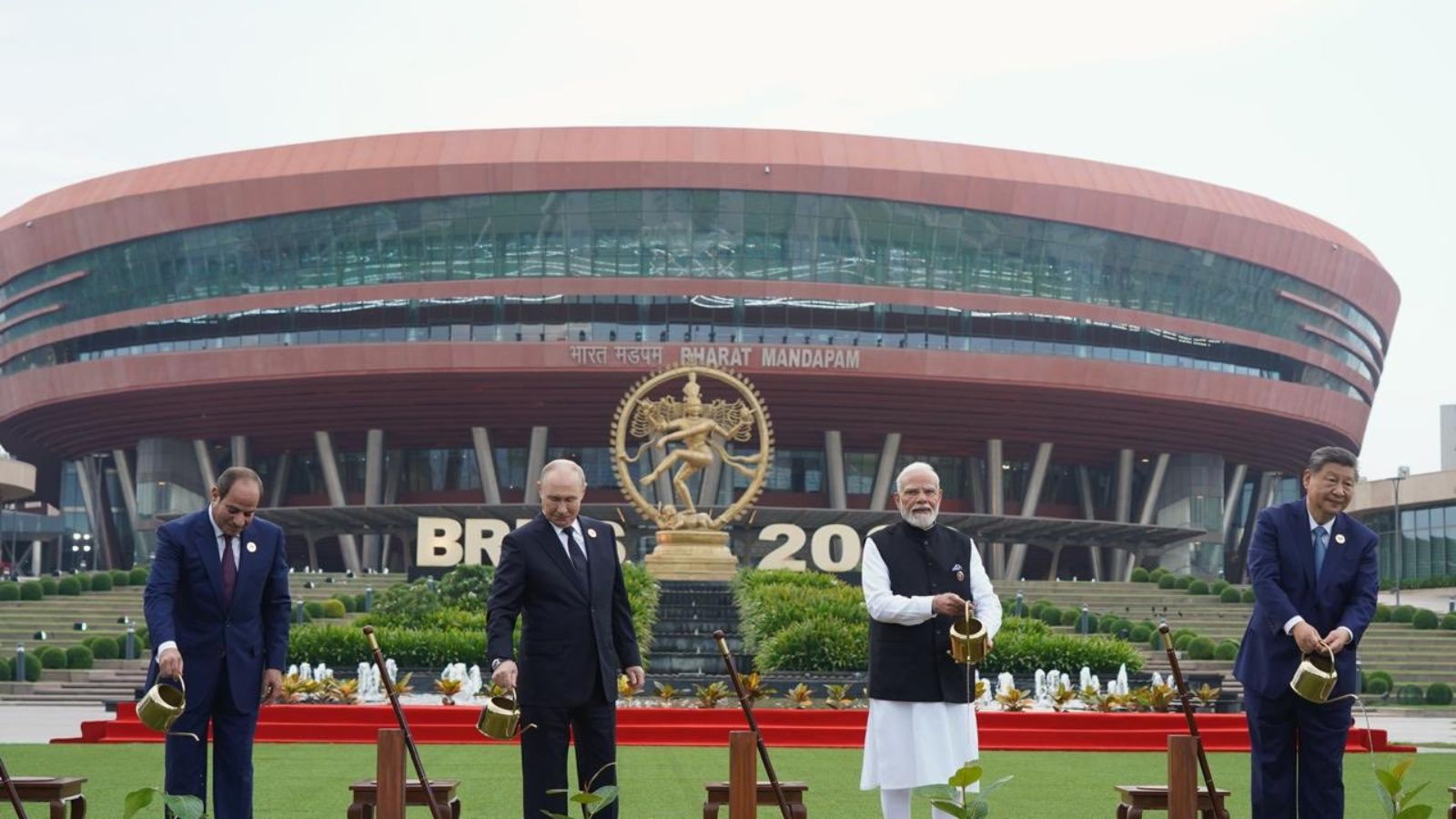
BRICS countries want to trade more with one another.
They plan to study policies that could make trade easier and supply chains stronger.
These policies could involve better roads and digital systems, simpler rules, and improved worker skills.
In 2025, BRICS countries made a large share of the world’s exports, but only a small part of their trade was with each other.
China was the biggest trader inside the group.
India had the largest trade deficit among the members.
Officials also want payment systems to work better together and to encourage trade using members’ own currencies.
The countries are considering invoice discounting so small businesses can receive money sooner for goods they have already sold.
Experts say businesses need more support because cooperation has so far focused mainly on governments.

The New Delhi Declaration calls for mutually reinforcing policy levers to strengthen trade within BRICS and build resilient global value chains.
Proposed measures include better regional integration, infrastructure, regulatory frameworks, workforce skills, diversified supply chains, and reduced trade barriers.
BRICS accounted for 21.6% of global exports in 2025, but only 4.1% of trade among its members was intra-BRICS.
China dominates intra-BRICS trade, while India recorded the grouping’s largest trade deficit at $226 billion in 2025.
The declaration supports exploring interoperable payment systems, local-currency settlements, and invoice discounting to help MSMEs participate in international trade.
- Who
- The BRICS member countries, their trade and finance officials, and businesses including micro, small, and medium enterprises.
- What
- The New Delhi Declaration outlined policy measures to increase intra-BRICS trade, strengthen global value chains, improve cross-border payments, and support MSMEs.
- Where
- The measures concern trade among BRICS members, with the declaration issued in New Delhi.
- When
- The declaration was issued on Saturday; it followed an August meeting of BRICS trade ministers in Jaipur and a March UNCTAD report.
- Why
- To make trade within the grouping more resilient and diversified, address low intra-BRICS trade, and reduce financing and other barriers affecting businesses.
Supporters of Deeper Integration
Critics and Implementation Concerns
How to increase trade
Supporters of Deeper Integration
Officials and analysts support better market access, lower trade barriers, improved logistics, diversified supply chains, and local-currency settlement.
Critics and Implementation Concerns
UNCTAD said BRICS cooperation has relied on soft initiatives and lacks a comprehensive trade agreement covering the entire bloc.
Business participation
Supporters of Deeper Integration
Governments and business representatives say stronger support and an invoice discounting mechanism could help MSMEs enter international trade and global value chains.
Critics and Implementation Concerns
Business awareness of opportunities in other BRICS countries is described as abysmally low, with most interactions still occurring government to government.
Policy design
Supporters of Deeper Integration
A coordinated bloc-wide approach could strengthen resilient value chains and cross-border commerce.
Critics and Implementation Concerns
The obstacles differ by country, including finance, taxes, electricity, and political instability, requiring differentiated policy responses rather than one uniform solution.
Key facts
- BRICS share of global exports
- $5.7 trillion, or 21.6% of the $26.3 trillion global total in 2025.
- Intra-BRICS trade share
- 4.1% of the grouping’s trade in 2025.
- China’s intra-BRICS trade
- China exported $551 billion to and imported $465 billion from other BRICS members in 2025.
- India’s trade deficit
- India had the largest intra-BRICS trade deficit, at $226 billion in 2025.
- MSMEs in BRICS
- The 11 members are home to 266 million MSMEs; India accounts for 94.91 million, or 36%.
- Proposed financing measure
- An Invoice Discounting Mechanism would help businesses obtain funds against unpaid customer invoices.
- Payment cooperation
- The declaration supports exploring interoperable payment and messaging channels and promoting settlements in BRICS local currencies.
Quotes
Ajay Srivastava
Founder of the Global Trade Research Initiative
“To realise the potential of intra-BRICS trade, especially among original BRICS countries, respective governments have to liberally facilitate and support businesses to explore by reducing their risks”
 indianexpress.com
“Overall, intra-BRICS trade follows a China-centred hub-and-spoke pattern, rather than a balanced trading network”
indianexpress.com
Sources
Related news

Intra-BRICS Trade Hits $1.17 Trillion, Faces Growth Tests
BRICS Summit to Focus on Payments, Trade and Market Access

India Urges BRICS Payment Links and Deeper Local-Currency Trade

PHDCCI Urges BRICS to Deliver Tangible Benefits for Indian Businesses

Goyal Urges BRICS to Link Payments and Expand Trade