1 hr ago
Super El Niño May Reshape US Food, Energy and Economy
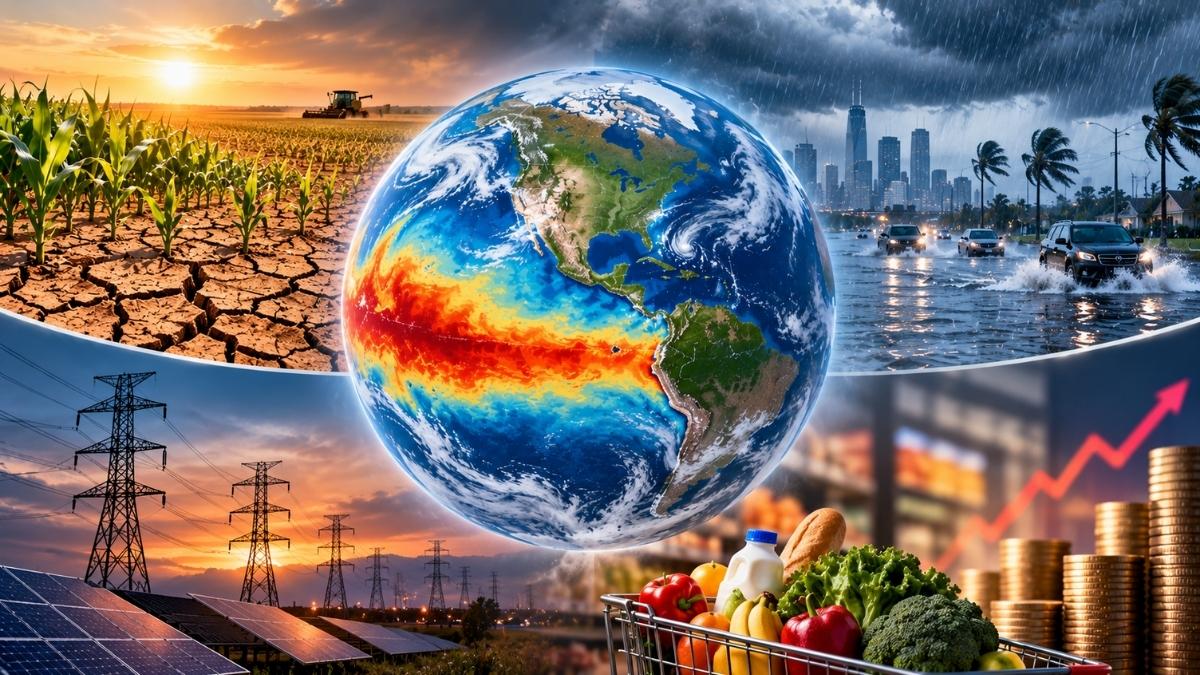
El Niño is a change in ocean temperatures that can alter weather around the world.
Scientists expect this El Niño to become unusually strong in late 2026.
Some parts of the southern United States could receive more rain, while some northern areas could have a milder winter.
Extra rain might help farms and water supplies, but too much rain could cause floods and damage crops.
Weather problems in other countries could reduce supplies of coffee, cocoa and sugar.
That could make some food and drinks more expensive in the United States.
Storms could also damage roads, power systems and other infrastructure.
Some people might pay less for heating, while others could face higher energy or repair costs.
The final effect will depend on exactly where the strongest weather occurs.

Forecasts give El Niño more than a 90% chance of becoming very strong during fall and winter 2026-27.
The event could bring heavier rain and flooding to parts of the southern United States while producing milder conditions in some northern areas.
Global disruptions to coffee, cocoa and sugar supplies could raise costs for American consumers and food companies.
Electricity and heating bills may vary by region, depending on temperatures, storms, infrastructure damage and energy demand.
S&P Global warns the weather pattern could create a mild stagflationary effect through higher costs and weaker economic growth.
- Who
- The World Meteorological Organization, United States Geological Survey, National Oceanic and Atmospheric Administration and other agencies are assessing the event's possible effects on communities, consumers and businesses.
- What
- A rapidly strengthening El Niño is forecast to become very strong, potentially ranking among the strongest events recorded in more than 150 years.
- Where
- The effects could vary across the United States and globally, including in major agricultural regions such as West Africa, Vietnam, Indonesia, Brazil, India and Thailand.
- When
- The event is expected to strengthen during fall and winter 2026-27, peak toward the end of 2026 and potentially persist through February 2027.
- Why
- El Niño changes ocean temperatures and atmospheric circulation, shifting the jet stream and influencing rainfall, temperatures, storms, crop production and energy demand.
Potential benefits
Potential risks
Rainfall and agriculture
Potential benefits
Additional precipitation in Southern and Central California, Arizona and nearby areas could improve water supplies and soil moisture.
Potential risks
Heavy or poorly timed rain could cause flooding, erosion, crop damage and infrastructure problems in the southern United States.
Household energy costs
Potential benefits
Milder winter conditions in parts of the northern United States could reduce heating demand and costs.
Potential risks
Storms, flooding and unusual temperatures could damage power infrastructure or increase energy-market volatility in other regions.
Economic effects
Potential benefits
Some farmers, hydropower operators and households could benefit from improved water availability or lower heating needs.
Potential risks
Disrupted crops, logistics and infrastructure could raise food and energy costs, reduce consumer spending and weaken economic growth.
Key facts
- Probability of very strong event
- More than 90% during Northern Hemisphere fall and winter 2026-27.
- Record comparison probability
- The Climate Prediction Center estimates a 69% chance that October-December 2026 strength will exceed previous El Niño events dating to 1950.
- Persistence outlook
- The World Meteorological Organization sees an exceptionally high likelihood of nearly 100% that El Niño will continue through February 2027.
- Potential crop risks
- Coffee, cocoa and sugar supplies could be disrupted by weather in major producing regions.
- Existing food-price increases
- United States beef and veal prices were 9.4% higher and fresh vegetable prices 6.3% higher in July 2026 than a year earlier.
- Energy outlook
- The Energy Information Administration forecasts natural-gas use for power generation at 46.1 billion cubic feet per day in summer 2027.
- Economic risk
- S&P Global Market Intelligence describes a possible mild stagflationary impulse involving higher inflation and weaker growth through the fourth quarter of 2027.
Quotes
World Meteorological Organization
International weather organization that assessed the event’s regional impacts.
“The strength of an El Nino event does not translate directly into the magnitude of impacts in any region.”
 financialexpress.com
“El Nino … has the potential to deliver a massive blow to communities and economies across the world.”
financialexpress.com
Sources
Related news
Supersized El Niño Could Become Strongest Ever, UN Warns
Potential 2026 Super El Niño Could Rewrite Global Weather Records

Latin America's super El Niño to impact top food-exporting region
Possible Super El Niño Could Reshape 2026–27 Weather Patterns
WMO Warns Very Strong El Niño Could Reshape Global Weather
Powerful El Niño Could Make 2027 Hottest Year

BRICS Summit Drives Delhi Hotel Tariffs Past ₹2 Lakh

India Urged to Address Widening BRICS Trade Deficit

BRICS Summit to Focus on Payments, Trade and Market Access

Inaugural FIFA ASEAN Cup Set for September 24 Kickoff