3 weeks ago
12th Century Jain Inscription Reveals Lost Vijay Parshvanath Temple Evidence
A long time ago, in the 1100s, people in India built a beautiful Jain temple.
Jainism is one of the oldest religions in the country.
The temple was called the Vijay Parshvanath Jinalaya.
Recently, a researcher named Krushna Gudade found an old stone with words carved on it.
The words were hidden under layers of paint on a wall.
Experts cleaned the stone very carefully and read what it said.
The writing tells us that a kind monk named Subhasena Muni built the temple.
The writing also tells us about a group of Jain monks called the Yapaniya Sangha.
Today, an old statue of Parshvanath still stands at the same place.
This discovery helps us learn about how people lived and prayed many centuries ago.

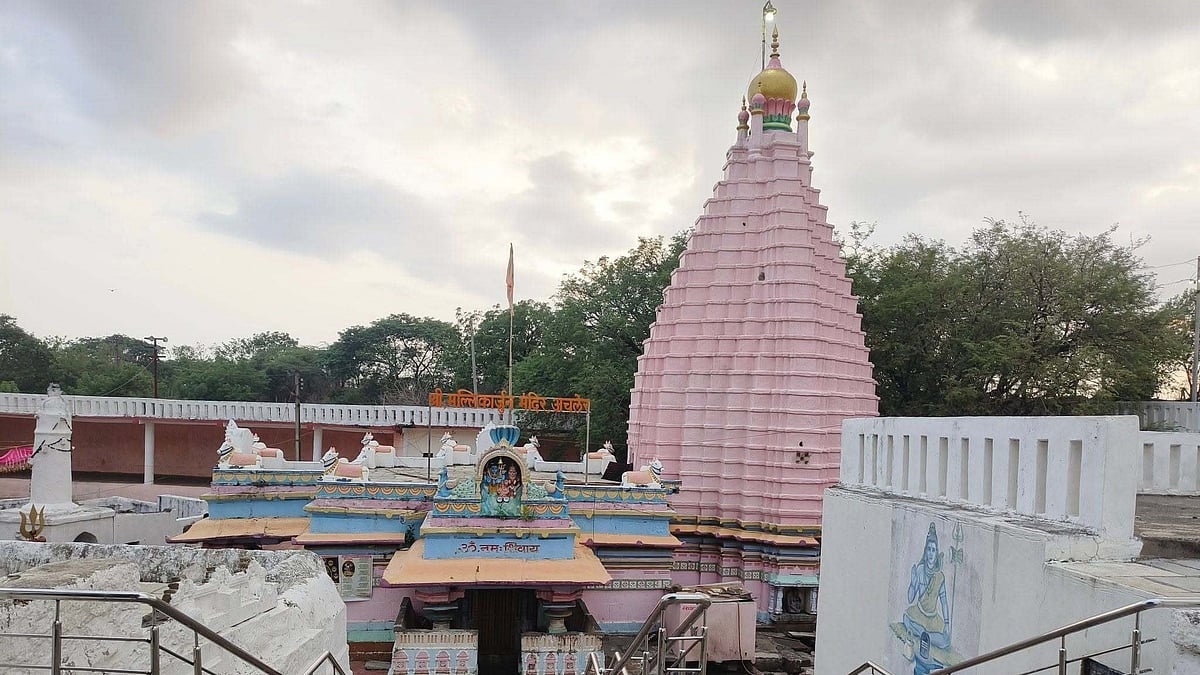
A rare 12th century Jain inscription was discovered at the Mallikarjun Temple premises in Achaler village of Lohara, Dharashiv district.
Inscription researcher Krushna Gudade identified the stone, which was embedded in a wall beside a flight of steps and covered with layers of paint.
The two-line inscription, written in Hale Kannada script and composed in Sanskrit, records the construction of a Vijay Parshvanath Jinalaya by monk Subhasena Muni of the Yapaniya Sangha.
The stone was confirmed to be the lion-throne pedestal of a Jain idol, and an idol of Tirthankara Parshvanath still exists within the temple campus.
References to the Yapaniya Sangha have also been found in inscriptions from Murum, Karla (Killari), Dharmapuri and other sites across Maharashtra and Karnataka.
- Who
- Researcher Krushna Gudade identified the inscription, and Dr Devarakonda Reddy, President of the Karnataka History Academy, deciphered it.
- What
- A rare 12th century Jain inscription providing evidence of a lost Vijay Parshvanath Jain temple (Jinalaya) built by monk Subhasena Muni.
- Where
- Mallikarjun Temple premises in Achaler village of Lohara, Dharashiv district, Maharashtra, India.
- When
- The inscription dates to the early 12th century; the discovery was reported on August 6.
- Why
- The inscription records the construction of the Vijay Parshvanath Jinalaya and offers fresh evidence of a medieval Jain religious centre in the region.
Key facts
- Discovery site
- Mallikarjun Temple premises, Achaler village, Lohara, Dharashiv district
- Inscription date
- Early 12th century
- Script and language
- Hale Kannada script, composed in Sanskrit
- Recorded structure
- Vijay Parshvanath Jinalaya (Jain temple/Basadi)
- Builder
- Monk Subhasena Muni of the Yapaniya Sangha
- Deciphered by
- Dr Devarakonda Reddy, President, Karnataka History Academy
- Discovered by
- Inscription researcher Krushna Gudade
- Related sites
- Murum, Karla (Killari), Dharmapuri and other sites in Maharashtra and Karnataka
Sources
Related news
11th-Century Jain Inscription Discovered at Dundigal Temple
Kannada Inscription at Jeur Temple Sheds Light on Medieval History
11th-Century Inscription Identified at Telangana’s Siddheshwara Temple
11th Century Telugu-Kannada Inscription Discovered at Dundigal Temple
Rare Nagini and Garuda Sculptures Unearthed Near Hampi Jain Temple