

3 days ago
11th-Century Inscription Identified at Telangana’s Siddheshwara Temple
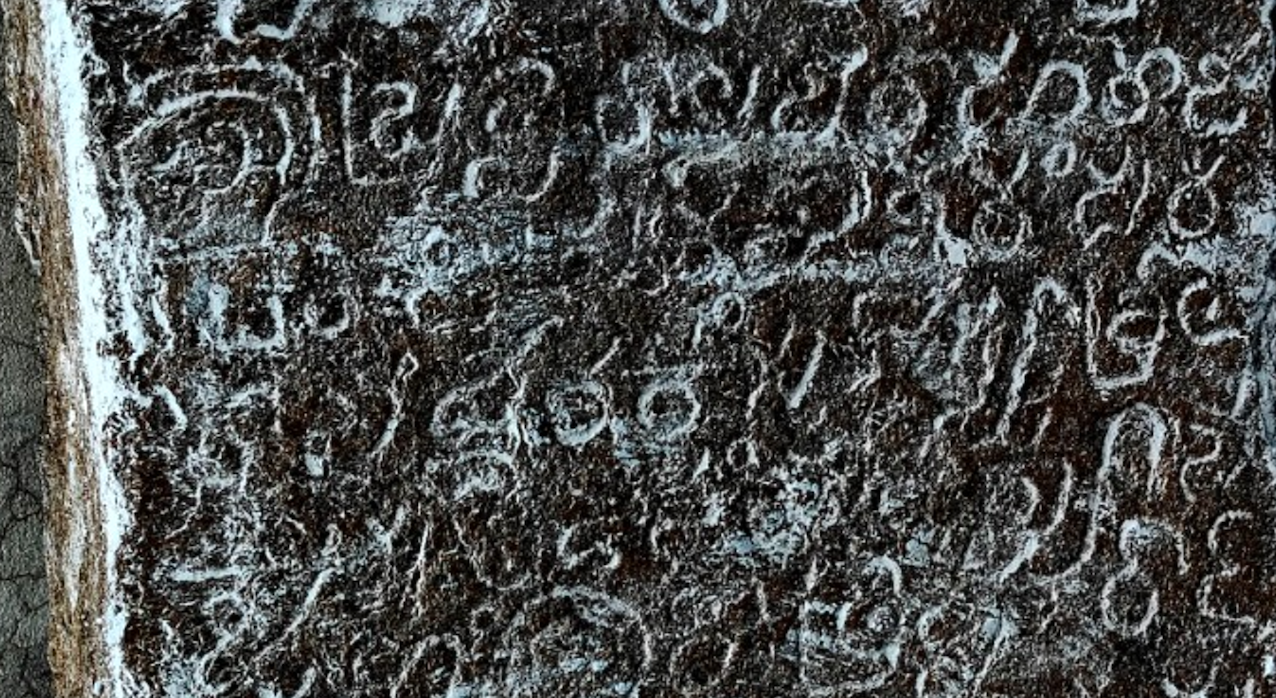
Researchers found an old stone inscription at the Siddheshwara Temple in Nandivanaparti.
They determined that it was made more than 900 years ago.
The writing uses an old Telugu-Kannada script, but the language is Kannada.
One side praises Emperor Tribhuvanamalla Vikramaditya VI.
It also names Kalyana as his capital.
The other side describes a donation made in 1077.
The donor was a high-ranking official named Mogata Rasara.
Some parts of the inscription are damaged, so details about the gifts are missing.

Researchers identified an inscription at Siddheshwara Temple in Nandivanaparti as dating to the 11th century CE.
The slab was deciphered by Dr Pavan Kumar with assistance from Sriramoju Haragopal.
It is written in 11th-century Telugu-Kannada script and the Kannada language.
One side praises Kalyani Chalukya Emperor Tribhuvanamalla Vikramaditya VI and mentions his capital, Kalyana.
The reverse records a donation on 7 April 1077 CE by Mahamandaleshwar Mogata Rasara to Iinjakeshvara.
- Who
- Researchers, Dr Pavan Kumar, Sriramoju Haragopal, Emperor Tribhuvanamalla Vikramaditya VI, and Mahamandaleshwar Mogata Rasara.
- What
- An 11th-century inscription was identified, deciphered, and found to record a royal eulogy and a temple donation.
- Where
- At Siddheshwara Temple in Nandivanaparti, Yacharam mandal, Rangareddy district, Telangana.
- When
- The donation was recorded on 7 April 1077 CE, corresponding to Shaka year 998, Chaitra Shuddha 12.
- Why
- The inscription recorded a donation made to Iinjakeshvara and praised the Kalyani Chalukya ruler.
Key facts
- Inscription date
- 7 April 1077 CE
- Calendar date
- Shaka year 998, Chaitra Shuddha 12, Friday
- Script
- 11th-century Telugu-Kannada script
- Language
- Kannada
- Ruler mentioned
- Kalyani Chalukya Emperor Tribhuvanamalla Vikramaditya VI
- Donor
- Mahamandaleshwar Mogata Rasara
- Condition
- The inscription is damaged, and details of the gifts are missing.
Sources
Related news
11th Century Telugu-Kannada Inscription Discovered at Dundigal Temple
11th-Century Jain Inscription Discovered at Dundigal Temple
Kannada Inscription at Jeur Temple Sheds Light on Medieval History
12th Century Jain Inscription Reveals Lost Vijay Parshvanath Temple Evidence
Chola-Era Inscription Found at Tiruvannamalai’s Vengikkal Lake
Gajapati-Era Odia Inscription Found Inside Tekkali Royal Palace

All-Party Meeting Seeks Eligibility Cards for Telangana Tenant Farmers

Telangana BJP Alleges Congress, BRS Avoid Hyderabad Liberation Day

BRS Charges Telangana CM Revanth With Corruption, Misrule
BRS Accuses Telangana Congress Government of Failing Poll Promises
Telangana Government Marks 1,000 Days With Welfare Push