1 week ago
Hyderabad Road Sweepers Show Poor Performance Despite ₹40 Crore Spending
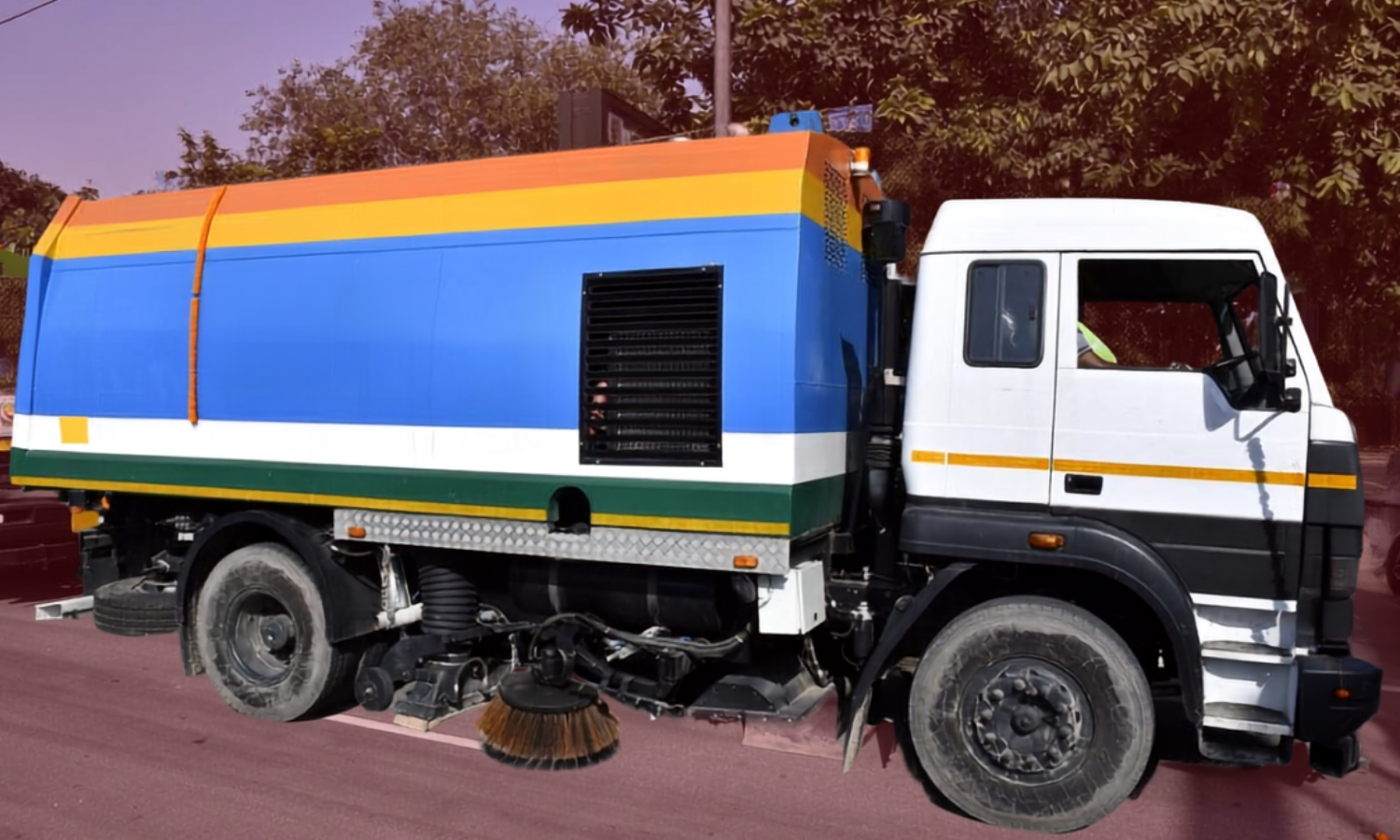
Hyderabad uses large machines to sweep dust from its roads.
The city spends ₹40 crore every year to operate them.
A study found that the machines removed only about one-third of the road silt on average.
Many machines had worn-out brushes or weak suction.
Some operators reportedly turned off the suction to save fuel.
Six machines even left dust patches behind.
Officials said better maintenance and training could make the machines work properly.
They estimated that effective sweeping could improve air quality by 15% to 20%.
Payments may be linked to proof that the machines are working effectively.

Greater Hyderabad spends ₹40 crore annually on 40 mechanical road sweepers.
An IIT Hyderabad study found average silt-removal efficiency of just 32.7% across 40 locations.
Brushes and suction systems were poorly maintained, with 95% receiving the lowest condition ratings.
Six machines left dust patches behind instead of removing road dust and silt.
Officials recommended better training, frequent brush and filter replacement, suction checks, and performance-linked payments.
- Who
- The Telangana Pollution Control Board, IIT Hyderabad, and agencies operating Hyderabad’s mechanical road sweepers.
- What
- An IIT Hyderabad study found that mechanical road sweepers were removing road silt inefficiently because of poor maintenance and operation.
- Where
- Hyderabad, including 40 study locations suggested by the Greater Hyderabad Municipal Corporation; the workshop was held at the Pollution Control Board office in Sanathnagar.
- When
- The findings were discussed at a workshop on Tuesday; the articles do not provide a specific date.
- Why
- The study was conducted to understand why large annual spending on sweepers was not producing visible improvements in air quality and road cleanliness.
Key facts
- Annual spending
- ₹40 crore is paid to contractors each year to operate the mechanical road sweepers.
- Machines studied
- 40 mechanical road sweepers were assessed at 40 Hyderabad locations.
- Average efficiency
- Average silt-removal efficiency was 32.7%.
- Low-performing locations
- 17 locations recorded efficiency below 25%, while 28 recorded efficiency below 50%.
- High-performing locations
- Only two locations recorded efficiency above 75%.
- Maintenance problems
- Brush and suction conditions received the lowest ratings for 95% of the machines surveyed.
- Potential air-quality benefit
- Officials said properly functioning sweepers could improve Hyderabad’s ambient air quality by 15% to 20%.
Quotes
A Telangana Pollution Control Board source
An unnamed source from the Telangana Pollution Control Board discussing mechanical sweeper performance
“It is not uncommon to see ‘lofting’ of dust when a MRS machine is at work. This shows there is either no suction or not enough suction. There were also several doubts whether the machines were actually working or just being driven around as the contractors are paid using a GPS tagging mechanism.”
 deccanchronicle.com
“With `40 crore being spent a year on these machines, the presumption is that they work efficiently. The present system is not performance linked.”
deccanchronicle.com
Sources
Related news
Khammam Uses AI App, Machines to Track Road Cleaning

NDMC Plans New Cleaning SOP for Lutyens’ Delhi Roads

G Kishan Reddy urges GHMC to tackle monsoon drainage problems

GHMC Intensifies Hyderabad Monsoon Cleanup With Pothole Repairs

GHMC fixes over 100 potholes during monsoon drive

Shakti Sharma Becomes First Woman Air Vice Marshal

Uttar Pradesh Appoints 40 Pollution Control Board Officers

Shakti Sharma Becomes First Woman Non-Medical Air Vice Marshal

Brain And Gut Signals May Predict Antidepressant Response Early
Free Public Coaching Could Make India’s Entrance Exams Fairer