1 day ago
Bengal Voter Roll Revision Raises Questions Over Centralisation
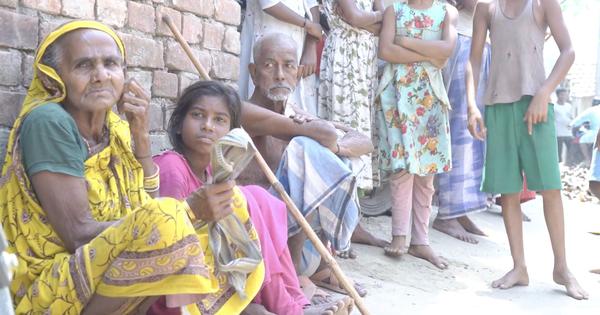
India reviewed the list of people allowed to vote in West Bengal.
More than 91 lakh names were removed during the process.
Many people were asked to prove that they or their parents had appeared on an older voter list.
Computers helped decide which voters would receive notices about possible problems.
Some local election officers said they could not control who was called or removed.
The Election Commission said its observers were only helping the local officers make decisions.
The Supreme Court moved many unresolved cases to judicial officers before the election.
Those officers restored about 33 lakh names, but more than 27 lakh people still could not vote.
Critics say the process gave too much power to central authorities instead of local officers.

Election Commissioner Vivek Joshi reportedly warned in May about the gradual centralisation of voter lists.
During West Bengal’s six-month special intensive revision, more than 91 lakh names were deleted from the rolls.
Notices were centrally generated using software that flagged missing records and alleged name, gender, age, or family-data discrepancies.
Critics said electoral registration officers were excluded from key decisions, while the Election Commission maintained that observers only assisted them.
Judicial officers restored about 33 lakh names, but more than 27 lakh voters remained excluded before the Assembly election.
- Who
- The Election Commission of India, electoral registration officers, the Supreme Court of India, voters, petitioners, and civil society organisations were involved.
- What
- West Bengal’s special intensive revision of electoral rolls centralised parts of the process and led to the deletion, restoration, or continued exclusion of millions of names.
- Where
- West Bengal, with related concerns previously reported during the revision in Bihar.
- When
- The revision lasted six months; an internal warning about centralisation was reportedly raised in May, and the Assembly election took place in April.
- Why
- The Election Commission sought to verify voter eligibility and investigate alleged discrepancies in submitted forms and earlier voter records.
Critics, Petitioners, and Local Officers
Election Commission and Court Position
Who controlled notices
Critics, Petitioners, and Local Officers
Local electoral registration officers said notices were automatically generated by central software and that they had no say in deciding which voters would be summoned.
Election Commission and Court Position
The Election Commission used software to identify possible discrepancies and said its observers’ role was limited to assisting electoral registration officers.
Who made eligibility decisions
Critics, Petitioners, and Local Officers
Critics argued that observers and later judicial officers displaced the local officers whom the law designates as the final decision-makers.
Election Commission and Court Position
The Supreme Court initially accepted the Election Commission’s position that electoral registration officers would make the final decisions, then transferred unresolved cases to judicial officers because of the extraordinary circumstances.
Documents voters could submit
Critics, Petitioners, and Local Officers
Petitioners and civil society groups argued that excluding documents such as Aadhaar and West Bengal Class X admit cards would unfairly affect voters with limited paperwork.
Election Commission and Court Position
The Election Commission initially limited the accepted documents and sought additional proof from some voters, while the Supreme Court later ordered Aadhaar’s inclusion and allowed Class X admit cards with pass certificates.
Key facts
- Names deleted
- More than 91 lakh voter names were deleted from West Bengal’s rolls.
- Notices for discrepancies
- About 1.4 crore voters received notices over what the Election Commission called logical discrepancies.
- Hearing cases
- More than 60 lakh voters attended hearings and submitted documents, but their cases remained unresolved near the election.
- Names restored
- Judicial officers restored about 33 lakh names to the electoral roll.
- Names still excluded
- More than 27 lakh voters remained deprived of the right to vote.
- Legal provision
- Section 13B of the Representation of the People Act, 1950, assigns preparation and revision of constituency rolls to electoral registration officers.
- Documents
- The Supreme Court directed that Aadhaar be accepted, and later allowed Class X admit cards with pass certificates.
Quotes
Saikat Asraf Ali
General secretary of the West Bengal Civil Service (Executive) Officers’ Association.
“Names of electors might be deleted from the electoral roll without the knowledge of the ERO [electoral registration officer]. The common people who will be affected by such action will only blame the ERO without knowing that the ERO has been kept out of the entire deletion process by the commission.”
 scroll.in
“It is worth remembering that in a constitutional democracy, the Court’s primary role is to ensure that other state organs comply with the Constitution, and not to transform itself into an administrator.”
scroll.in
An electoral registration officer from Nadia district
A local electoral registration officer who described the centrally generated hearing notices.
“We have no power to decide which elector will be called for a hearing”
scroll.in
Sources
Related news
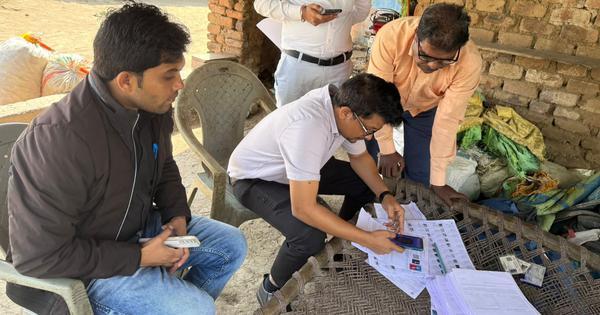
India's Controversial Electoral Roll Revision Faces Internal and Public Scrutiny

Two Election Commissioners Raise 14 Objections Over SIR Decisions

West Bengal SIR Leaves Over 37 Lakh Appeals Pending
Why the Supreme Court Did Not Stop India’s SIR
EC Says 82% of Deleted Bengal Voters Appealed Removal
Bengal SIR Appeals Focus Supreme Court on Voter Roll Restorations
Adani Group to Spend ₹100 Crore Restoring Writers’ Buildings
Adani pledges ₹1 trillion Bengal investment by 2035
Former Supreme Court Justice Ganendra Narayan Ray Dies at 93

Modi to Launch Bengal Durga Puja Festivities at Eden Gardens

Abhishek Banerjee Flags ‘30 Lakh Names’ Voter Roll Deletion Claim