1 week ago
India’s Polyester Yarn Boom Faces Insolvency Threat After Rules Withdrawn

India’s polyester yarn industry grew quickly after the government required certain quality standards in 2023.
Many small and medium-sized companies built new factories and borrowed money to do this.
In November 2025, the government withdrew those quality requirements.
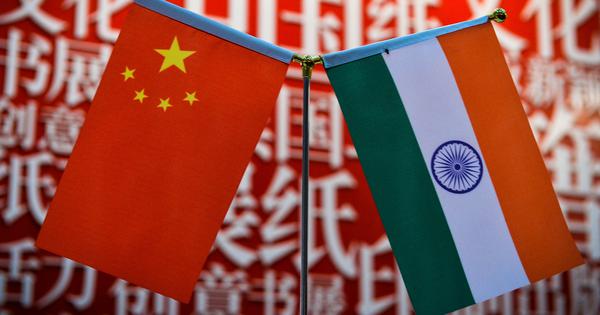
Manufacturers worry that cheaper imports, especially from China, could now enter the market.
They say these imports may be difficult for Indian companies to match on price.
The industry says its new factories were also intended to support exports, not only Indian customers.
Companies are asking officials to reconsider the change and discuss the issue with them.
They are concerned that changing the rules so soon could make their investments unprofitable.

India withdrew mandatory quality controls for polyester Mother Yarn and Mono Yarn in November 2025.
Manufacturers say the reversal could expose domestic firms to cheaper, subsidized imports, especially from China.
Protected by the October 2023 order, annual capacity grew from about 1.25 lakh to 2.36 lakh tonnes.
The sector attracted approximately Rs 2,691 crore in investment, including Rs 1,445 crore in bank financing.
Surat manufacturers are seeking consultations and continued Bureau of Indian Standards oversight for their products.
- Who
- Indian manufacturers of polyester Mother Yarn and Mono Yarn, mostly small and medium-sized enterprises, particularly those in Surat.
- What
- The government withdrew mandatory quality control orders covering the relevant polyester yarn category, prompting concerns about cheaper imports and the viability of recent investments.
- Where
- India, with the main industry concerns coming from the textile manufacturing cluster in Surat.
- When
- The quality control order was introduced in October 2023 and withdrawn in November 2025.
- Why
- Manufacturers say withdrawal of the rules could allow low-priced imports from heavily subsidized producers to compete with recently established Indian capacity.
Manufacturers’ concerns
Policy and import considerations
Withdrawal of quality controls
Manufacturers’ concerns
Manufacturers say removing the orders undermines investments made on the assumption that the regulatory framework would remain in place.
Policy and import considerations
Officials view the issue as part of a wider challenge: supporting domestic manufacturing while reducing import barriers and keeping input costs competitive.
Competition from imports
Manufacturers’ concerns
Industry representatives warn that cheap, potentially lower-grade imports—particularly from China—could be sold at prices Indian companies cannot match.
Policy and import considerations
The policy reversal reduces a regulatory safeguard that manufacturers say protected domestic production, potentially allowing more imports into the Indian market.
Surplus production capacity
Manufacturers’ concerns
Manufacturers say capacity exceeding domestic knitting requirements reflects an intended export-oriented production base rather than necessarily overinvestment.
Policy and import considerations
The reported capacity of about 2.35 lakh tonnes compared with estimated domestic demand of around 48,000 tonnes highlights the sector’s exposure if expected export growth does not materialize.
Key facts
- Relevant product category
- Polyester Mother Yarn and Mono Polyester Yarn, classified under HSN 5402-4700.
- Capacity growth
- Estimated annual capacity increased from about 1.25 lakh tonnes to roughly 2.36 lakh tonnes by November 2025.
- Reported investment
- Approximately Rs 2,691 crore, including about Rs 1,445 crore in bank financing.
- Employment
- More than 5,000 direct jobs were created, with analysts estimating another 10,000 could eventually be generated.
- Domestic requirement
- Manufacturers estimate India’s knitting requirement at around 48,000 tonnes annually.
- Industry request
- The Mother Yarn Association wants the regulatory change reconsidered and consultations held with the Bureau of Indian Standards and relevant ministries.
- Earlier precedent
- Low Melt Polyester Yarn was classified as a separate speciality product and excluded from Bureau of Indian Standards provisions in July 2024.
Quotes
Mother Yarn and Mono Yarn manufacturers
Indian polyester yarn manufacturers affected by the withdrawn quality control orders
“particularly damaging because companies made capital commitments on the assumption that the regulatory framework would remain in place.”
 thestatesman.com
“Rather, the intention was to build an export-oriented production base and establish Indian companies in international markets”
thestatesman.com
Indian government officials
Officials discussing the broader policy implications of the regulatory reversal
“It highlights a recurring dilemma in India’s industrial strategy — How do policymakers encourage domestic manufacturing and attract capital while simultaneously reducing barriers to imports and keeping input costs competitive?”
thestatesman.com
Sources
Related news
Apparel Exporters Seek Cotton Yarn Export Controls Amid Surge
Surat Weaving Factories Plan Two Weekly Shutdown Days
US China Cotton Curbs Push Indian Yarn Prices Higher

Indian textile makers face rising labour and material costs

India Reconsiders BIS Standards Rules for High-Tech Manufacturing
Telangana Toy Clusters Gain Momentum as Exports Surge

Trump administration weighs chip tariffs amid AI industry warnings

Why India Must Conserve Forex Despite Strong GDP Growth

CM Vijay Plans Britain Tour to Attract Tamil Nadu Investment

US and Australia Commit $580 Million for Pacific Islands

Tamil Nadu CM Vijay Plans UK Investment Outreach