

2 weeks ago
Quick Commerce Platforms Turn Premium Grocery Into Growth Strategy
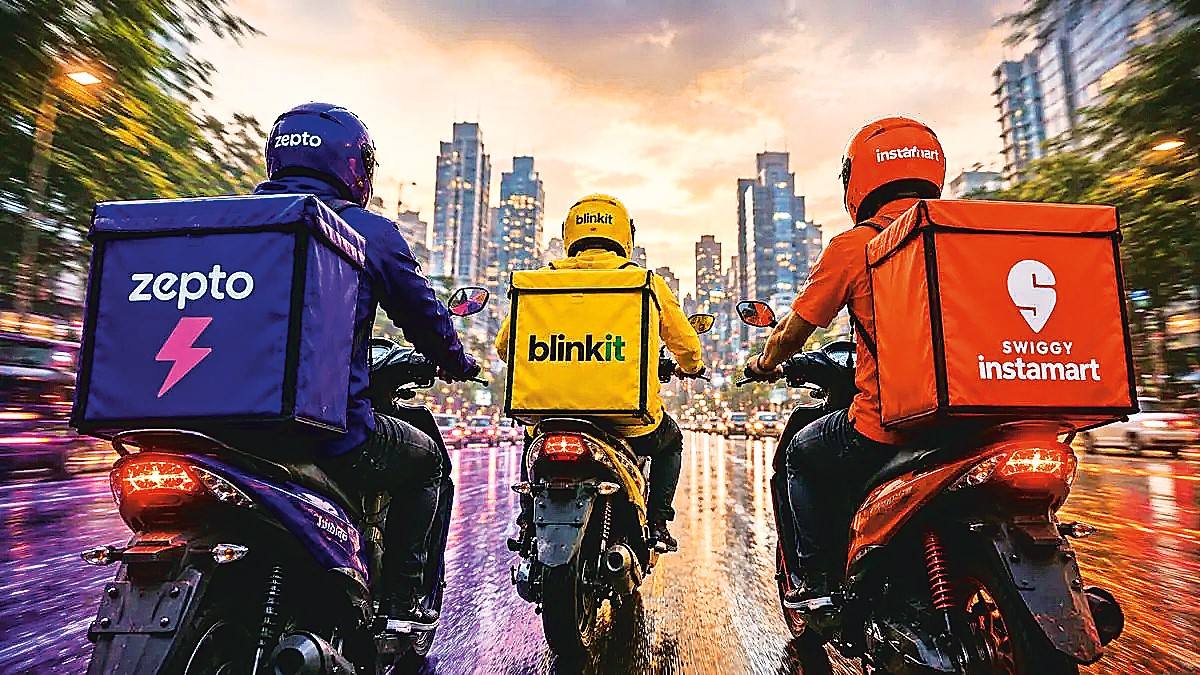
Quick-commerce companies usually deliver everyday items very quickly.
Now, they are also selling expensive foods such as gourmet snacks, specialty coffee, and premium groceries.
These larger baskets can generate more money and potentially higher margins.
Companies also hope premium products will keep customers using their apps.
Demand for gourmet food is growing, although it is still a smaller part of shopping overall.
However, premium products can be difficult to store and predict because fewer people buy them.
Specialist companies such as FirstClub and Handpickd are competing with their focus on quality and niche brands.
The companies must prove that gourmet grocery stores can grow profitably in India.

Zepto, Blinkit, Flipkart Minutes, and Amazon Now are expanding premium grocery offerings.
Premium baskets may be worth Rs 1,500-2,000 versus typical orders of Rs 500-700.
India’s gourmet food market is valued at $5.4 billion and projected to reach $24.5 billion by 2034.
Premium products can improve margins, product discovery, advertising opportunities, and customer retention.
Scaling remains difficult because of uncertain demand, perishables, niche competition, and price sensitivity.
- Who
- Quick-commerce platforms including Zepto, Blinkit, Flipkart Minutes, and Amazon Now, alongside specialist players such as FirstClub and Handpickd.
- What
- Major quick-commerce companies are expanding or piloting premium grocery, gourmet food, and premium snacking services.
- Where
- India, including urban and increasingly rural demand markets.
- When
- The expansion is occurring as platforms pursue profitability; Nature’s Basket reported its Q1FY27 results for the June quarter.
- Why
- The companies want larger baskets, stronger margins, advertising and product-discovery opportunities, and additional reasons for existing users to remain on their apps.
Premium Expansion Opportunity
Scaling and Profitability Concerns
Higher-value baskets
Premium Expansion Opportunity
Premium products can make baskets 30% to 200% larger than mass-product baskets and generate stronger absolute margin potential.
Scaling and Profitability Concerns
Premium products do not drive high volumes, and their smaller customer base can make profitability difficult to achieve.
Customer and brand growth
Premium Expansion Opportunity
Immediate access to celebratory treats, specialty coffee, and gourmet snacks can increase product discovery and give existing users more reasons to stay.
Scaling and Profitability Concerns
Specialist players such as FirstClub offer niche D2C products and compete through promises of cleanliness and quality that regular platforms may not match.
Category scalability
Premium Expansion Opportunity
Gourmet demand is growing quickly, with premium products becoming visible even in rural demand and the gourmet food market projected to expand substantially.
Scaling and Profitability Concerns
Inventory forecasting and perishable storage are challenging, while the scale of gourmet stores remains untested in India’s price-sensitive market.
Key facts
- Typical quick-commerce order value
- Rs 500-700, according to a Bernstein report cited in the article.
- Potential premium basket value
- Rs 1,500-2,000.
- Gourmet food market
- Currently valued at around $5.4 billion and projected to reach $24.5 billion by 2034.
- Projected market growth
- Nearly 18% compound annual growth rate, according to IMARC Group data cited in the article.
- Nature’s Basket Q1FY27 revenue
- Rs 59.3 crore, down 14% year over year.
- Nature’s Basket Q1FY27 loss
- Rs 19.5 crore.
- Nature’s Basket annual revenue run rate
- Around Rs 323 crore after stabilisation.
Quotes
Santosh Sreedhar
Partner at Avalon Consulting
“"Net-net, the basket sizes for premium products can be anywhere from 30% to 200% higher compared to mass product baskets"”
 financialexpress.com
“"It’s a small share growing much faster than the whole"”
financialexpress.com
Sources
Related news

Flipkart Minutes Enters Gourmet Grocery Market With Private Label Pykd

Quick commerce private-label push gathers pace as platforms chase margins

Quick Commerce Replays Modern Trade Revolution Faster in India

Premium Spending Becomes an Everyday Habit for Indian Consumers

QCaaS Could Drive Next Phase of India's Quick Commerce Growth

Broker Reiterates Buy on Nykaa, Raises Target to ₹475

Flipkart Enters India’s Micro-Drama Market Through Content Partnerships

Festive Delivery Expansion Faces a Capacity Mismatch in India

iPhone 17 Pro Models Get Discounts Before iPhone 18 Launch

iPhone 17 Pro Prices Cut Ahead of Apple Event

Quick Commerce Surges as Indians Shop Last-Minute Raksha Bandhan Gifts
