1 day ago
Scientists Identify 57 New Species in Argentina’s Deep-Sea Canyon
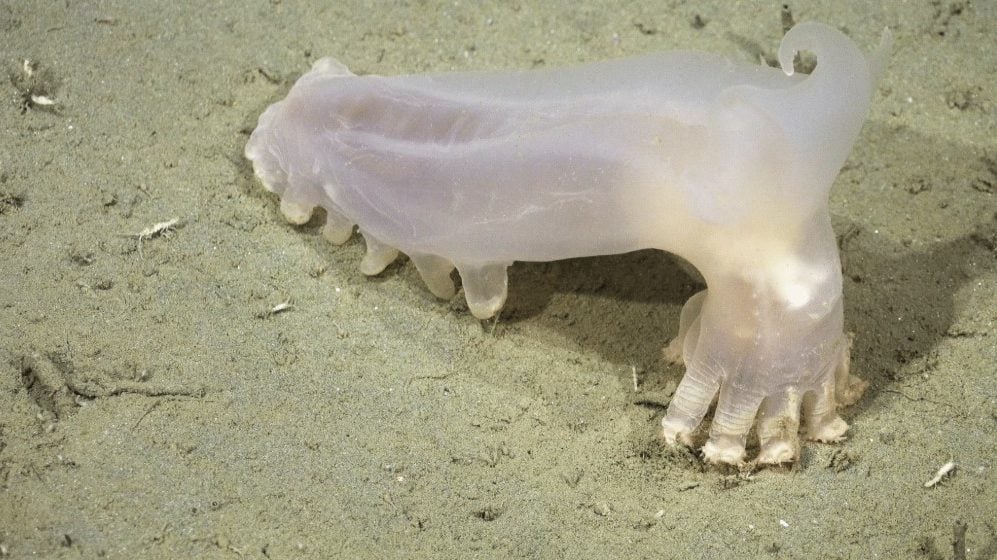
Scientists studied animals collected from a deep canyon in the ocean near Argentina.
They found 57 species that had not been described by science before.
They also identified five new groups called genera.
One sea cucumber was nicknamed “Loki” because it has horn-like parts.
It was found more than two and a half kilometres underwater, where there is no sunlight.
Scientists used a robot controlled from a ship to explore the seafloor and collect samples.
Studying these animals takes time because researchers must compare their bodies and sometimes their DNA with known species.
The discoveries show that many parts of the deep ocean are still not well understood.

Researchers identified 57 species new to science and five new genera from samples collected in the Mar del Plata Submarine Canyon.
The discoveries include 20 copepods, 22 echinoderms, 14 cnidarians and one scaphopod mollusc.
A sea cucumber nicknamed “Loki” was found about 2,577 metres below the surface.
Twenty taxonomists and early-career researchers examined specimens at a workshop in Buenos Aires; some samples still need further study.
The deep ocean remains poorly observed: NOAA says people have visually seen less than 0.001 per cent of its seafloor.
- Who
- Twenty taxonomists and early-career researchers examined specimens from the expedition.
- What
- They identified 57 species new to science and five new genera.
- Where
- The Mar del Plata Submarine Canyon off Argentina; the identification workshop was held in Buenos Aires.
- When
- The specimens were collected during a 2025 expedition and examined at a workshop described as taking place this year.
- Why
- The expedition and analysis aimed to document life in a poorly studied deep-sea ecosystem.
Key facts
- Location
- Mar del Plata Submarine Canyon, in Argentina’s waters
- Species identified
- 57
- New genera identified
- 5
- Specimen groups
- 20 copepods, 22 echinoderms, 14 cnidarians and one scaphopod mollusc
- Loki’s depth
- About 2,577 metres
- Identification team
- 20 taxonomists and early-career researchers
- Copepod samples examined
- About 10 per cent of those collected during the expedition
- Deep-ocean seafloor visually observed
- Less than 0.001 per cent, according to NOAA
Sources
Related news
Ocean Photographer of the Year 2026 Showcases Deep-Sea Wonders
SpongeBob and Patrick Lookalikes Reveal a Predator-Prey Reality

Wild Cat, Penguin and Snake Among Newly Discovered Species

Hardeep Puri Says Andaman Exploration Could Transform India’s Energy Future

ONGC Strikes Deepwater Gas Well Off Odisha Coast
New Legless Amphibian Species Found in Maharashtra’s Western Ghats

India Urged to Prepare for a Potential Super El Niño

UN Declaration Highlights Growing Global Threat of Sea-Level Rise
What Makes an El Niño Super and Especially Severe
Super El Niño Threatens Deaths, Crop Losses and Extreme Weather