2 days ago
Swiss Underwear Experiment Maps Soil Health Across Landscapes
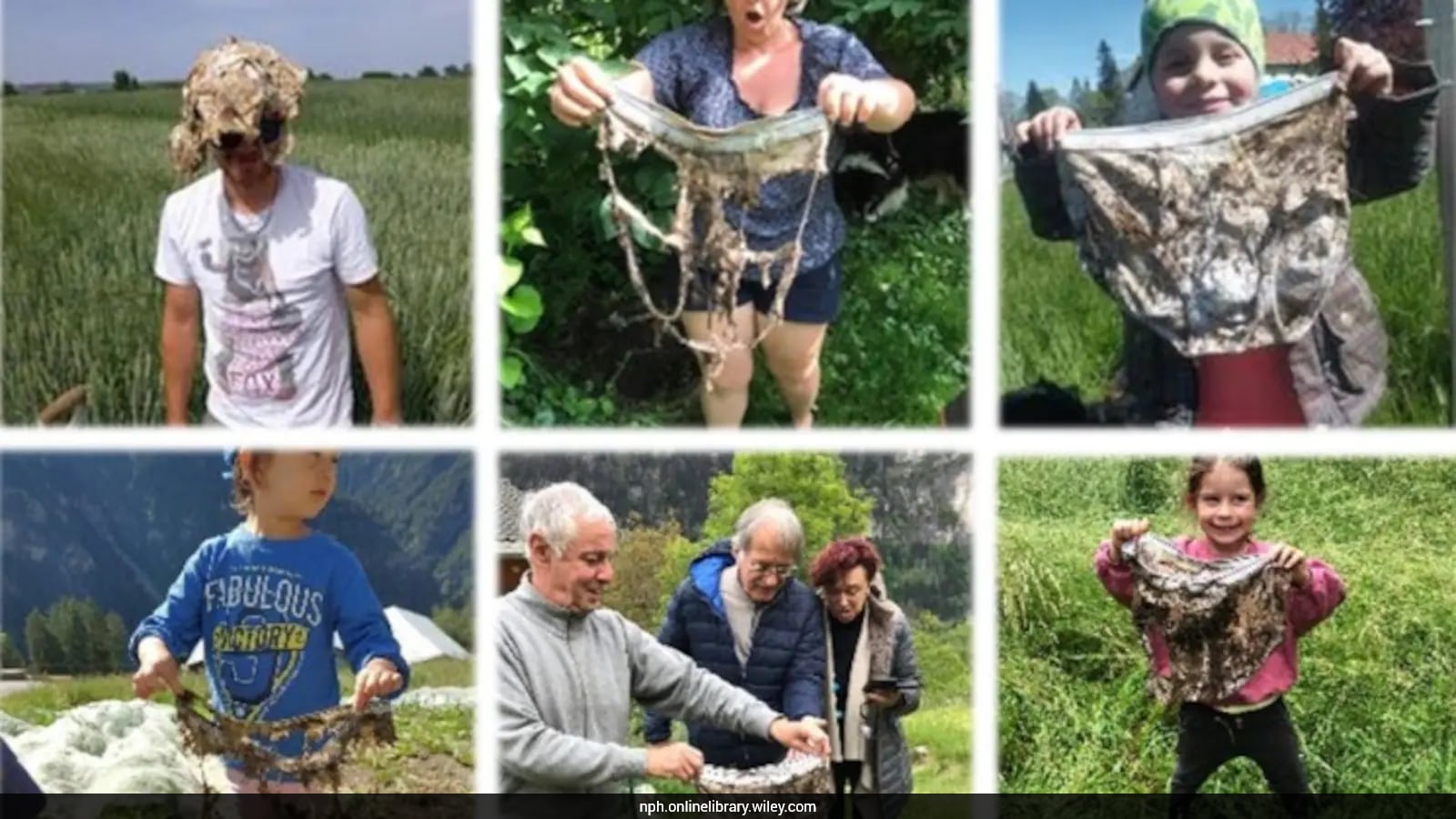
Scientists wanted to learn how active the living organisms in soil are.
They asked 1,000 people in Switzerland to bury cotton underwear and tea bags.
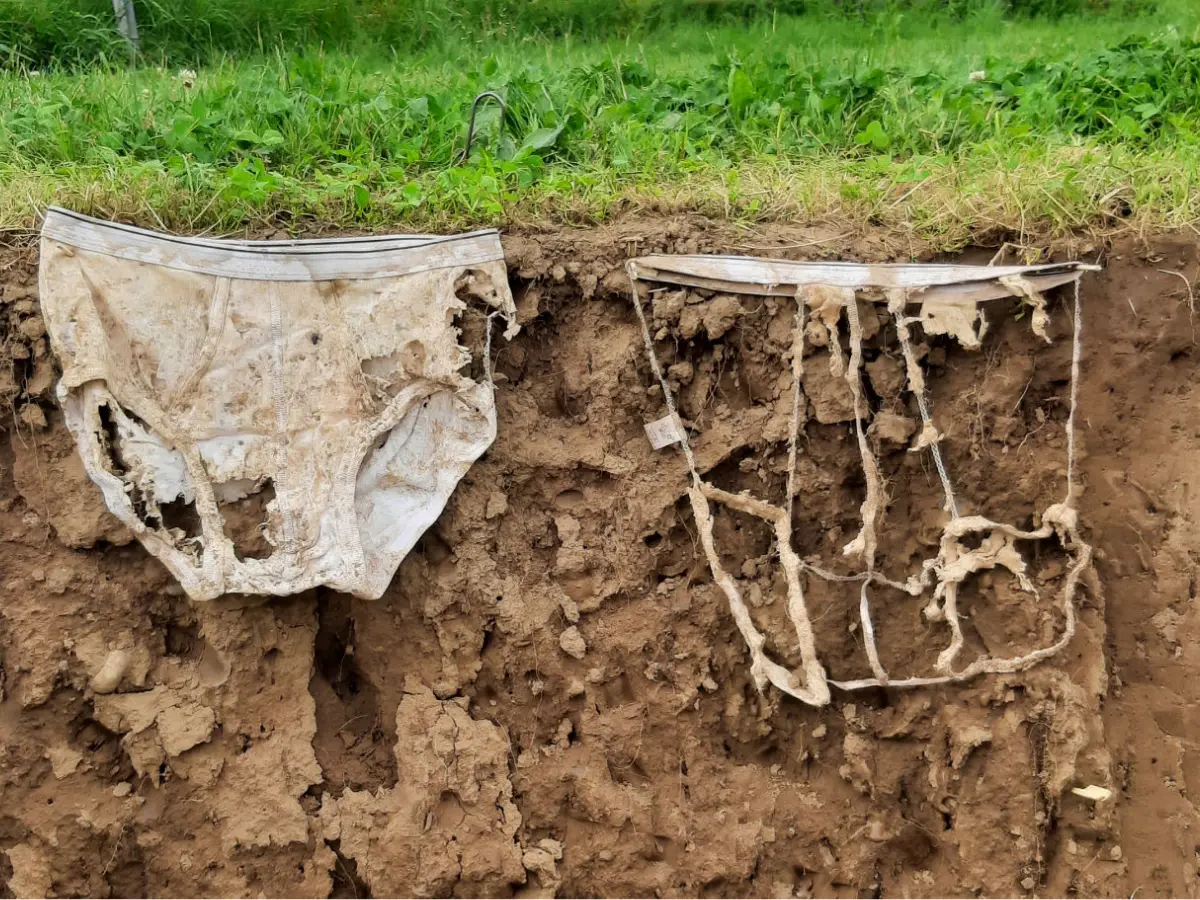
After two months, they dug up the items and studied what had happened.
Worms, fungi, bacteria, and other organisms break down cotton in active soil.
The underwear broke down most in private gardens and least in lawns.
About 58% decomposed in gardens, while about 40% decomposed in lawns.
This does not mean the fastest decomposition is always best, because too many nutrients can sometimes disturb natural ecosystems.
The researchers hope underwear can help people understand why healthy soil matters.

Researchers and 1,000 volunteers buried more than 2,000 cotton underwear pairs and 12,000 tea bags at about 1,000 Swiss sites.
After two months, researchers measured how much the underwear had decomposed as an indicator of soil biological activity.
Underwear decomposed fastest in private gardens, where soils had the highest organic carbon, nutrients, and biological activity.
About 58% of the cotton decomposed in private gardens, compared with 40% in lawns.
Researchers said land management affects soil life and proposed an “underwear index” to make soil health easier to understand.
- Who
- Researchers from the University of Zurich and Agroscope, assisted by 1,000 volunteers and about 240 citizen-scientist co-authors.
- What
- A citizen-science project used buried cotton underwear and tea bags to compare soil biological activity and soil conditions.
- Where
- At about 1,000 sites across Switzerland, including private gardens, lawns, agricultural fields, and meadows.
- When
- The project began in 2021, and the items were retrieved two months after burial.
- Why
- To collect data on soil life, raise awareness of soil degradation, and show how land management affects soil quality.
Faster Decomposition Indicates Healthier Soil
Faster Decomposition Is Not Always Better
Meaning of decomposition
Faster Decomposition Indicates Healthier Soil
Researchers used faster cotton breakdown as a sign of greater biological activity, fertility, nutrients, and soil organisms.
Faster Decomposition Is Not Always Better
The researchers cautioned that maximum decomposition is not desirable in every ecosystem and may sometimes reflect excessive nutrients.
Private gardens
Faster Decomposition Indicates Healthier Soil
Private gardens had the fastest decomposition and the highest measured levels of organic carbon, nutrients, and biological activity.
Faster Decomposition Is Not Always Better
The researchers said rapid breakdown in gardens may indicate an oversupply of nutrients, potentially linked to fertilizer use.
Land management
Faster Decomposition Indicates Healthier Soil
The findings support practices such as composting, keeping soil covered, using diverse crop rotations, and reducing mineral fertilizers and pesticides.
Faster Decomposition Is Not Always Better
Soil activity also depends strongly on temperature and moisture, so decomposition alone cannot describe every aspect of soil health.
Key facts
- Project
- Proof by Underpants
- Participants
- 1,000 volunteers buried the materials across Switzerland.
- Materials
- More than 2,000 pairs of cotton underwear and 12,000 tea bags.
- Retrieval period
- Two months after burial
- Garden decomposition
- About 58% of the cotton decomposed in private gardens.
- Lawn decomposition
- About 40% of the cotton decomposed in lawns.
- Publication
- The study was published in Plants, People, Planet.
Quotes
University of Zurich researchers
Scientists led by researchers at the University of Zurich
“In near-natural habitats such as forests, very high nutrient levels can indicate disruptions to the natural balance of nutrients. In gardens, too, rapid decomposition of the underwear may point to an oversupply of nutrients.”
 NDTV
NDTV
“Our results show that how soil is managed can significantly affect both soil life and soil quality. Healthy, biologically active soil is crucial for fertility, nutrient cycling and many other ecosystem services.”
NDTV
 wionews.com
Sources
Related news
Why Soil Is Brown: Humus, Iron, and Earth’s Colour
Fungus Found in Pakistan Landfill Breaks Down Tough Plastic
Why Butterflies Visit Cow Dung: The Science of Puddling

Ancient poop may have driven Earth's Cambrian explosion, study says

Gujarat Governor advocates natural farming for soil fertility, cost savings

The Age Code Argues Food May Shape How We Age
Nepal Floods Expose Growing Risks to Himalayan Hydropower

Nepal Glacier Collapse Exposes Rising Himalayan Flash-Flood Risks

Beidaihe Retreat Begins Amid Xi’s Consolidated Power