3 weeks ago
Money Bills, Polymer Banknotes and River Sedimentation: India's Current Affairs
The Reserve Bank of India is the country's central bank — the people who look after India's money.
On Wednesday, they decided to keep interest rates the same, so most loans and savings will not change right now.
They were careful because oil prices are jumping around and other parts of the world are unsure about the future — even the US Federal Reserve kept its rates the same.
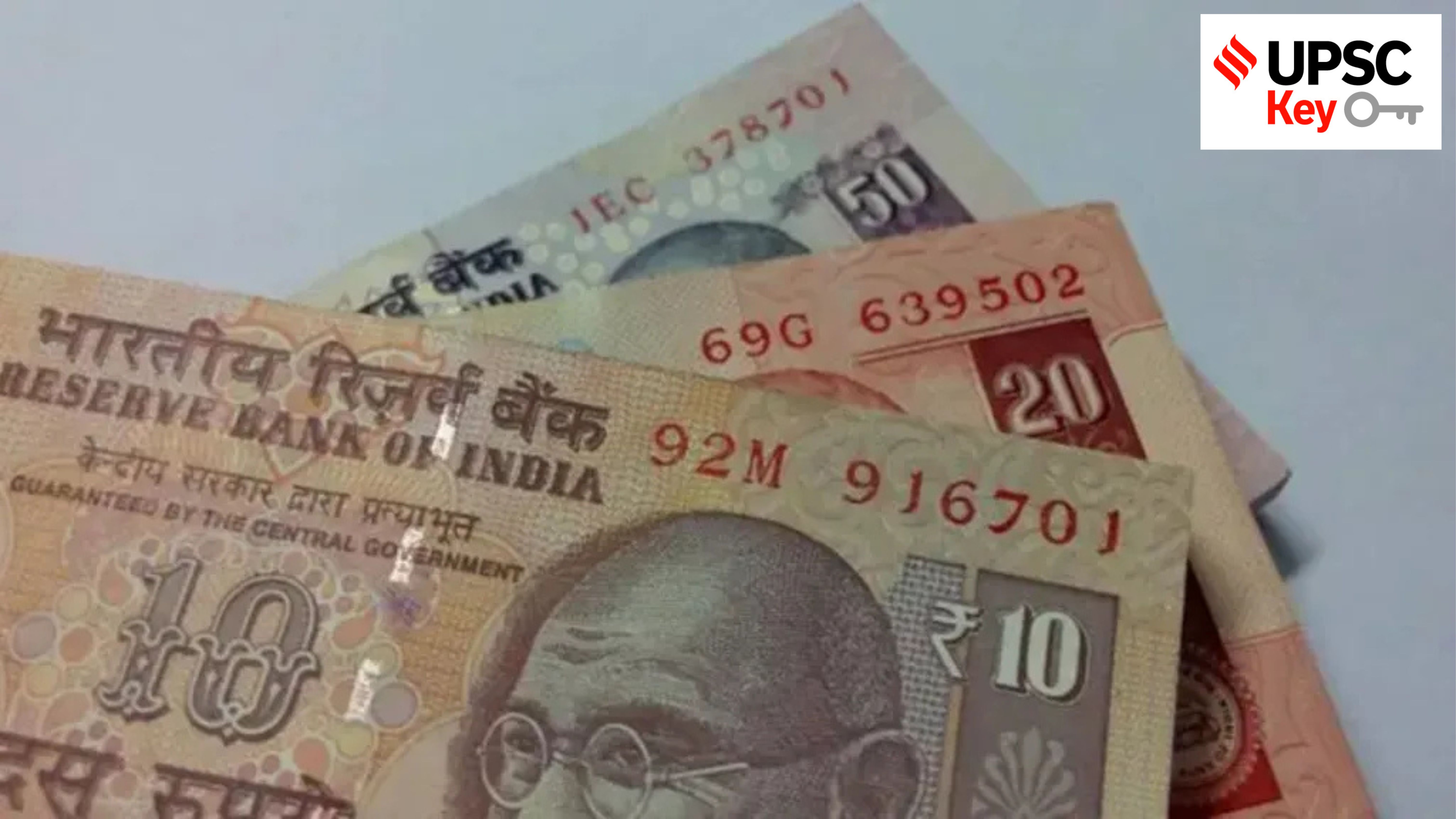
The bank is also planning new 'plastic' money notes for Rs 10 and Rs 20 that last much longer than paper ones.
In Parliament, the government said it will soften a law about foreign money given to charity groups so that they are not punished for things done in the past.
Parliament also voted to let the Supreme Court have more judges, from 34 to 38.
The Supreme Court asked judges to be extra kind and careful when people who have been hurt by crimes come to court, so that they do not get hurt again.
Heavy rain caused big floods in Kerala, where 26 people died and thousands of people had to stay in shelters.
The floods were worse because rivers are full of mud and sand and because too much concrete covers the ground, so the Kerala government plans to clean the rivers.

The government reached out to the Opposition on Wednesday and signalled that the Foreign Contribution (Regulation) Amendment Bill, 2026 will have no penalising retrospective provision.
The Rajya Sabha passed the Supreme Court (Number of Judges) Amendment Bill, 2026, raising the sanctioned strength of judges from 34 to 38 via the money Bill route, which a 2018 dissenting Supreme Court opinion called a 'fraud on the Constitution'.
The RBI's Monetary Policy Committee kept the repo rate unchanged at 5.25%, and RBI Governor Sanjay Malhotra announced plans to launch Rs 10 and Rs 20 polymer banknotes at the start of FY28.
A new Supreme Court report, 'Judgments and Gender', urges judges to prevent the secondary traumatisation of sexual assault survivors; it replaces the 2023 Handbook on Combating Gender Stereotypes issued under then Chief Justice D Y Chandrachud.
Kerala's floods killed 26 people, left four missing and drove over 27,000 into about 460 relief camps, with sedimentation, rapid urbanisation and shrinking wetlands worsening the crisis.
- Who
- The Government of India and the Opposition in Parliament, RBI Governor Sanjay Malhotra and the Monetary Policy Committee, the Supreme Court of India, and Kerala Chief Minister V D Satheesan.
- What
- A multi-topic day in Indian current affairs: the government signalled softening of the FCRA Amendment Bill 2026; the Rajya Sabha passed a Bill raising Supreme Court strength to 38 judges; the RBI held the repo rate at 5.25% and announced polymer banknotes; the Supreme Court released a gender-sensitivity report drafted by a committee headed by Justice Aniruddha Bose; and heavy rains flooded Kerala.
- Where
- India — in Parliament, at the RBI and the Supreme Court, and in Kerala, where Kottayam, Pathanamthitta and Alappuzha districts were among the worst affected.
- When
- Wednesday, August 5, 2026; the Supreme Court gender report was published the preceding Monday, and Parliament's monsoon session is scheduled to end August 13.
- Why
- To break the parliamentary deadlock over the FCRA Bill; to expand the Supreme Court's capacity; to manage inflation amid volatile crude prices and West Asia tensions; to make lower-denomination notes more durable; to reduce trauma for sexual assault survivors in court; and to respond to floods made worse by sedimentation and urbanisation.
Critics and Opposition
Government
FCRA Bill's asset-vesting rules
Critics and Opposition
Civil society and religious groups fear the vesting provisions could penalise past investments and sweep in organisations whose FCRA certificates ceased years ago — even those running on domestic funds — putting assets like schools, hospitals and community centres under a Designated Authority.
Government
The government says the existing law lacks a comprehensive framework for such assets, creating administrative uncertainty and scope for misuse, and has signalled that the Bill will have no penalising retrospective provision.
Money Bill route for the judges Bill
Critics and Opposition
Opposition parties argue the money Bill route bypasses the Rajya Sabha, and a 2018 dissenting Supreme Court opinion called it a 'fraud on the Constitution'; they say it is used because the government lacks numbers in the Rajya Sabha.
Government
The government says the Bill qualifies as a money Bill under Article 110 because it involves expenditure on new judge posts, staff, residences and security, and it used the same route in 2019 when the court's strength was raised to 34.
Key facts
- Repo rate
- Held unchanged at 5.25% by the RBI's Monetary Policy Committee
- RBI FY27 forecasts
- GDP growth raised to 6.7% (from 6.6%); inflation projection cut to 5% (from 5.1%)
- Supreme Court strength
- Sanctioned judges to rise from 34 to 38 including the Chief Justice of India
- Cost of new judges
- About Rs 14.04 crore for four additional posts including staff, residences and security
- Kerala flood toll
- 26 dead, 4 missing; over 27,000 people in about 460 relief camps (as of August 5)
- Polymer banknotes
- Rs 10 and Rs 20 notes from start of FY28; 100 crore pieces each totalling Rs 3,000 crore; subsidiary BRBNMPL floated a global tender for 3.4 crore polymer sheets
- FCRA Bill
- Introduces certificate 'cessation' (Section 14B) and vesting of assets in a Designated Authority (Sections 16A, 16B); no penalising retrospective provision
- Kerala paddy land
- Fell from 7.93 lakh hectares (1979-80) to 1.80 lakh hectares (2023-24)
Sources
Related news

UPSC Key: Tribunals bill, alcohol policy, Mecca Agreement and more
FCRA Amendment Bill 2026 Tightens India's Foreign Funding Rules

Weekly current affairs: Mecca defence pact, RBI rate, Commonwealth medals

UPSC Key: Gene Therapy, Tribunals, Nuclear Rules and Trade
UPSC Current Affairs: India’s Diplomacy, Economy, Law and Policy

Supreme Court Collegium Recommends New Rajasthan High Court Chief Justice
JudgeGPT Trial Shows AI’s Potential to Speed Judicial Justice
Debate Grows Over Bhumi Pujan At Indian State Events
Letter Urges Zohran Mamdani to Reconsider Mohan Bhagwat
CJI Says Rajasthan Acting Chief Justice Allegations Under Review